
Review · COSTA DEL SOL TOURS
Marbella Old Town group tour with a True Local
Marbella has layers. This 90-minute walk reveals more than beaches and glossy resorts, with Javier’s local storytelling and a tasty olive oil stop at the end. I like the way it connects seaside sights with old lanes, and I like the practical restaurant tips you get along the way. The main consideration is that the pace can feel brisk, and the olive oil shop visit depends on opening hours.
You meet near Marbella’s seafront and finish in Plaza de los Naranjos, the Old Town’s grand orange-tree square. The advertised group can include up to 20 people, though personal audio equipment may help you hear the guide clearly. At $30.23 per person, this is a fair introduction to Marbella, especially if you take it early in your stay and use the advice to shape the rest of your visit.
In This Review
- Key points to know before you book
- Why Marbella is more than sun and sand
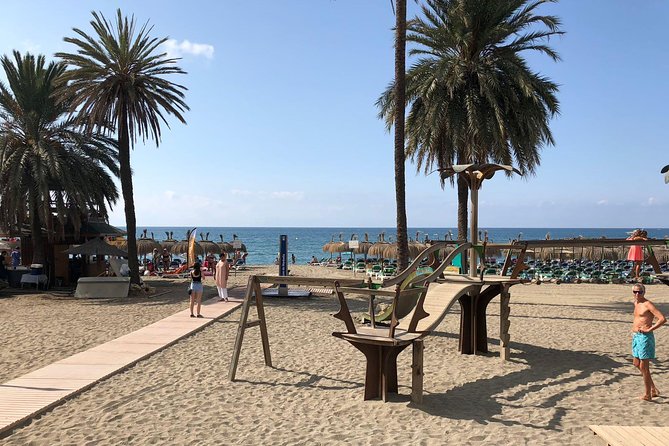
- Starting beside Avenida del Mar and the Paseo Maritimo
- A local gathering place under the shade
- Capilla de San Juan de Dios and its surviving woodwork
- Hospital Bazán and the National Engraving Museum
- Plaza Altamirano and the city’s former command
- Torre de la Polvora and Marbella’s medieval defenses
- Plaza de los Naranjos and the Castilian redesign
- The D.OLIVA tasting is more than a quick sample
- Guide style, group size, and hearing clearly
- Price, timing, and who gets the most from it
- Should you book the Marbella Old Town walk?
- FAQ
- How much does the Marbella Old Town group tour cost?
- How long does the walking tour last?
- What language is the tour offered in?
- Where does the tour start?
- Where does the tour finish?
- Is the olive oil tasting included?
- Can the tour enter the National Engraving Museum?
- What happens if the tour is canceled because of bad weather?
- How far in advance can I cancel for a full refund?
Key points to know before you book
- A seaside-to-Old-Town route: The walk begins around Avenida del Mar and the Paseo Maritimo before moving into historic Marbella.
- Javier is a local favorite: He explains the city’s past, traditions, food, and daily life with warmth and plenty of personal suggestions.
- A surprisingly broad history lesson: You encounter Moorish street patterns, Castilian civic design, churches, medieval defenses, and later cultural institutions.
- The olive oil tasting is the finale: At D.OLIVA, you sample between three and six extra virgin oils when the shop is open. Some tastings have included more.
- Useful for first-day orientation: The tour ends in a central square surrounded by cafés and restaurants, leaving you well placed for lunch or further exploring.
- Expect a walking tour, not a museum marathon: Most stops are brief exterior visits, with the National Engraving Museum sometimes entered if opening times allow.
Why Marbella is more than sun and sand
Marbella is easy to read at first glance. There is the beach, the promenade, the restaurants, and the polished holiday image. But the older city is more interesting when you understand how several periods overlap in a compact area.
This tour gives you that framework without asking you to commit to a half-day excursion. You move from the coast into the Old Town, then through chapels, squares, old walls, and narrow streets. I appreciate this order because it makes the contrast clear: modern seaside Marbella gives way to a much older town shaped by Moorish planning and later Castilian rebuilding.
The walk is especially useful if you have just arrived. You get a sense of where to eat, which streets deserve another look, and how the Old Town fits together. Several guests also received advice on family-run taverns, tapas places, parking, and other nearby sights. Those small pointers may be worth as much as the formal history lesson.
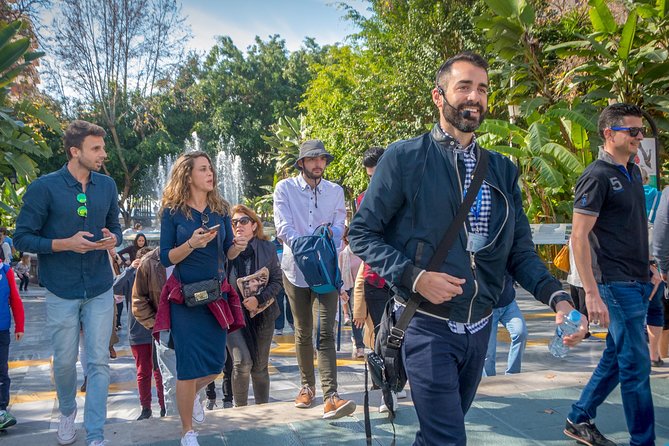
The guide is the heart of the experience. Javier is named most often, and his connection to the area comes through in the way he discusses local customs and points out places he uses with family and friends. Eva has also led the tour, and Juan has assisted Javier as a trainee. The common thread is a friendly, personal approach rather than a memorized speech.
A few more Spain trips worth a look
- From Marbella: Guadalmina River Guided Canyoning Adventure
★ 4.9 · 1,486 reviews - Marbella: Sailing & Dolphin Watching with Snacks and Drinks
★ 4.7 · 1,062 reviews - Natural Parck Jeep Eco Tour from Costa del Sol
★ 5.0 · 662 reviews
Starting beside Avenida del Mar and the Paseo Maritimo
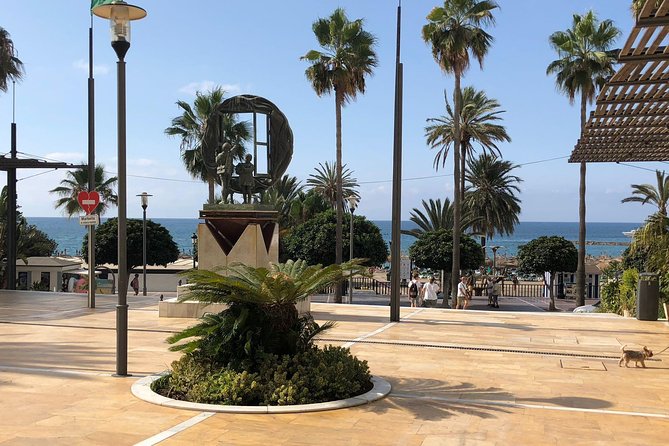
The opening section begins around the coast, including Avenida del Mar, where sculptures by Salvador Dali can be seen. From there, you reach the Paseo Maritimo, Marbella’s seafront promenade, with bars, restaurants, and chiringuitos, the casual beachside places associated with Andalusian coastal dining.
You spend about 15 minutes here. That is enough to set the scene and explain how the modern resort city developed around its shore. It also gives you an easy first look at the relationship between Marbella’s public spaces and its tourist economy.
I like beginning here because it prevents the Old Town from feeling isolated from the rest of the city. You see the resort image first, then learn that Marbella has a much longer story behind it.
There is one practical point to remember: this is a walking route, so comfortable shoes are sensible. The tour is not a private car trip, and no private transportation is included. If your feet are already tired from a day at the beach or a long arrival journey, the short coastal section may feel less appealing than it would early in the morning.
A local gathering place under the shade
An unnamed opening stop is described as a place where local people gather for events or simply enjoy the shade. The detail matters because it points you toward Marbella as a lived-in town, not only a place arranged for visitors.
The exact name of this gathering place is not provided, so you should rely on the guide to identify it at the meeting point. Its value is less about a single landmark and more about seeing how public squares and shaded areas function in local life.
That kind of explanation can make the Old Town easier to understand. A square is not just a pretty backdrop for photographs. It can be a meeting place, a festival setting, or a quiet refuge from the sun.
Capilla de San Juan de Dios and its surviving woodwork
The Capilla de San Juan de Dios is a small chapel dating from the 16th century. You spend around 10 minutes here, focusing on the building and its surviving wooden ceiling work.
This is a short stop, but it adds texture to the walk. Marbella’s historic center is not only about broad plazas and decorative façades. Smaller religious buildings show how civic and spiritual life once occupied the same tight network of streets.
You should expect a brief explanation rather than a long indoor visit. The tour covers several locations in a limited time, so the chapel is best treated as one piece of a larger historical picture.
A completely different kind of day out in Marbella:
- Dolphin Watching Adventure in Estepona Bay
★ 4.5 · 626 reviews - Authentic Andalusia – Jeep Eco Tour (pick up from Marbella – Estepona)
★ 5.0 · 564 reviews - From Fuengirola: Caminito del Rey Guided Day Trip
★ 4.7 · 535 reviews - Boat Trip in Fuengirola, Dolphin Watching and Drinks
★ 4.5 · 345 reviews
Hospital Bazán and the National Engraving Museum
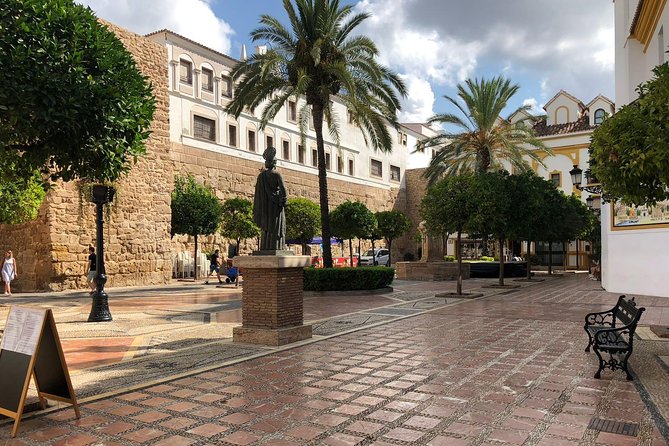
The old Bazán Hospital is one of the more unusual stops. This historic building now houses the National Engraving Museum, giving the tour a link between old architecture and a modern cultural institution.
The scheduled visit lasts about 15 minutes. Entrance to the museum is complimentary, and the group may go inside when it is open. That last point is important: the museum visit is not guaranteed at every departure because opening hours control the timing.
If you do enter, you get more than an exterior view of an old building. You also have a chance to see how historic spaces can serve a new purpose. If the museum is closed, the guide can still explain the site and its place in Marbella’s Old Town.
This stop may be one of the best value features in the tour because it adds an indoor cultural option without an extra admission fee. Still, keep your expectations in proportion. Fifteen minutes is enough for a taste, not a full museum visit.
Plaza Altamirano and the city’s former command
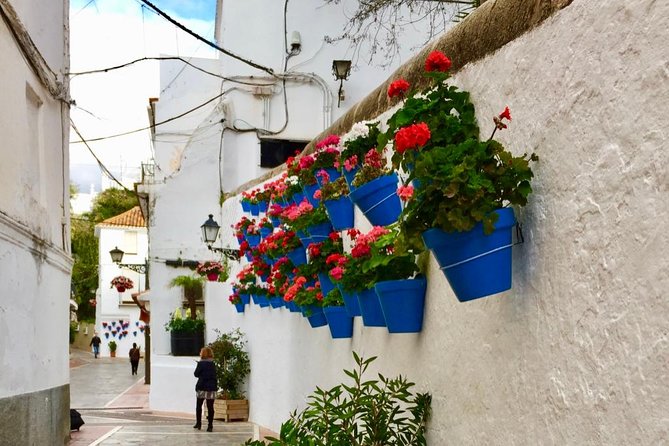
Plaza Altamirano is a charming square associated with a 16th-century palace that belonged to the former commander of the city. You spend approximately 10 minutes here.
The square gives you a chance to pause and look at the scale of the Old Town. After the narrow lanes and smaller chapel, an open plaza helps you see how authority and public life were organized in earlier Marbella.
This is also the kind of stop where a good guide makes a difference. A bare description of a palace can pass quickly. Javier’s style, based on the information available about his tours, includes placing buildings within local stories and traditions rather than simply naming dates.
Torre de la Polvora and Marbella’s medieval defenses
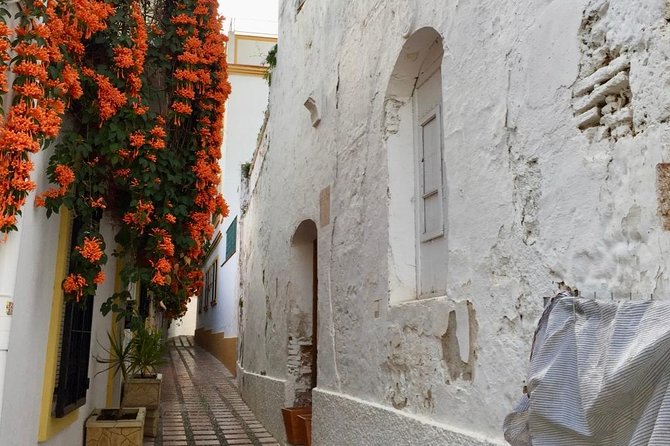
At Torre de la Polvora, you see remains of Marbella’s medieval walls. The visit lasts about 10 minutes.
The surviving defenses help explain why the Old Town has such a distinct shape. Walls divide spaces, control movement, and leave behind the tight urban form that you still experience in the lanes today.
This is a ruin rather than a complete fortress, so it is not the sort of stop that takes a long time to explore. Its strength is context. When you later walk through the old streets, you can connect their twists and boundaries with the defensive town that once occupied this area.
The guide also discusses different civilizations that shaped Marbella. That broad approach is useful because it moves the tour beyond one historical period and shows how the city changed over time.
Plaza de los Naranjos and the Castilian redesign
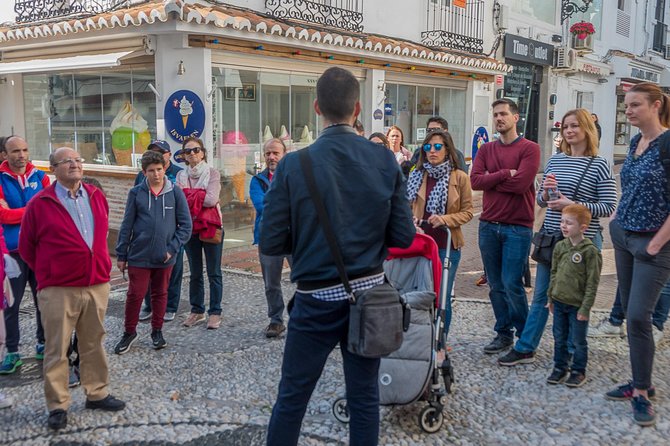
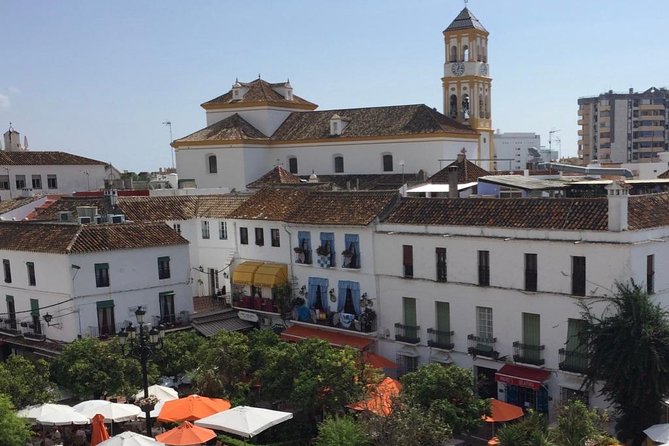
The tour then reaches Plaza de los Naranjos, its formal ending point. The square dates from the 16th century and follows a typical Castilian style.
Its creation involved demolishing the older narrow, winding Moorish streets in this part of town. That contrast is one of the most interesting ideas in the walk. You are not simply looking at an attractive plaza. You are seeing a deliberate change in the city plan, where a more ordered Castilian public space replaced an earlier Moorish pattern.
Today, the square is shaded by orange trees and surrounded by flowerbeds, cafés, restaurants, and 16th-century buildings. It is a sensible place to finish because you can continue your day without needing another transfer.
You might stay for a meal, return to a lane you passed earlier, or use the guide’s restaurant suggestions. Several people particularly valued being shown family-owned taverns and places for genuine tapas. Those recommendations are not part of the formal inclusions, but they are one of the tour’s useful extras.
The D.OLIVA tasting is more than a quick sample
The final stop is D.OLIVA, an olive oil shop where you taste high-quality extra virgin oils. The stated tasting includes three to six oils, and some sessions have included considerably more. The visit lasts about 10 minutes and is included in the price.
I like this ending because it connects the sightseeing to Andalusian food. Olive oil is not just a souvenir here. It is a daily ingredient, and tasting several oils side by side can show you how different they can be in flavor and intensity.
The shop visit depends on opening hours, so it may not happen on every departure. If it is available, allow yourself time to pay attention rather than treating it as a rushed sales stop. One person bought containers to take home, so shopping is possible, but purchasing is not required for the tour to have value.
The tasting also gives you a practical idea of what to look for in Spanish olive oil. You can ask questions, compare samples, and decide if a bottle would make a useful gift. Just remember that the number of oils offered may vary.
Guide style, group size, and hearing clearly
The tour includes a local licensed guide and is offered in English. Javier is the name most closely associated with the experience, and his strengths are clear: he is personable, proud of Marbella, and comfortable discussing both historical events and everyday local life.
His family has lived in the area for generations, according to the information shared about the tour, and he is familiar with Old Town shopkeepers and restaurant owners. That does not mean every stop will be a private encounter or an exclusive access point. It does mean you can expect advice that feels connected to the town rather than copied from a basic guidebook.
The maximum group size is 20. That is small enough to keep the group together through narrow streets, but it is not a private tour. In a larger departure, you may stand farther from the guide during explanations.
Personal audio receivers and earphones have recently been added. That is a welcome practical feature, especially near the promenade or in crowded lanes. If clear narration matters to you, confirm the equipment at the start and stay close enough to follow the walking route.
The advertised duration is about one hour and 30 minutes. Some outings have lasted closer to two hours, depending on questions, stops, and the olive oil tasting. I would keep a little flexibility in your schedule rather than booking a tight lunch reservation immediately afterward.
Price, timing, and who gets the most from it
At $30.23 per person, this is good value if you want a guided introduction instead of wandering past historic buildings without context. The price covers the licensed guide and olive oil tasting, while the museum entrance is complimentary if the group enters during opening hours.
You are paying mainly for interpretation and local orientation. Marbella’s Old Town is easy enough to walk through on your own, but the guide helps you connect the chapel, hospital, walls, squares, food traditions, and Moorish and Castilian influences.
I would book this for:
- First-time visitors who want a clear introduction to Marbella
- Couples and solo visitors looking for an easy social activity
- Families who prefer a short walk with regular stops
- Food-minded visitors who enjoy tastings and local restaurant advice
- Anyone staying several days and wanting help planning the rest of the visit
It may be less suitable if you want a slow photography walk, a private experience, or detailed museum time. The group can reach 20 people, and the route covers several stops in a short period.
The activity is suitable for most participants, and service animals are allowed. It is near public transportation, but private transportation is not included. You should also note the weather requirement. If poor weather cancels the tour, you can receive a different date or a full refund. Free cancellation is available up to 24 hours before the start time, with the usual restriction on later changes.
Should you book the Marbella Old Town walk?
I would book it, especially for your first day or two in Marbella. The tour gives you a useful historical frame, introduces the Old Town without overloading you, and ends with something genuinely local: olive oil tasting.
Choose this experience if you value a friendly guide, practical food suggestions, and a short route that links the coast with the old center. Skip it if you prefer exploring entirely on your own or want a longer, more specialized history tour.
For most visitors, the best reason to go is the combination. You get Dali sculptures and the seafront, a 16th-century chapel and hospital, medieval walls, Moorish street patterns, a Castilian plaza, and a taste of Andalusia in one compact outing.
FAQ
How much does the Marbella Old Town group tour cost?
The price is $30.23 per person.
How long does the walking tour last?
The advertised duration is approximately one hour and 30 minutes. Some outings may last closer to two hours, depending on the pace, questions, and stops.
What language is the tour offered in?
The tour is offered in English.
Where does the tour start?
It starts near G457+GM Marbella in Marbella, Spain.
Where does the tour finish?
The tour ends at Plaza de los Naranjos in Marbella’s Old Town.
Is the olive oil tasting included?
Yes. The D.OLIVA tasting is included when the shop is open. The stated tasting includes three to six extra virgin olive oils, though the selection can vary.
Can the tour enter the National Engraving Museum?
The group may enter the museum when it is open. Entrance is complimentary, but the visit depends on opening hours.
What happens if the tour is canceled because of bad weather?
You will be offered a different date or a full refund.
How far in advance can I cancel for a full refund?
You can cancel at least 24 hours before the experience start time for a full refund. Changes or cancellations made less than 24 hours before the start time are not accepted for a refund.
Recently added around Marbella
- Sunset Sailing Experience in Estepona★ 5.0 · 105 reviews
- Marbella 3-hour Catamaran Group Excursion with Dolphin Watching★ 5.0 · 105 reviews
- Caminito del Rey and Ardales Guided Tour from Costa del Sol★ 4.0 · 107 reviews
- Marbella Old Town: Group Tour with a True Local★ 4.9 · 111 reviews
- Guided Canyoning Adventure Near Marbella (Benahavís River Walk)★ 5.0 · 116 reviews
- Dolphin trips on a catamaran★ 4.5 · 120 reviews
- From Marbella or Estepona: Caminito del Rey Guided Day Trip★ 4.0 · 121 reviews
- Flamenco evening and barbecue by the sea at the Blue Dolphin Beach Club★ 4.5 · 123 reviews
Costa del Sol Tours, compared.
From Málaga & Costa del Sol: Caminito del Rey Guided Tour
Read our review →

Málaga & Costa del Sol: Ronda and Setenil de las Bodegas
Read our review →
Benalmádena: Mount Calamorro Cable Car Ticket
Read our review →
Fuengirola: Dolphin Watching by Yacht with Snacks and Drinks
Read our review →


Sailing & Dolphin Watching with Snacks and Drinks
Read our review →Browse the lists this tour appears in