Review · TICKETS
Málaga: Museo Picasso Málaga Entry Ticket
Picasso comes home in Málaga. I like the clear journey through his life, from early academic studies to the daring paintings of the 1970s, and I like that the museum adds ceramics, sculpture, drawings, and prints instead of focusing only on famous paintings. The elegant Palacio de Buenavista gives the visit a graceful setting, too.
The $15 ticket is a fair deal for a full day of access, especially when temporary exhibitions and the underground archaeological remains are included. My main caution is simple: book ahead. Time slots can sell out, and the audio guide is easy to miss if you do not scan its QR code promptly at the entrance.
In This Review
- Key points to know before you go
- Why Picasso’s Málaga museum is worth your time
- Entering the Palacio de Buenavista on Calle San Agustín
- Following Picasso from student studies to late paintings
- Making sense of Cubism without getting lost
- Looking beyond paintings: ceramics, sculpture, and graphic work
- The underground archaeological remains
- Temporary exhibitions add value to the ticket
- The café, courtyard, and a sensible break
- Price, timing, and who gets the best value
- Tips for getting more from your visit
- Should you book the Museo Picasso Málaga ticket?
- FAQ
- Where is the Museo Picasso Málaga?
- How much does the entry ticket cost?
- How long is the ticket valid?
- What does the ticket include?
- Is the audio guide included?
- Can I visit the archaeological remains with the same ticket?
- Is the museum wheelchair accessible?
Key points to know before you go
- Picasso’s birthplace matters: The museum was created to honor Picasso’s wish to have his work shown in Málaga, where he was born in 1881.
- 141 works cover many periods: You see paintings, drawings, sculpture, ceramics, and graphic work, not just Cubist pieces.
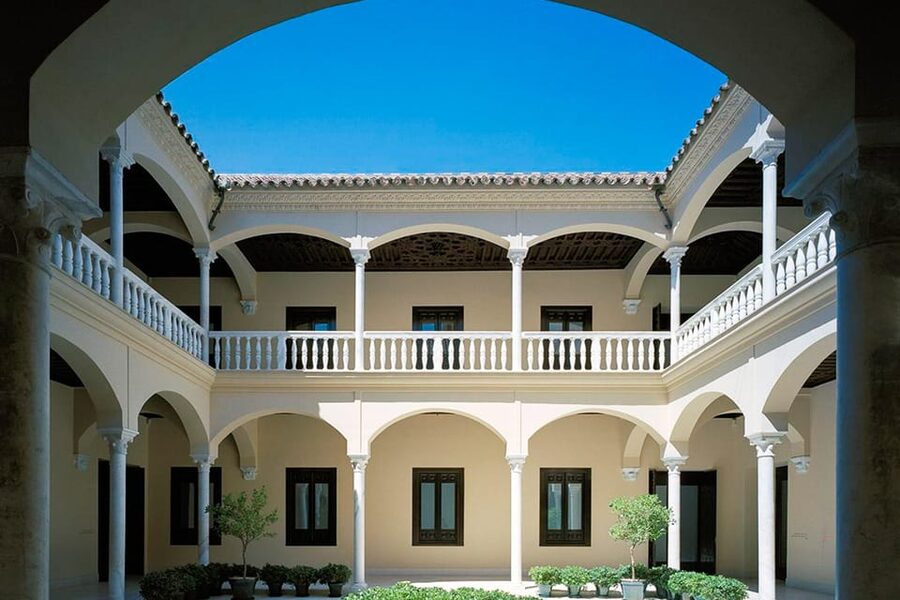
- The Palacio de Buenavista is part of the attraction: Renaissance details, Mudéjar design, and modern additions create a calm setting for the art.
- Do not skip the lower floor: Phoenician, Roman, and Arabic remains occupy the archaeological area beneath the museum.
- Reserve a timed entry: The 15-minute entry margin helps, but advance booking can save you from a long queue or a sold-out day.
- The audio guide needs a little attention: Scan the QR code at the start, and bring a charged phone with enough room to use the web app.
Why Picasso’s Málaga museum is worth your time
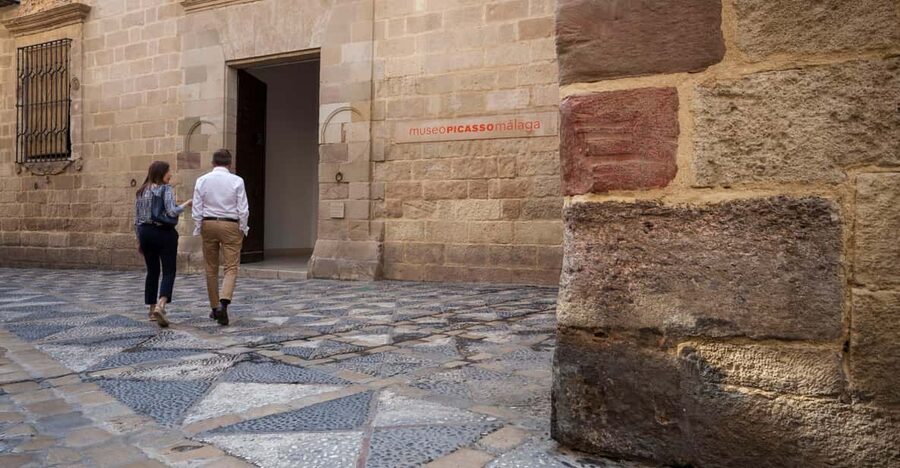
Málaga has plenty to keep you busy, from the Alcazaba to the cathedral and Roman Theatre. Still, the Museo Picasso Málaga gives the city a special connection to one of the twentieth century’s most influential artists.
Picasso was born in Málaga in 1881. This museum grew from his wish that his work should be shown in his birthplace, but it did not open until 2003. Its creation depended on the donations of Picasso’s daughter-in-law and grandson, along with a major project led by the Junta de Andalucía.
That background changes the way you approach the collection. You are not simply entering another international art museum. You are seeing Picasso through a Málaga connection, in a building chosen to link the city’s older layers with its modern cultural life.
I especially like the museum’s sense of proportion. It is large enough to give you a real picture of Picasso’s development, but it is not so huge that you lose the thread. Depending on your pace, allow about one to two hours for the main collection. An hour works for a quick overview. Two hours gives you time to read the displays, study the changing styles, and visit the archaeological remains without rushing.
A few more Spain trips worth a look
- Barcelona: Sagrada Familia Entry Ticket with Audio Guide
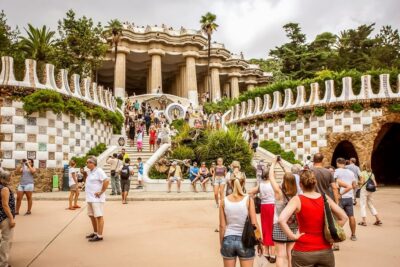
★ 4.6 · 105,312 reviews - Barcelona: Park Güell Admission Ticket
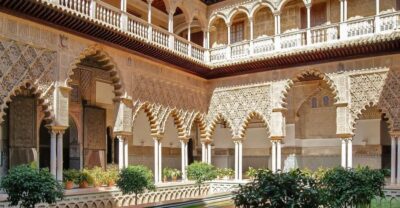
★ 4.4 · 76,534 reviews - Seville: Royal Alcázar Entry Ticket
★ 4.6 · 28,378 reviews
Entering the Palacio de Buenavista on Calle San Agustín
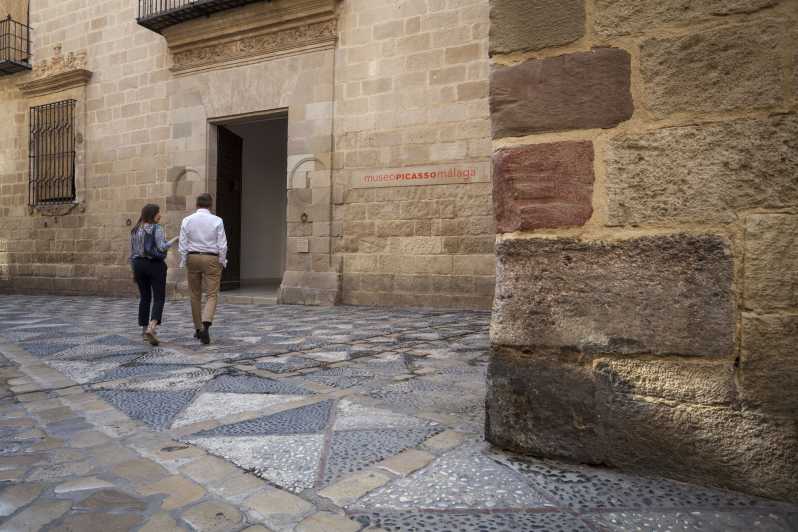
Your visit begins at the Palacio de Buenavista, at Calle San Agustín 8 in central Málaga. The palace was declared a National Monument in 1939, long before it became the home of the Picasso museum.
The architecture is one of the first pleasures here. The building brings together Renaissance and Mudéjar elements, then adds quieter contemporary lines. That mix feels appropriate for Picasso, an artist who repeatedly borrowed from the past while pushing art into new forms.
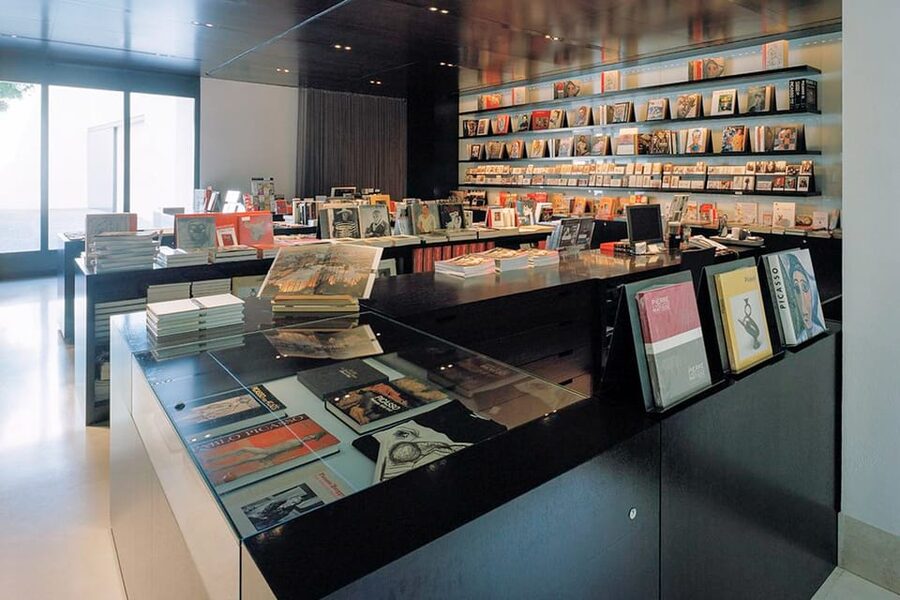
Do not hurry through the entrance areas. The palace, courtyards, and exhibition rooms provide a calmer setting than the sunny streets outside, especially in summer. A garden café near the bookshop gives you a pleasant place to stop for a snack, lunch, or drink after the galleries.
Timed admission is useful at this museum. Your assigned time includes a 15-minute margin, and the entry line generally moves quickly when tickets are already reserved. The first time slot of the day is a smart choice if you want a quieter visit. By afternoon, the queue may stretch outside in the sun.
The museum can sell out, even when you might assume a ticket will be easy to find. Online booking the night before has saved people from arriving to a full day. I would not leave this one until the last minute during summer or other busy periods.
Following Picasso from student studies to late paintings
The permanent collection is arranged to help you follow Picasso’s development. This matters because Picasso’s reputation can make him seem like a collection of disconnected tricks: Cubist faces here, distorted figures there, bright ceramics somewhere else.
The museum gives you a timeline and supporting photographs that help put the changes in order. You can see how his work moves from early academic training toward a more personal Neoclassical approach, then through Cubism and later experiments.
I find the early works useful even if they are not the reason you came. They show Picasso’s command of traditional drawing and painting before he began breaking familiar rules. Once you have seen that foundation, his later inventions feel less like random destruction and more like deliberate choices.
The collection includes 141 works by Picasso. That number is enough to show the range of his career without turning the visit into an exhausting survey course. You may see:
- Paintings from different stages of his career
- Drawings that reveal his quick, searching line
- Sculptures and three-dimensional experiments
- Ceramics showing his interest in everyday objects and old traditions
- Graphic works that add another view of his methods
- Late paintings from the 1970s
The central pleasure is comparison. You can look from one period to another and notice how Picasso changes the treatment of the human body, space, line, and color. You do not need a degree in art history to follow the basic story. Clear explanations and the timeline make the collection approachable.
Making sense of Cubism without getting lost
Picasso’s overlapping Cubist forms are among the museum’s main draws. If Cubism usually leaves you cold, give yourself time to look rather than search for a single correct interpretation.
Start with the physical details. Notice how a face may be shown from more than one angle. Look for forms that overlap instead of sitting neatly in a single realistic space. Ask how the painting would feel if Picasso had followed ordinary perspective. The point is not simply that the image looks strange. The point is that he is asking you to see an object as a collection of shifting viewpoints.
The museum works well for this because the collection places Picasso’s experiments within a wider progression. You see the artist’s movement toward Cubism, then his later interpretations of older subjects and art traditions. The result is more useful than a single famous masterpiece hung alone with little context.
Some displays may feel brief if you want a full account of every painting. The audio guide also covers only selected works, not every object in every room. That is its main weakness. It can explain the highlights, but it does not replace a full guided tour or detailed reading of the wall text.
The audio guide is delivered through a web app. Scan the QR code at the entrance before you get too far into the museum. One visitor missed it during the busy entry process and had no audio support later. Use headphones if you have them, and check that your phone is ready before entering the galleries.
The guide is available in Spanish, Chinese, English, French, German, Italian, Japanese, Arabic, Portuguese, Russian, Basque, Catalan, Galician, and Korean. That wide language choice is helpful for international visitors, though the selection of works with commentary remains limited.
A completely different kind of day out in Spain:
- Barcelona: Casa Batlló Entry with Self-Audioguide Tour
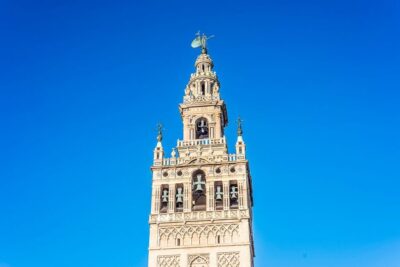
★ 4.7 · 25,359 reviews - Seville: Cathedral and La Giralda Entry Ticket
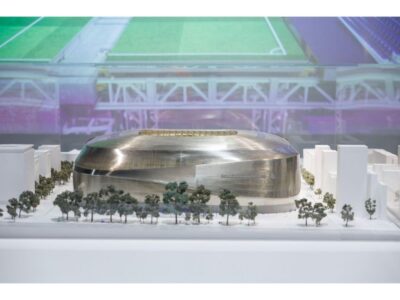
★ 4.5 · 24,592 reviews - Madrid: Tour Bernabéu Entry Ticket
★ 4.5 · 21,573 reviews - Barcelona: 24 or 48-Hour Hop-On Hop-Off Bus Tour
★ 4.4 · 20,872 reviews
Looking beyond paintings: ceramics, sculpture, and graphic work
One of the museum’s strengths is the variety of mediums. Picasso did not spend his career solving the same problem on canvas. His ceramics, sculptures, drawings, and graphic works show an artist testing different materials and working methods.
Ceramics can be especially revealing. They connect Picasso’s modern ideas with older craft traditions, and they make the collection feel less predictable. The sculptures let you see how he handled volume and physical space, while drawings can feel more direct and personal.
If you are mainly interested in famous Cubist paintings, you may move quickly through some sections. I would resist that temptation. The less familiar pieces help explain how Picasso kept returning to basic subjects, including faces, bodies, objects, and historical models, while changing the way he represented them.
The late works from the 1970s are also important. They remind you that Picasso did not stop experimenting after his early fame. His final paintings can look raw, playful, forceful, or unsettling. They give the visit a proper ending because you see not just the young innovator, but an artist still testing his language late in life.
The underground archaeological remains
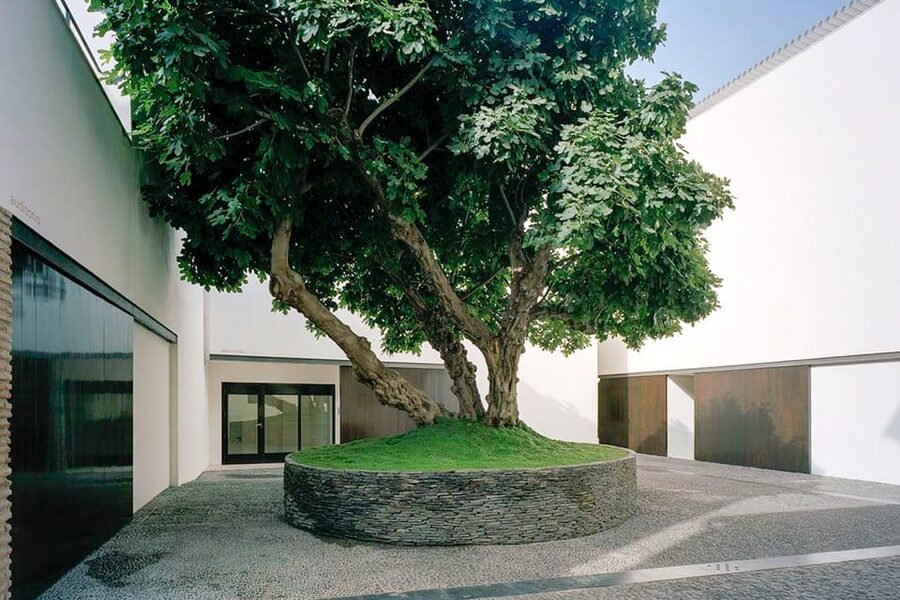
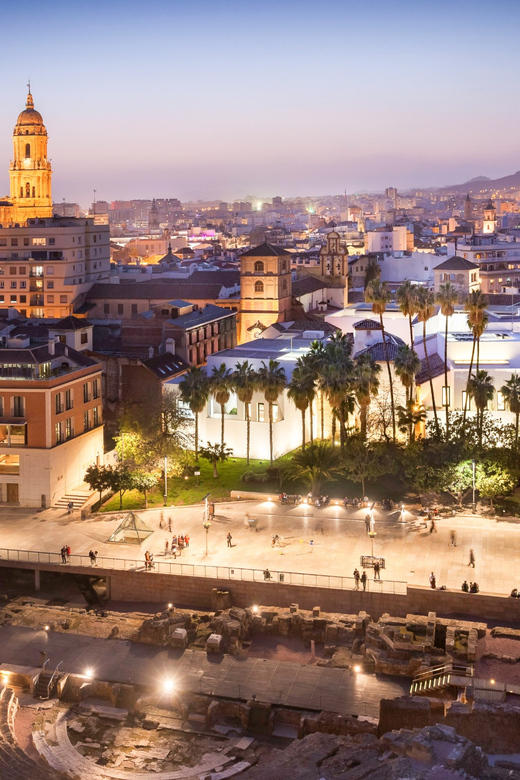
Head downstairs before you leave. The archaeological area beneath the museum contains Phoenician, Roman, and Arabic remains, with discoveries dating as far back as the sixth century BC.
This is not a separate day trip or an optional ticketed attraction. Any museum admission allows you to enter the archaeological site. That makes it an easy addition, and it gives you a stronger sense of Málaga as a city built over many eras.
The contrast is striking. Upstairs, you are looking at Picasso’s experiments with modern art. Below, you see physical traces of earlier communities and buildings. The layers echo the museum’s larger idea: Málaga is not one historical moment but a place shaped by successive cultures.
The archaeological area is not huge, so plan on a short visit rather than an extended excavation tour. Still, it is one of the best-value parts of the ticket because it adds something completely different to the Picasso collection.
Clear signs between areas could be better, so pay attention to the museum layout and ask staff if you are unsure where the lower floor begins. The staff are generally friendly and happy to help.
Temporary exhibitions add value to the ticket
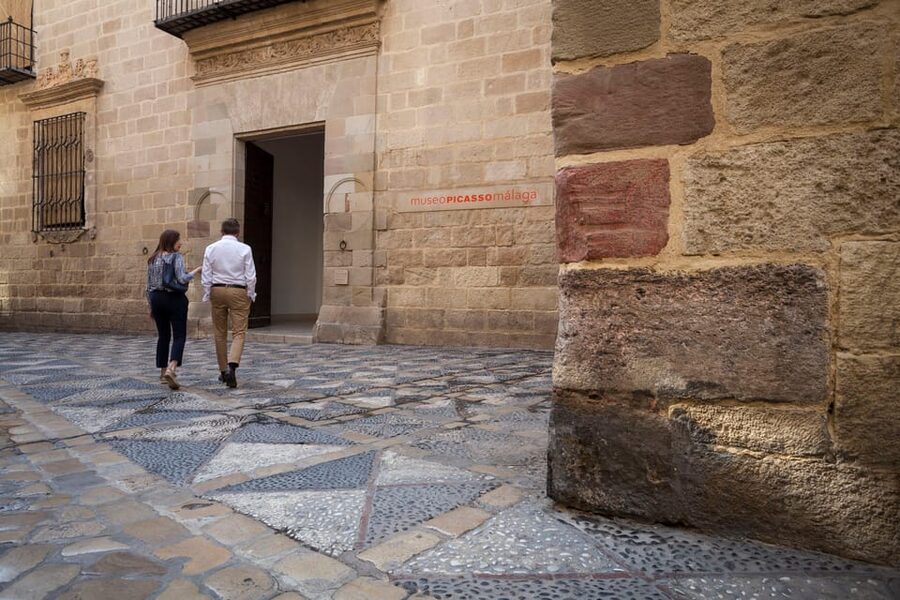
Your admission includes temporary exhibitions as well as the permanent collection. The exact program changes, so check the current dates when you book.
The ticket information for this experience includes William Kentridge’s More Sweetly Play the Dance, scheduled from November 21, 2024, to April 27, 2025, and Picasso: The Royan Sketchbooks, scheduled from January 31 to May 5, 2025. If you are visiting outside those dates, do not assume these shows are still on display.
Temporary exhibitions can change the length and mood of your visit. Recent programming has included work by artists such as Oscar Domínguez and Farah Atassi, and some visitors found these exhibitions as memorable as the Picasso rooms. That is a useful reminder: the museum is not only a fixed shrine to one artist. It also creates space for related modern and contemporary work.
Allow extra time if a temporary show is included during your visit. A quick Picasso visit may take an hour, while a careful visit with the temporary galleries and archaeology can approach two hours or more.
The café, courtyard, and a sensible break
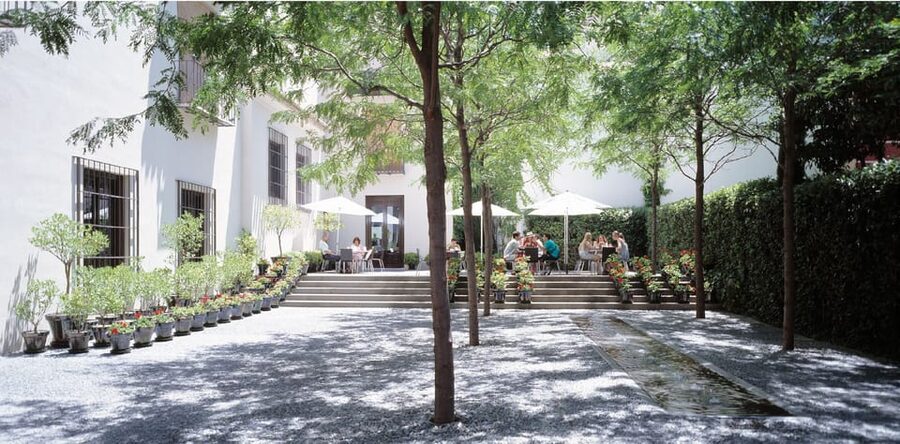
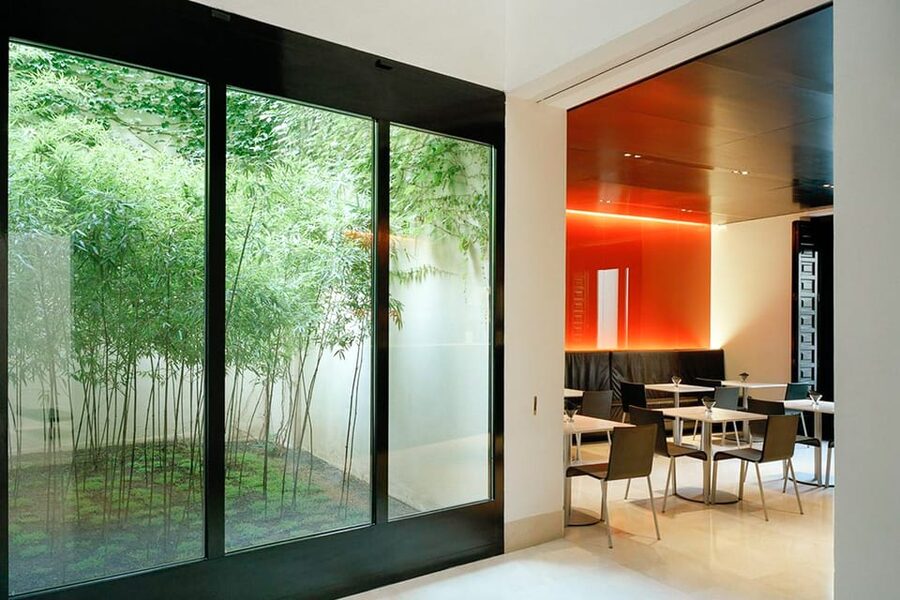
The garden café in the Palacio de Buenavista is a natural place to end the visit. You can stop for an appetizer, lunch, or a drink near the bookshop rather than rushing straight back into Málaga’s heat.
Food and drinks are not allowed in the galleries, so plan your break for the café. Keep refreshments inside your bag while you are inside, and remember that liquids may need to remain stored during the art visit.
The courtyard and garden space also give you a quiet pause after the visual concentration of the collection. If you are visiting with children, this break may help, but the museum itself is not an ideal place for a very energetic toddler. Children under 13 must be accompanied by an adult, and touching objects or shouting in the galleries is not acceptable.
The bookshop is included as part of the museum facilities. Even if you do not buy anything, it can be useful for finding art books or a souvenir connected to Picasso and Málaga.
Price, timing, and who gets the best value
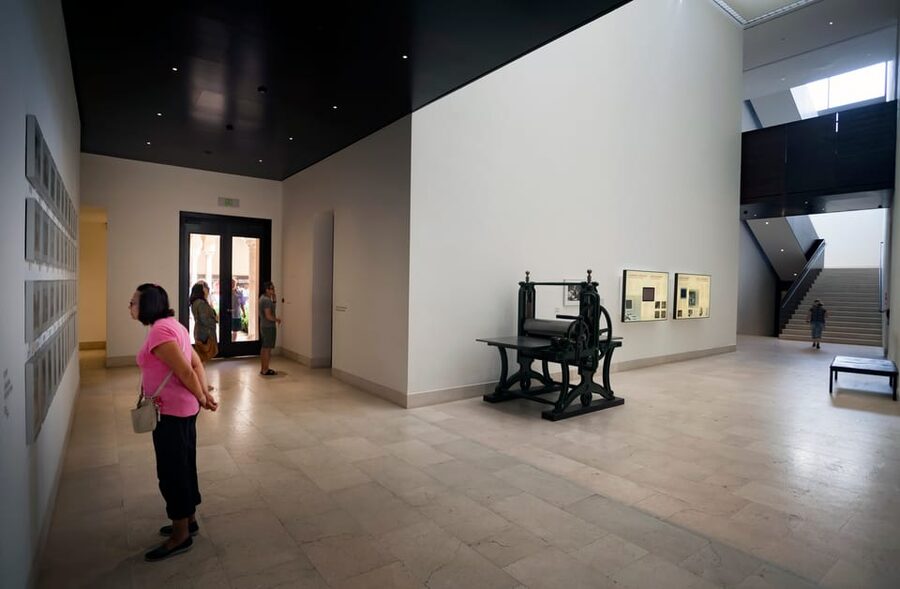
At $15 per person, this is good value for a central Málaga attraction. You get the permanent collection, temporary exhibitions, audio guide service, archaeological remains, bookshop access, and café access under one admission.
The value improves if you spend enough time to see the lower floor and temporary galleries. If you only have 30 minutes, the ticket may feel less rewarding, though a short stop can still work for a dedicated Picasso fan.
I would book online for a timed entry, particularly on weekends, in summer, or when a popular temporary exhibition is running. Some people without advance tickets have been turned away when the day was sold out. The 15-minute time margin gives you a little flexibility, but it is not a reason to arrive casually late.
Sunday admission is free during the final two hours before closing. That can save money, but it may also be the busiest period and gives you less time to see the collection. It is best for a quick, budget-minded visit, not for a slow first visit.
Reduced or free ticket holders need identification at the ticket office. Check the conditions before selecting that option.
The museum is wheelchair accessible. A cloakroom is available, but only suitcases and backpacks up to 55 by 35 by 20 centimeters are accepted. Large bags, bicycles, scooters, tricycles, pets, food, and drinks are not allowed inside. Umbrellas and other potentially dangerous items must also be left in the cloakroom, and stored belongings must be collected the same day.
Tips for getting more from your visit
I would use these simple strategies:
- Choose an early time: Morning entry can mean less waiting and cooler conditions outside.
- Arrive about 10 minutes early: This gives you time to find the entrance and prepare your phone for the audio guide.
- Scan the audio QR code immediately: Do not assume you can arrange it later inside.
- Begin with the timeline: It gives the rooms a clear order and makes Picasso’s changes easier to follow.
- Look at more than paintings: The ceramics, sculpture, drawings, and graphic work explain his range.
- Visit the archaeology before leaving: It is included and easy to miss.
- Keep your bag small: A large backpack may need to go into storage.
- Plan a courtyard break: The café is a practical way to rest after the galleries.
The museum also provides equipment for people who are blind or visually impaired, including audio-written guides in Spanish. Spanish sign-language support is available for Pablo Picasso: Structures of Invention. The Unity of a Life’s Work.
Should you book the Museo Picasso Málaga ticket?
Book it if you want a clear, manageable introduction to Picasso, especially if you are already visiting Málaga’s historic center. The museum does a good job of showing how his art changed over time, and the palace, temporary galleries, and archaeological remains give the ticket more substance than a standard single-artist display.
Picasso fans should allow close to two hours. Casual art visitors can see the main collection in about an hour, then add the archaeology and café. Families with older children can make it work, but toddlers may struggle with the quiet galleries and no-touch rules.
The only real drawbacks are the limited audio commentary, occasional queues, and the need to reserve ahead. At $15, those are manageable concerns. I would book an early time, scan the audio guide at once, and treat the archaeological floor as part of the main visit rather than an afterthought.
FAQ
Where is the Museo Picasso Málaga?
It is located at Palacio de Buenavista, Calle San Agustín 8, Málaga 29015, in Andalusia, Spain.
How much does the entry ticket cost?
The listed price is $15 per person.
How long is the ticket valid?
The ticket is valid for one day, with entry arranged through an available time slot.
What does the ticket include?
It includes the permanent Museo Picasso Málaga collection, temporary exhibitions included during the selected dates, the audio guide web app, archaeological remains, the bookshop, and the café.
Is the audio guide included?
Yes. You access it through a web app by scanning a QR code with your mobile device. It is available in Spanish, Chinese, English, French, German, Italian, Japanese, Arabic, Portuguese, Russian, Basque, Catalan, Galician, and Korean.
Can I visit the archaeological remains with the same ticket?
Yes. The Phoenician, Roman, and Arabic archaeological site can be entered with any museum admission ticket.
Is the museum wheelchair accessible?
Yes, the museum is wheelchair accessible. A cloakroom is available for permitted suitcases and backpacks, but large bags, bicycles, scooters, tricycles, pets, food, and drinks are not allowed.
Recently added around Spain
- Half-Day Luxury Catamaran Sailing Cruise in Granada★ 5.0 · 165 reviews
- Jeep Safari to Teide and Masca★ 4.5 · 165 reviews
- Madrid: Thyssen Museum Guided Tour with Skip-the-Line Entry★ 4.5 · 165 reviews
- Visit in Spanish to the Cathedral Mosque. Does not include entrance ticket★ 5.0 · 165 reviews
- Canyoning in Andalucia: Rio Verde Canyon★ 5.0 · 165 reviews
- Guided Tour to Caminito del Rey from Malaga★ 4.5 · 165 reviews
- VIP Private Segway Tour of Palma★ 5.0 · 165 reviews
- Las Palmas: Private Old City Guided Walking Tour with Tapas★ 4.6 · 166 reviews
Tickets, compared.
Sagrada Familia Entry Ticket with Audio Guide
Read our review →