
Review · MUSEUMS
Madrid: Museum of Illusions Ticket
Reality gets slippery here. Madrid’s Museum of Illusions packs optical tricks, brain games, and photo setups into a playful one-hour visit. I like the hands-on design, and I like that children and adults can enjoy the same exhibits in different ways. The main caution is size: some people finish in about 35 to 45 minutes, so $17 can feel high if you move quickly.
This is an easy break from Madrid’s streets, especially in hot weather or with children who need something active. You can take striking photos, test your balance and perception, and learn why your eyes can fool your brain. Just know that the museum works best with a partner or family group, since many displays are made for two or more people.
In This Review
- Key points to know before you go
- What the Museum of Illusions Madrid actually offers
- A one-hour route through the exhibits
- Why photos are such a big part of the visit
- How long should you allow?
- Is $17 good value?
- The best age groups for this activity
- Visiting as a couple, with friends, or alone
- Getting to Tirso de Molina
- Accessibility and physical comfort
- Small groups and the pace inside
- What to bring and how to get more from it
- Who should book the Museum of Illusions?
- FAQ
- How much does the Museum of Illusions Madrid ticket cost?
- How long does the visit last?
- Where is the Museum of Illusions Madrid?
- Which Metro station is closest?
- Which buses stop nearby?
- What languages are available?
- Is the museum wheelchair accessible?
- Can I cancel the ticket for a refund?
Key points to know before you go
- Plan on 35 minutes to one hour: A careful visit takes about an hour, but quick visitors may finish sooner.
- Bring a charged phone: Many exhibits are designed for unusual photos, often with clear instructions for the best angle.
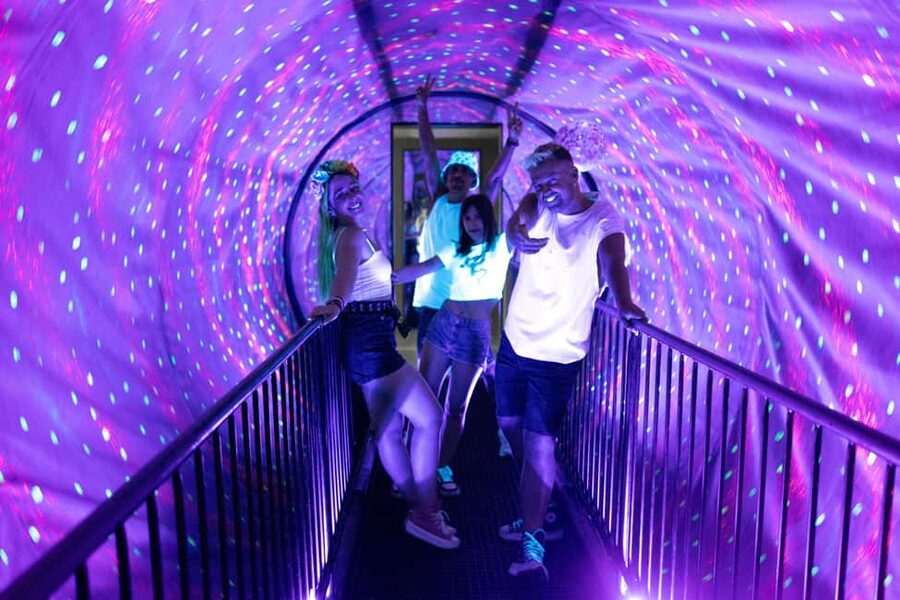
- Expect hands-on puzzles: The yellow moving cube, Einstein image, moving tunnel, and rotating-drum footbridge are among the memorable displays.
- Best for families and pairs: Children can play with the illusions while adults enjoy the visual tricks and explanations.
- Use Tirso de Molina station: The nearest Metro stop is Tirso de Molina on Line 1.
- Check accessibility carefully: The museum is listed as wheelchair accessible, but some exhibitions are not suitable for wheelchair users.
What the Museum of Illusions Madrid actually offers

This is not a traditional museum where you quietly study paintings behind a barrier. It is a compact series of optical and photographic illusions built to make you question what your eyes are reporting.
The displays aim to explain vision, perception, and the human brain through simple experiments. You may look at a picture that appears to change, walk through a space that seems to move, or try to understand why a fixed object appears to shift. The point is not just to look. You are encouraged to interact, test the effect, and work out how the trick functions.
I like that balance. The exhibits provide entertainment first, but many also give you a small lesson in how sight works. Younger children may simply enjoy the surprise, while older children and adults can think about perspective, balance, motion, and visual processing.
The museum is also built for photographs. Some displays are easier to understand once you see the picture taken from the correct position. Instructions help you frame the shot, so you do not need special photography skills. Still, your phone should be well charged before you arrive.
More museums:
- Madrid: Prado Museum Entry Ticket
★ 4.6 · 17,509 reviews - Barcelona: FC Barcelona Museum “Barça Immersive Tour” Ticket
★ 4.4 · 10,944 reviews - Madrid: Reina Sofía Museum Entrance Ticket
★ 4.5 · 6,889 reviews
A one-hour route through the exhibits
There is no long guided route or formal sightseeing schedule. You move from one installation to the next at your own pace, reading the short explanations and trying each effect.
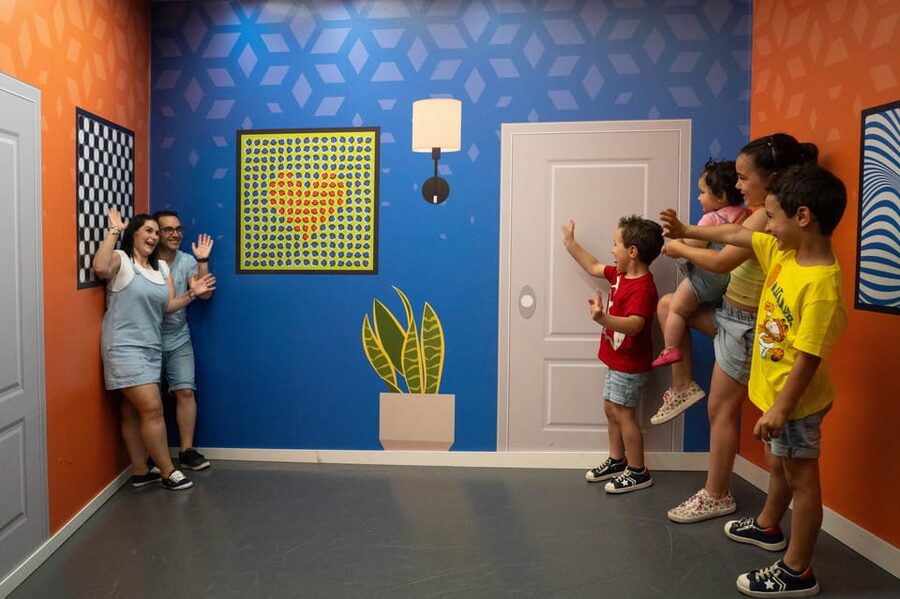
The first part helps you get used to the museum’s style. Instead of asking you to admire an object, each display asks you to participate. You may need to stand in a certain place, look from a certain angle, or use your camera to make sense of the scene.
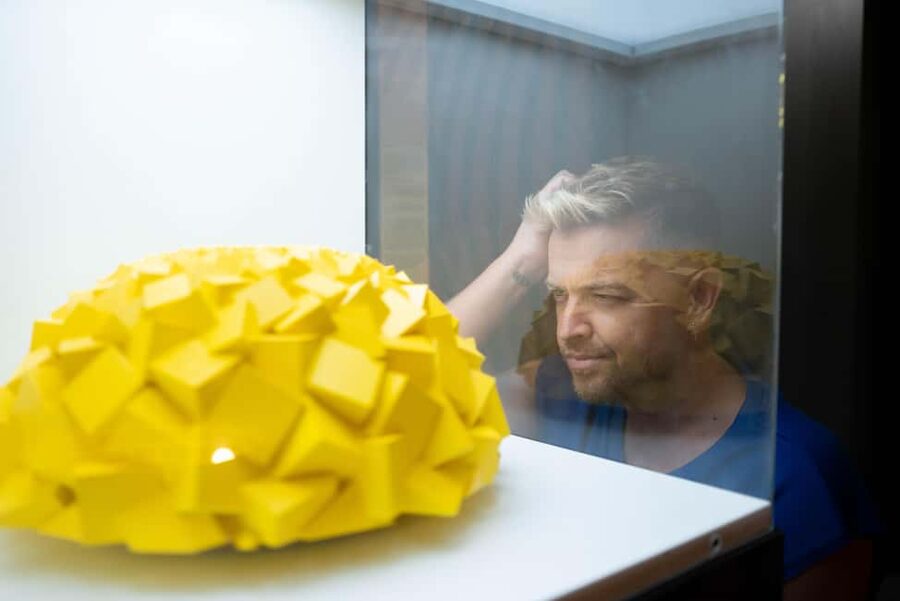
Among the specific displays noted by visitors is a yellow moving cube. It is a good example of what the museum does well: a simple object becomes visually confusing once movement and perspective come into play. The attraction is not its size or decoration. The fun comes from trying to figure out why your eyes read the cube in a particular way.
An Einstein picture is another named exhibit. Like many optical images, its effect depends on where you look and how your brain interprets the picture. It is the kind of stop that takes only a moment to view, but a little longer if you want to understand the visual trick and take a photo.
The moving tunnel creates a stronger physical sensation. A tunnel that appears to shift can make your balance feel uncertain, even when the floor beneath you is stable. This is one of the museum’s more memorable experiences because it turns an optical idea into something your body notices.
The footbridge in a rotating drum offers a different challenge. It was praised as an especially inventive example, and it gives you more than a flat picture or standard mirror trick. The apparent rotation changes how you judge the path, making the exhibit feel active and slightly mad in the best possible way.
You may also find that the displays appeal to different ages in different ways. A two-year-old may enjoy the colors and strange shapes, an eleven-year-old may want to solve the puzzle, and an adult may be more interested in the reason the illusion works. That range helps explain why families tend to get more from the visit than solo visitors.
Why photos are such a big part of the visit

Bring your phone, because taking pictures is not an extra feature here. It is part of the experience.
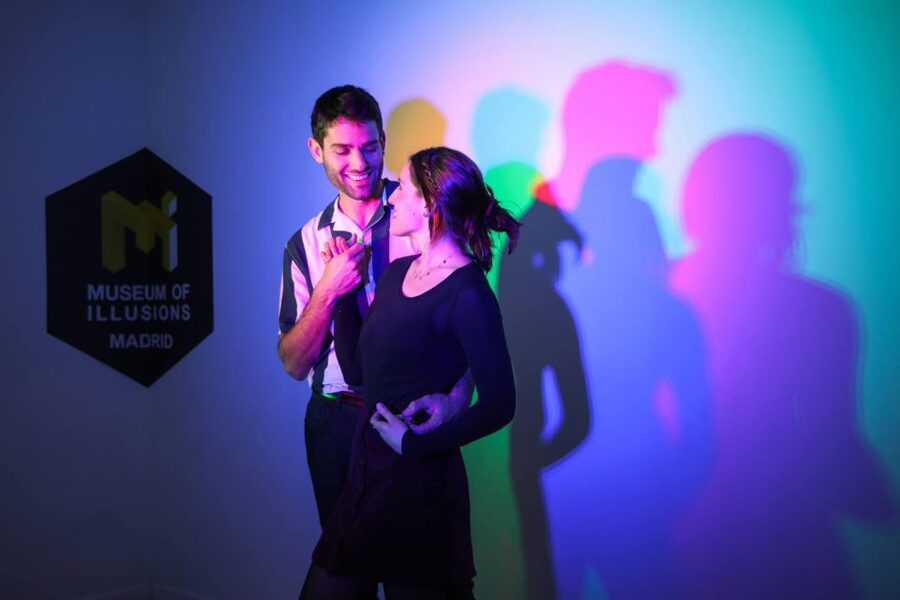
Several installations are designed to produce images that look impossible when viewed later. You might appear to change size, lose your sense of direction, or interact with a scene in a way that makes no ordinary physical sense. The museum provides instructions at photo points, which helps you understand where the photographer should stand and how the subject should pose.
This is where visiting with a partner or family group matters. A number of the displays work best with two or even three people. One person may need to pose while another takes the photo, and some effects are more amusing when you can watch someone else try them.
Solo visitors can still enjoy the exhibits. Staff may be able to take a picture at some points, but the experience is less convenient when you need to ask for help repeatedly. If you are traveling alone, expect more looking and experimenting, and fewer polished photos.
With friends or family, the museum becomes more social. You can compare what each person sees, repeat an illusion from a new angle, and laugh at the results. That makes the visit feel less like a short gallery stop and more like a shared activity.
How long should you allow?

The advertised duration is one hour, and that is a fair target if you read the explanations, wait for a photo spot, and try the installations properly.
Your actual visit may be shorter. Some people complete the museum in about 35 minutes, while others spend a full hour or a little more taking pictures and repeating favorite exhibits. The difference is not necessarily a sign that one person had a better experience. It depends on your pace, the size of your group, and how much time you give each illusion.
I would schedule one hour, but I would not build half a day around it. The museum is a useful short activity between larger Madrid sights, not a major all-morning attraction.
That limited length can work in your favor. Children may enjoy the museum without becoming tired, and adults can fit it into a day of sightseeing. It also makes a sensible hot-weather stop because you get an indoor activity without committing to several hours.
The drawback is value for fast visitors. At $17 per person, finishing in 35 minutes may leave you feeling that you paid for a small amount of entertainment. To make the ticket work harder, slow down, read the explanations, try each exhibit from the suggested position, and retake photos when the first attempt does not show the trick clearly.
A few more Spain trips worth a look
- Barcelona: Sagrada Familia Entry Ticket with Audio Guide
★ 4.6 · 105,312 reviews - Barcelona: Park Güell Admission Ticket
★ 4.4 · 76,534 reviews - Seville: Royal Alcázar Entry Ticket
★ 4.6 · 28,378 reviews - Seville: Cathedral and La Giralda Entry Ticket
★ 4.5 · 24,592 reviews
Is $17 good value?
At $17, this is not Madrid’s cheapest short attraction. The value depends heavily on how you visit.
For a family, the ticket can be worthwhile because several age groups can enjoy the same room. Parents can help younger children with the activities, older children can treat the displays as puzzles, and adults can take the photos. The museum also offers a practical change of pace from churches, galleries, and outdoor sightseeing.
For a couple, the price is easier to justify if you enjoy taking pictures and trying things together. The exhibits give you a reason to interact rather than simply walk through a room. A couple who rushes through every station may find the ticket less satisfying.
For a solo visitor, the value is more uncertain. You can still explore the illusions, but many photo opportunities are designed for groups. If your main goal is to collect unusual vacation pictures, the experience is stronger with companions.
The museum’s overall rating is 4.1 from 1,909 reviews, which fits the mixed value picture. The strongest praise focuses on clever illusions, family fun, good photographs, and an easy one-hour outing. The more critical comments are consistent too: the museum is smaller than expected, and some people want more exhibits for the price.
My advice is simple. Buy the ticket for the activity, not for a large museum building or a long cultural visit. If you value play, photos, and shared laughs, $17 is reasonable. If you want several hours of content, it is not the right choice.
The best age groups for this activity
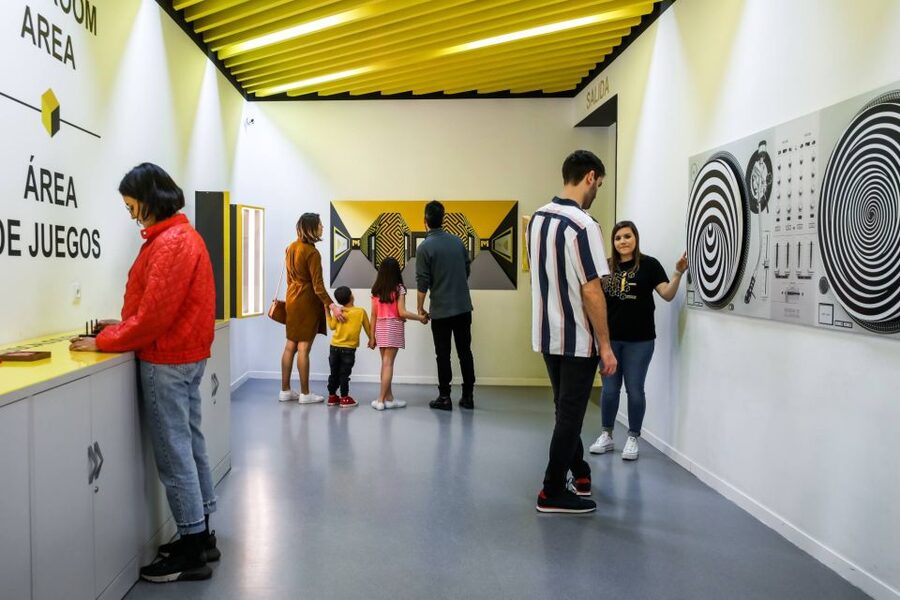
The Museum of Illusions works especially well for families with school-age children. A child who enjoys puzzles, visual tricks, or unusual photographs has plenty to investigate. One eleven-year-old was especially taken with the illusions, and younger children can also enjoy the bright, physical nature of the displays.
Toddlers may not understand the explanations, but they can still respond to the strange sights and interactive setups. The activity is short enough that it does not demand a long attention span.
Adults without children should not dismiss it as a kids-only attraction. The rotating-drum footbridge, moving tunnel, and photographic illusions can be surprisingly effective, especially when you stop to consider how your brain is interpreting the scene.
It also suits grandparents and mixed-age groups because nobody needs specialist knowledge. You do not have to know anything about science or art before arriving. You simply follow the instructions and see what happens.
Visiting as a couple, with friends, or alone
A pair is probably the ideal setup. One person can pose while the other takes the photo, then you can switch roles. You also get a second set of eyes for the puzzles, which often makes the illusions more entertaining.
Friends can make the museum lively without needing a lot of time. You can challenge one another to cross the apparent footbridge, compare photos, and see who reacts most strongly to the moving displays.
Families should take turns rather than letting one person rush through. Give children time to try each exhibit, then take the picture. The museum is more rewarding when you treat the displays as activities rather than a corridor to complete.
Solo visitors should go only if they are comfortable with a quieter, less photo-focused visit. Staff may help with pictures at times, but I would not count on every exhibit being easy to document alone.
Getting to Tirso de Molina
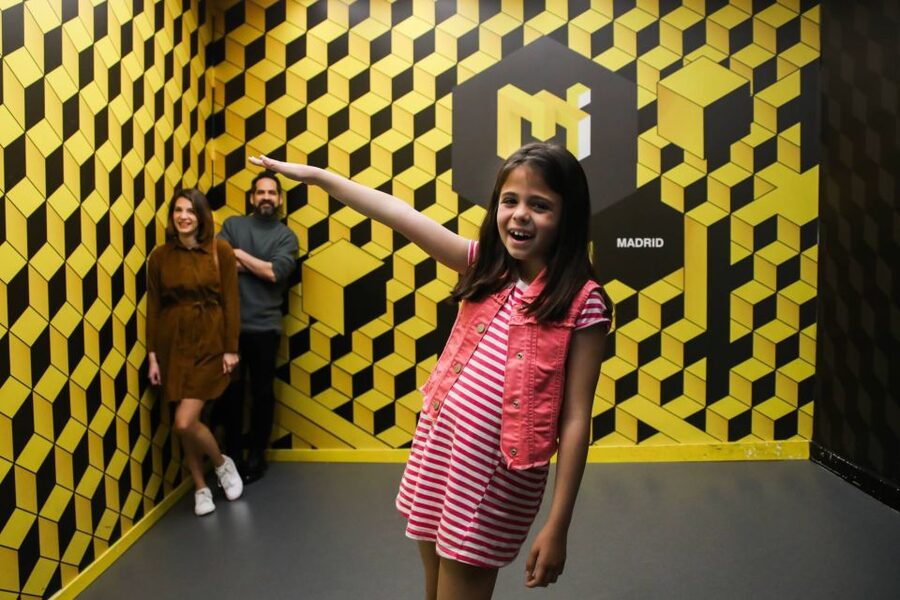
The museum is in the Community of Madrid, with Tirso de Molina the nearest Metro station. It is on Line 1, which makes the stop straightforward if you are already using Madrid’s Metro system.
The nearest bus stop is also Tirso de Molina, served by Lines 6, 26, 32, and M1. Having both Metro and bus options makes this a practical stop to pair with other central Madrid activities, though the provided details do not specify walking time from the station or bus stop.
The meeting point is the Museum of Illusions itself. You should go directly there rather than expect a city guide to lead you around Madrid. The host or greeter languages are Spanish and English.
For the smoothest visit, book before arriving. One important practical warning from the supplied information is that walk-ins may not be admitted, so an online ticket is the safer choice. Since the activity is non-refundable, check your date and starting time carefully before paying.
Accessibility and physical comfort
The experience is listed as wheelchair accessible, but the same information warns that some exhibitions are not suitable for wheelchair users. The separate suitability note also says it is not suitable for wheelchair users, so the accessibility wording is inconsistent.
If wheelchair access affects your decision, do not assume every display can be used. Confirm the current conditions with the provider before booking, particularly if you need to experience all exhibits rather than simply enter the museum.
The rotating tunnel and similar visual effects may feel disorienting for some people. The information does not specify medical restrictions, so I would use your own judgment and take each display at your own pace. You are allowed to look without forcing yourself to complete an attraction that feels uncomfortable.
Small groups and the pace inside
The activity is described as a small group experience limited to seven participants. That is useful for a museum built around photo spots because fewer people should make it easier to approach an exhibit and wait your turn.
Still, the museum is compact. A group of children can make certain stations feel crowded, even when the official group size is small. If you find a busy cluster at one display, hang back and use another section first. This simple tactic can make the visit calmer.
The flexible pace is one of the better features. You are not tied to a long lecture or a guide moving everyone from room to room. You can spend extra time with the exhibits you enjoy and pass more quickly through the ones that do less for you.
What to bring and how to get more from it
Charge your phone before you go. That is the most useful preparation because photos are central to the experience.
Try each exhibit from the marked position before deciding it is unimpressive. Optical illusions often fail when you view them from the wrong place. Read the instructions, stand where directed, and ask a companion to take the picture from the suggested angle.
Give the explanations a little time. The museum is more than a collection of strange photo backgrounds. Its value comes from showing how perception can disagree with physical reality.
If you are visiting with children, let them experiment first and explain later. The surprise is part of the fun. Then use the display to ask why the image or movement looked different from what was really there.
Who should book the Museum of Illusions?
Book it if you want a short, playful indoor activity with strong family appeal and plenty of photo chances. It is particularly suitable for couples, friends, and parents with children who enjoy puzzles or hands-on attractions.
Think twice if you expect a large museum, a lengthy visit, or a full cultural tour. The compact size means you may finish in under an hour, and $17 can feel steep for a quick walk-through.
My call: book it when you have the right company and a spare hour, especially on a hot day. Go slowly, use the photo instructions, and treat the exhibits as small experiments. With that approach, the museum offers good fun and memorable pictures. If you are alone, short on money, or seeking a serious art experience, spend your $17 elsewhere.
FAQ
How much does the Museum of Illusions Madrid ticket cost?
The listed price is $17 per person.
How long does the visit last?
The stated duration is one hour. Depending on your pace and the time you spend taking photos, you may finish in about 35 minutes or take roughly an hour.
Where is the Museum of Illusions Madrid?
It is located in the Community of Madrid, Spain. The meeting point is the Museum of Illusions itself.
Which Metro station is closest?
The nearest Metro station is Tirso de Molina on Line 1.
Which buses stop nearby?
The nearest bus stop is Tirso de Molina, served by Lines 6, 26, 32, and M1.
What languages are available?
The host or greeter languages are Spanish and English.
Is the museum wheelchair accessible?
The activity is listed as wheelchair accessible, but some exhibitions are not suitable for wheelchair users. The supplied information also lists the experience as not suitable for wheelchair users, so confirm access details before booking.
Can I cancel the ticket for a refund?
No. The activity is non-refundable.
Recently added around Spain
- Half-Day Luxury Catamaran Sailing Cruise in Granada★ 5.0 · 165 reviews
- Jeep Safari to Teide and Masca★ 4.5 · 165 reviews
- Madrid: Thyssen Museum Guided Tour with Skip-the-Line Entry★ 4.5 · 165 reviews
- Visit in Spanish to the Cathedral Mosque. Does not include entrance ticket★ 5.0 · 165 reviews
- Canyoning in Andalucia: Rio Verde Canyon★ 5.0 · 165 reviews
- Guided Tour to Caminito del Rey from Malaga★ 4.5 · 165 reviews
- VIP Private Segway Tour of Palma★ 5.0 · 165 reviews
- Las Palmas: Private Old City Guided Walking Tour with Tapas★ 4.6 · 166 reviews
Museums, compared.


FC Barcelona Museum “Barça Immersive Tour” Ticket
Read our review →

Park Güell and Gaudí House Museum Entry Ticket
Read our review →
Puro Flamenco Show with Optional Museum Ticket
Read our review →

Girona & Dali Museum Small Group Tour with Pick-up from Barcelona
Read our review →
Oceanogràfic, Hemisfèric & Science Museum Combo
Read our review →Browse the lists this tour appears in