
Review · WORKSHOPS
Guided Gaudí’s Trencadís Mosaic Workshop in Barcelona
Barcelona’s broken tiles tell a story. This hands-on workshop introduces you to Trencadís, the colorful ceramic mosaic style made famous by Antoni Gaudí, then lets you create a piece of your own. I like the friendly, patient instruction, and I like that your finished work becomes a personal souvenir rather than another shop-bought trinket. The main catch is timing: a one-hour session may feel rushed, especially if you choose a detailed design.
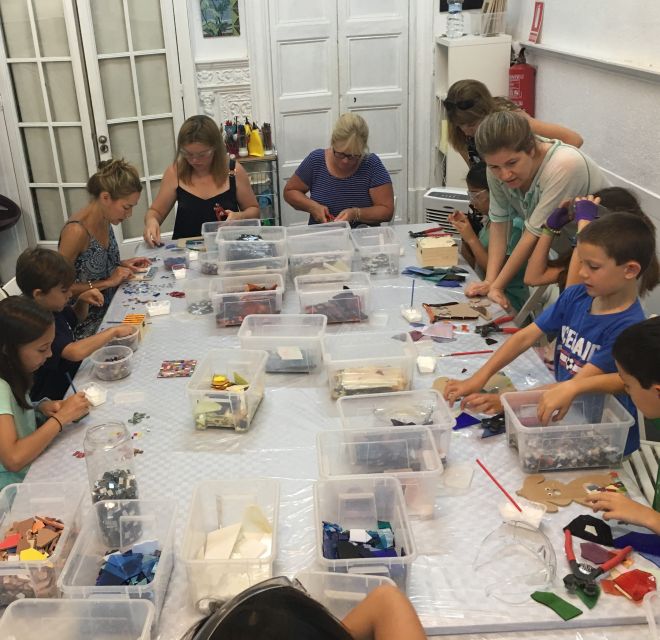
You’ll work with ceramic pieces, tools, safety goggles, and a form such as a photo frame, box, animal figure, or another shape. Children use pre-cut acrylic tiles, while those over age 10 may use regular ceramic pieces. Your work needs grout after the creative part, so you may need to collect it later that day or the next morning.
In This Review
- Key points to know before booking
- Why Trencadís makes a better souvenir
- Arriving near the Picasso Museum
- Choosing your project and planning the design
- Cutting ceramic pieces and working safely
- The creative work: where the class earns its price
- How long should you book?
- Grouting and collecting your finished piece
- A good family activity, with a few limits
- Sustainability and the local artistic connection
- Who should book this Barcelona workshop?
- Should you book the Trencadís workshop?
- FAQ
- Where does the Trencadís mosaic workshop take place?
- How much does the workshop cost?
- How long does the workshop last?
- Do I need previous mosaic experience?
- What can I make during the class?
- Are materials and tools included?
- Can children participate?
- When can I collect my finished artwork?
- Is the workshop wheelchair accessible?
Key points to know before booking
- Gaudí’s broken-tile method becomes your own artwork: You arrange colorful ceramic pieces into a personal design rather than simply watching a demonstration.
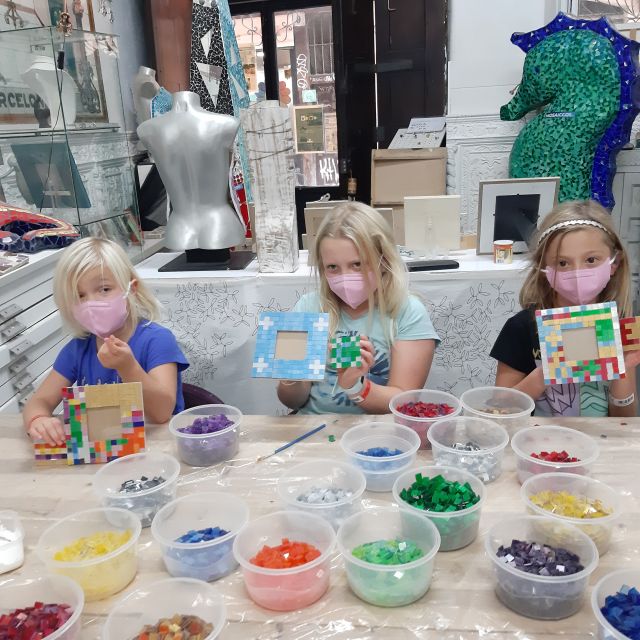
- A photo frame is a smart first project: It offers a useful shape and enough room for color patterns without making the task too complex.
- Allow more than one hour if you can: Two hours may still feel short for a careful design, while three hours gives you room to experiment.
- The studio is near the Picasso Museum: The meeting point at Carrer dels Assaonadors, 10, puts this activity in the old center of Barcelona.
- Your piece may need a second visit: Staff apply the grout after you finish, with pickup later the same day or the following day.
- It works well for families: Children can take part, and instructors are praised for giving extra help and time when needed.
Why Trencadís makes a better souvenir
Trencadís is not a neat grid of identical squares. It uses broken ceramic pieces arranged into patterns, pictures, and color fields. The method has a playful quality because the fragments are irregular, and the finished result depends on how you combine shapes, colors, and gaps.
That makes this more than a standard craft class. You get a small lesson in one of Barcelona’s most recognizable artistic styles, then put the idea to work with your own hands. I like that balance. You are not expected to produce a perfect copy of a Gaudí design, and you do not need art training to begin.
The class is guided, but the final choices are yours. You may choose a photo frame, box, animal figure, or another available shape. A salamander and penguin have been made in the class, along with photo frames and coasters. The range of finished objects means you can choose between something practical and something more decorative.
Your piece will not look factory-made, and that is part of the point. A slightly uneven line or an unexpected color pairing shows that you made it in Barcelona.
A few more Spain trips worth a look
- Barcelona Paella Cooking Class with Market Visit, Tapas & Sangria
★ 5.0 · 2,531 reviews - Barcelona: Cocktail Master Class by Mixologist with Tapas
★ 4.7 · 959 reviews - Barcelona: Paella Cooking Class with Market Visit and More
★ 4.9 · 711 reviews
Arriving near the Picasso Museum
The meeting point is Carrer dels Assaonadors, 10, in the 08003 district. It is about five minutes from the Picasso Museum, making the workshop easy to pair with a day in the old city.
This location matters for planning. You can place the class before or after a museum visit, though you should allow enough time for the workshop itself and the later pickup. Since your artwork may not be ready immediately, do not treat the class as a final activity just before heading to the airport unless you have confirmed the pickup arrangement.
The studio is wheelchair accessible, and small-group availability is offered. Instructors can work in Catalan, English, French, German, Spanish, Turkish, and Portuguese. That broad language choice helps if you are bringing family members who are more comfortable in a language other than English.
Arrive on time. The creative work may be flexible, but the scheduled start still matters, especially when other people are working beside you.
Choosing your project and planning the design
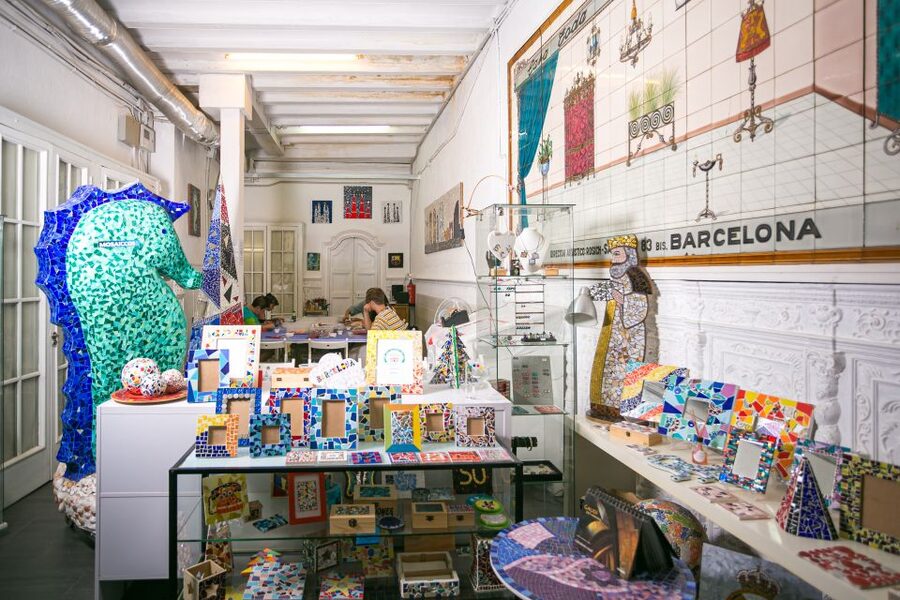
At the start, you are introduced to the tools, materials, and basic Trencadís method. You then choose what you want to decorate. The available object shapes can include frames, boxes, animals, and other forms.
This choice affects your whole session. A photo frame gives you a flat border and a clear working area. It is a good pick if you want a useful keepsake or if this is your first time handling tile pieces. Rounded animal shapes can look charming, but they require more care around curves and edges.
I would think about your color plan before you start cutting and placing pieces. You do not need a finished sketch, but a simple idea helps. You might use two or three main colors, create a repeating pattern, or build a loose picture. Without a plan, it is easy to spend too much time sorting pieces and not enough time fixing them in place.
The staff can help you make design choices, and the class allows you to change direction as you work. That freedom is useful, but it also means you should watch the clock if you book the shortest session.
Cutting ceramic pieces and working safely
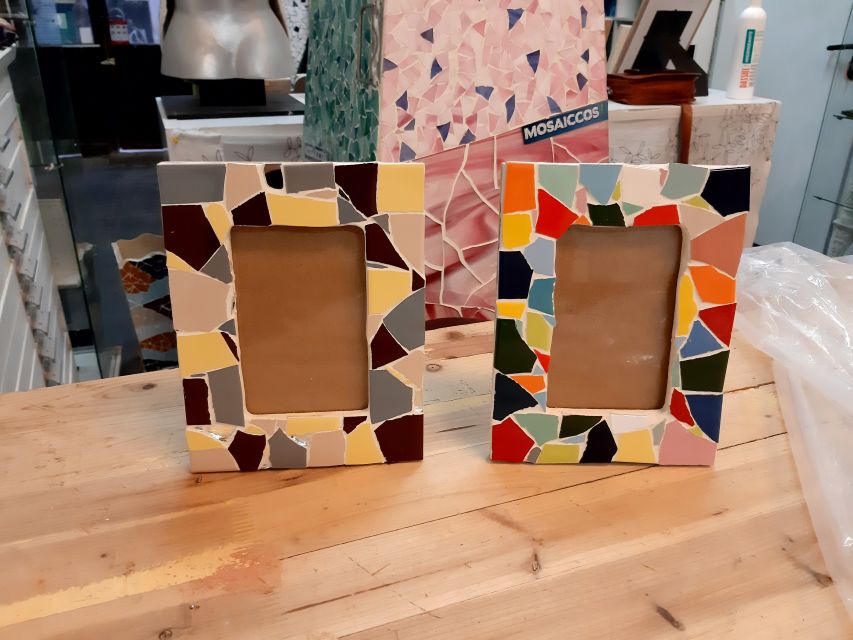
Materials and tools are included, including safety goggles, a ceramic cutter, ceramic pieces, and the object you decorate. The use of goggles is practical, since cutting tile is part of the normal process.
Ceramic cutting requires hand strength. One participant with an arthritic hand found the tile clippers difficult, while squared pieces were easier than rounded designs. That is an important point for anyone with hand pain, limited grip, or reduced dexterity. You can ask for help, but the task still involves handling the tools.
Children use pre-cut acrylic tiles. Children above age 10 may also work with standard ceramic pieces. The acrylic option makes the class more manageable for younger children, while older children can take on the same type of material used by adults.
I like that the class does not assume everyone wants the same level of challenge. A simple square pattern can be relaxing. A curved animal figure with small pieces demands more patience. Choose according to your hands, your age group, and how much time you have.
Food and drinks are not allowed in the workshop. Soft drinks are allowed, but meals and alcohol are not. Pets are not allowed, except for assistance dogs. The restrictions make sense around ceramic tools and small pieces, though you should eat before arriving if you expect to spend several hours there.
A completely different kind of day out in Barcelona:
- Barcelona: Sagrada Familia Entry Ticket with Audio Guide
★ 4.6 · 105,312 reviews - Barcelona: Park Güell Admission Ticket
★ 4.4 · 76,534 reviews - Barcelona: Casa Batlló Entry with Self-Audioguide Tour
★ 4.7 · 25,359 reviews - Barcelona: 24 or 48-Hour Hop-On Hop-Off Bus Tour
★ 4.4 · 20,872 reviews
The creative work: where the class earns its price
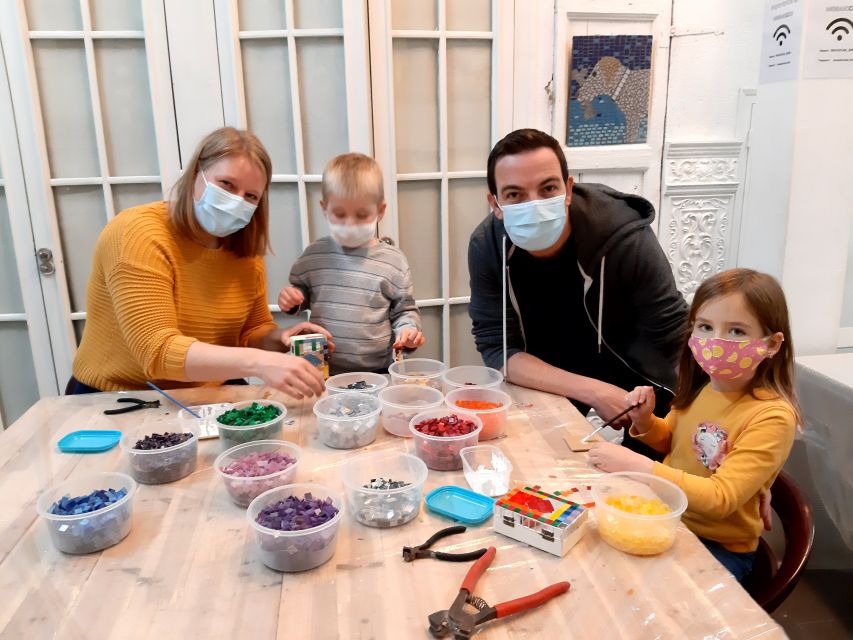
Once you begin arranging the pieces, the class becomes quiet, focused work. You test colors, adjust spacing, and decide which fragments fit your shape. Instructors guide you through each stage without taking over the design.
This is where the $35 price makes sense. You are paying for the class, materials, tools, safety equipment, and an object to decorate. A souvenir from a shop may cost less, but it will not carry your decisions or the memory of making it. On the other hand, this is not the cheapest way to spend an hour in Barcelona, especially if you choose the shortest booking and want a large or detailed object.
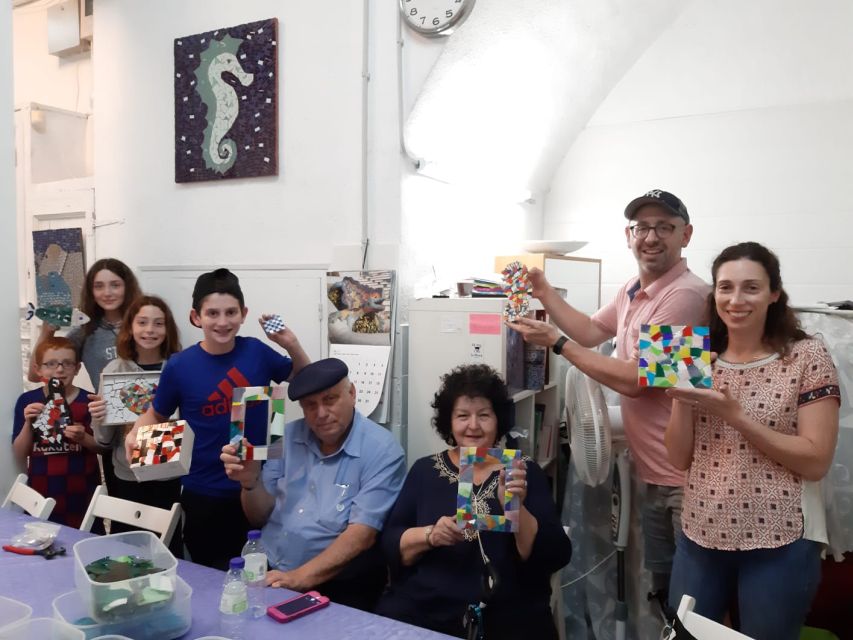
The strongest value comes when you use the session as a shared activity. A parent and child can work side by side. Two teenagers can choose different color schemes and compare the results. Three family members can each make a photo frame, creating a small set of matching but individual keepsakes.
The class has received especially warm praise for patient instruction. Melissa was described as friendly, funny, and helpful, and one family appreciated that the instructor gave extra time to children. Another parent said the instructor did not rush the group when the one-hour booking ended before the artwork was complete.
That flexibility is encouraging, but I would not count on unlimited extra time during a busy period. If your design matters to you, book three hours rather than hoping you can finish after the stated time.
How long should you book?
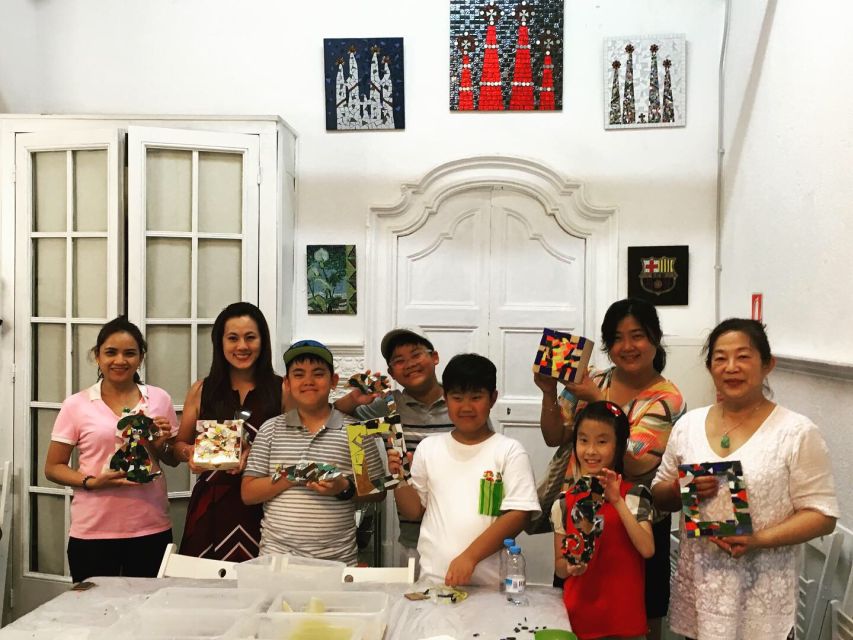
The listed duration ranges from one to four hours, with starting times available according to the date you choose. The right length depends on your object, your design, and your working speed.
Here is my practical guide:
- One hour: Suitable for a simple object, a basic color pattern, or a child using pre-cut acrylic pieces. It may not be enough for a detailed ceramic design.
- Two hours: A reasonable middle choice, but still potentially tight if you are making a curved shape or working carefully.
- Three hours: The safest choice for adults and older children who want time to experiment and finish without pressure.
- Four hours: Useful if you want a slower craft session or a more involved design.
One participant specifically found two hours too short and recommended three hours. Another booked one hour and was still working when the hour ended, though the instructors allowed extra time. That tells you something important: the listed time is not a reliable measure of how quickly your artwork will come together.
This is not a class where you simply decorate a ready-made item in ten minutes. Cutting, arranging, changing your mind, and filling gaps all take time.
Grouting and collecting your finished piece
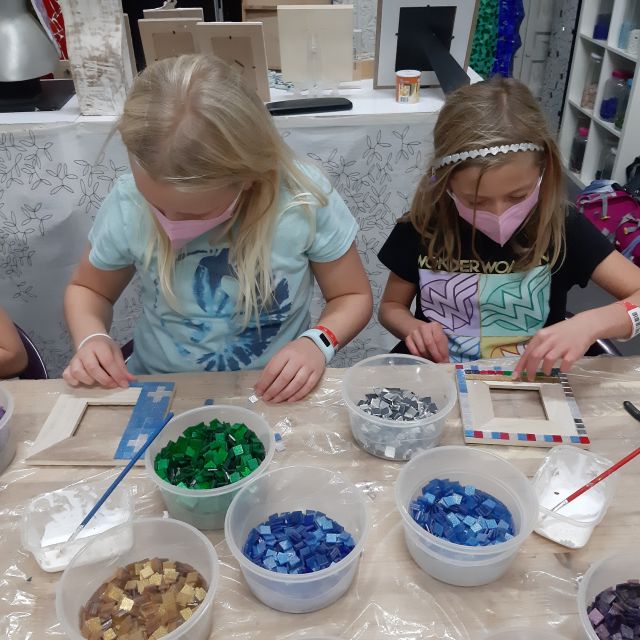
When you finish the creative work, staff apply the grout. Grout fills the spaces between the ceramic pieces and gives the artwork a more lasting finish. You do not leave with a fully finished object in your hands at the end of the class.
If your workshop takes place earlier in the day, the piece should be ready for pickup in the afternoon. If your session is later, pickup may be the following day. Delivery is not included.
Plan around this carefully. If you are staying several days in Barcelona, the collection process is simple enough. If you are leaving the next morning, check the timing before booking. One family managed to collect its pieces later the same day and pack them for a flight home the next day, but that timing may depend on the day’s workload.
The waiting period is a minor inconvenience, yet it protects the quality of the finished item. The staff can grout the piece properly instead of rushing the final step while you wait.
A good family activity, with a few limits
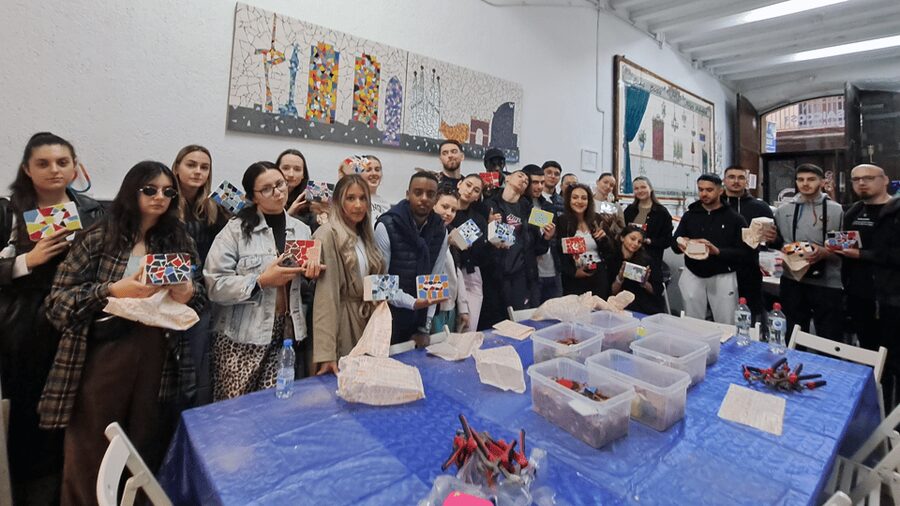
This class fits families particularly well because everyone can make a different object while sharing the same creative table. Children can use pre-cut acrylic tiles, and older children can try ceramic pieces. The instructors are used to helping participants who need more time or direction.
A seven-year-old may be able to enjoy the activity with support, based on the way families have used the class, but the provided guidance formally distinguishes younger children using acrylic from those above age 10 using regular ceramic. Parents should judge the child’s attention span and comfort with hand tools.
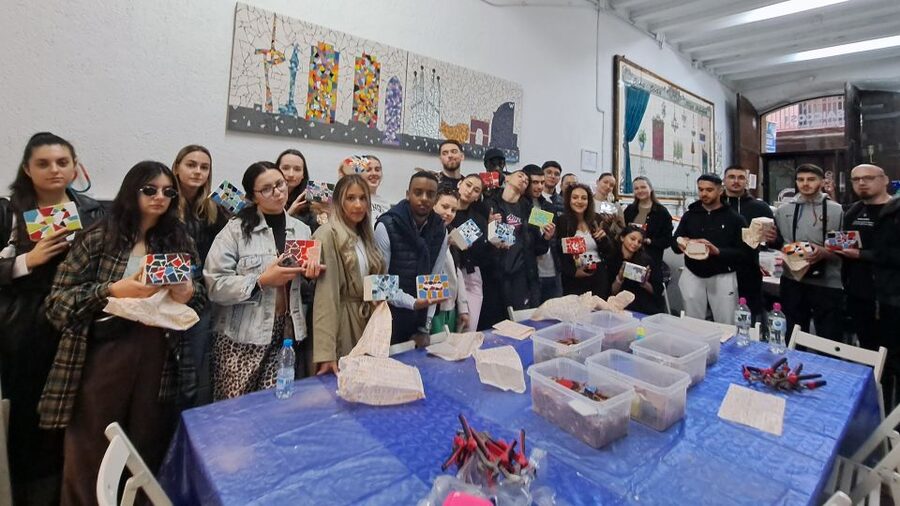
Teenagers are a strong match. They can make something personal without being treated like small children, and the result is easy to carry home. One parent and a thirteen-year-old son enjoyed working together and appreciated that no one was pushed out the door when the hour ended.
Adults who enjoy making things will also find plenty to do. If you dislike fiddly work, have hand pain, or want a quick activity with a guaranteed instant finish, this may test your patience.
Sustainability and the local artistic connection
The workshop holds BIOSPHERE Certification 2026 and presents itself as committed to responsible tourism and environmental respect. The activity also gives you a direct connection to a Barcelona art form instead of offering a generic craft with no local link.
That connection is the main reason I would choose this class over a standard souvenir-making session. You learn a technique associated with Gaudí, work with ceramic fragments, and leave with an object tied to the city’s visual identity.
The class does not turn you into a professional mosaic artist in a few hours. It gives you a friendly introduction and enough practice to understand why the method takes care. The real reward is the process and the personal result.
Who should book this Barcelona workshop?
I would recommend it to families, couples, friends, solo visitors who like hands-on activities, and anyone searching for a useful rainy-day plan. It is also a good break from museums and churches, since you spend the time making rather than only looking.
Book it if you want:
- A personal Barcelona souvenir
- A creative activity near the Picasso Museum
- A family class with several language options
- A guided introduction that does not require prior experience
- A small-group setting, when available
- Time to make a photo frame, box, animal, or similar object
Think twice if you have limited hand strength, need a finished souvenir immediately, or can spare only one hour for a detailed design. Avoid scheduling it just before departure unless pickup is confirmed.
Should you book the Trencadís workshop?
Yes, if you value a handmade keepsake and enjoy slow, practical creativity. At $35 per person, the price is fair because it covers instruction, tools, materials, safety gear, and the object you take home. The class becomes an especially good buy when you share it with family or friends.
I would book three hours for an adult ceramic project, arrive with a rough color idea, and choose a flat shape for your first attempt. The instructors are praised for patience, and that matters when your mosaic takes longer than planned. Just remember that grouting and pickup are part of the schedule.
For a quick photo stop, this is the wrong choice. For a personal piece of Barcelona made by your own hands, it is one of the more memorable ways to spend a few hours in the old city.
FAQ
Where does the Trencadís mosaic workshop take place?
The meeting point is Carrer dels Assaonadors, 10, 08003 Barcelona, Spain. It is about five minutes from the Picasso Museum.
How much does the workshop cost?
The price is $35 per person.
How long does the workshop last?
The available duration ranges from one to four hours. Starting times depend on availability.
Do I need previous mosaic experience?
No. The workshop is guided and designed for people with no prior experience.
What can I make during the class?
Possible projects include a photo frame, box, animal figure, coaster, or another available shape.
Are materials and tools included?
Yes. The class includes the mosaic materials and tools, including safety goggles, a ceramic cutter, and the object you decorate.
Can children participate?
Yes. Younger children work with pre-cut acrylic tiles. Children above age 10 may also work with regular ceramic pieces.
When can I collect my finished artwork?
Your artwork may be ready in the afternoon if you attend earlier in the day. An afternoon workshop may require pickup the following day.
Is the workshop wheelchair accessible?
Yes. The activity is wheelchair accessible and small-group availability is offered.
Recently added around Barcelona
- Intro Segway Tour Barcelona 1h★ 4.9 · 166 reviews
- Barcelona: Bike or eBike Tour, Top Sights & Local Insights★ 4.9 · 166 reviews
- Instagram Photoshoot Tour in Barcelona★ 5.0 · 167 reviews
- Artisan Ceramic Making Experience★ 5.0 · 168 reviews
- Barcelona: Big Fun Museum Ticket★ 4.2 · 169 reviews
- Gaudi’s Crypt in Colonia Güell with Audioguide★ 4.4 · 170 reviews
- Sagrada Familia Evening Private Tour with Expert Guide★ 4.5 · 170 reviews
- Las Golondrinas Barcelona 60-min Boat Tour★ 4.0 · 170 reviews
Workshops, compared.

Barcelona Paella Cooking Class with Market Visit, Tapas & Sangria
Read our review →
Spanish Cooking Class Paella Tapas and Sangria in Madrid
Read our review →
Paella and Sangria Workshop in the City Center
Read our review →
Paella Cooking Class, Wine Tasting & Central Market in Valencia
Read our review →
Group Surfing Lesson at Playa de las Américas, Tenerife
Read our review →
Paella Cooking Class in Madrid with Bottomless Wine Pairing
Read our review →
Playa de las Américas: Private or Small-Group Surf Lesson
Read our review →Browse the lists this tour appears in