
Review · GRAN CANARIA TOURS
Gran Canaria: Rural Villages Guided Sightseeing Tour
Mountains, villages, and sea views fill one long day. This eight-hour panoramic tour gives you a practical way to see Gran Canaria beyond the southern resorts, with hotel pickup, an air-conditioned vehicle, and a guide who explains the island as you go. I especially like the mix of high mountain viewpoints and small village stops, plus the chance to see the cave houses of Artenara. The main drawback is the pace: you cover a lot of ground, and several stops are brief.
I also like that the day includes both famous sights and less obvious corners, from the dunes near Maspalomas to banana plantations and the rough north coast. Guides such as Kevin, Fabio, Uwe, Jan, Charles, and Fabrice have been praised for clear explanations, humor, and careful driving on winding roads. Still, this is not the right outing if you want long walks, quiet museum visits, or a flexible private itinerary.
In This Review
- Key reasons to consider this Gran Canaria tour
- Why this is a useful first look at Gran Canaria
- Starting near Maspalomas and the famous dunes
- Fataga gives you a short village pause
- San Bartolomé de Tirajana and the climb inland
- Tejeda combines views, village streets, and almond treats
- Artenara and Gran Canaria’s cave houses
- Monte Pavon Mirador and the optional Canarian lunch
- Through Fontanales and the Laurel wood
- Moya, the north coast, and the sound of the sea
- What the guide adds to the long drive
- Is eight hours too long?
- Who will get the most from the $83 price?
- What to bring and how to prepare
- Should you book this rural villages tour?
- FAQ
- How long does the Gran Canaria rural villages tour last?
- Where does the tour pick up passengers?
- Is hotel pickup and drop-off included?
- Which villages does the tour visit?
- Is lunch included in the tour price?
- What languages are available?
- Is the tour suitable for people with mobility impairments?
- Can I bring luggage or a large bag?
- What happens if it rains?
Key reasons to consider this Gran Canaria tour
- A true island cross-section: You move from the dry south and Maspalomas dunes through mountain villages to the cooler north coast.
- Tejeda and Artenara provide the cultural heart: Tejeda offers an old center and almond treats, while Artenara is known for its remarkable cave homes.
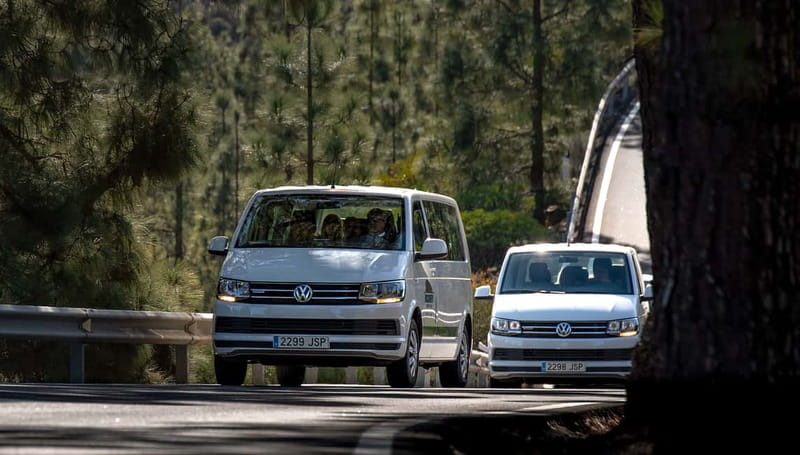
- Comfortable transport matters: The air-conditioned vehicle is a welcome feature on a full day of mountain roads, especially compared with open jeep excursions.
- The optional lunch adds local flavor: At Monte Pavon Mirador, you can stop for a Canarian meal, though lunch, tastings, and drinks cost extra.
- The guides are a major strength: The best feedback centers on their humor, island knowledge, multilingual skills, and smooth driving.
- Bring a coat for the north: The south can feel warm, while the mountain and north coast portions may be cooler and breezier.
Why this is a useful first look at Gran Canaria
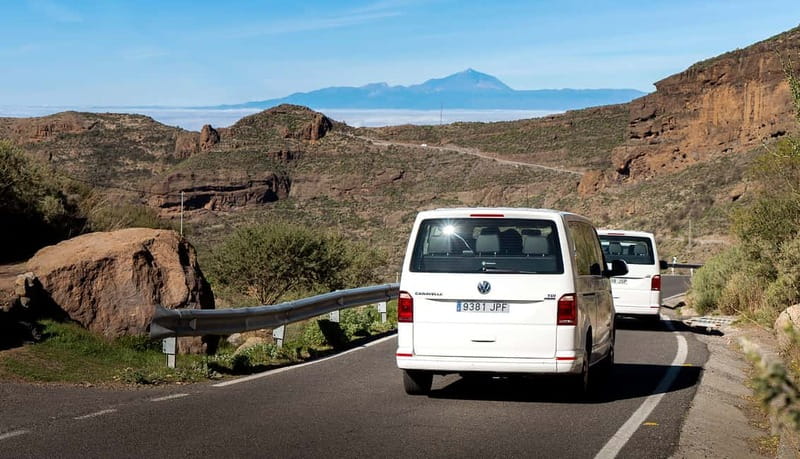
Gran Canaria is easy to misunderstand if you stay only around Maspalomas, Playa del Inglés, or Puerto de Mogán. The southern resorts are sunny and dry, but the middle of the island rises quickly into steep valleys, pine covered slopes, and small settlements. The north is greener in places and often feels cooler, with a stronger connection to farming and village life.
This excursion is built around that contrast. You spend much of the day in a vehicle, but the road itself is part of the experience. You will see the island change as you climb from the coast into the interior, then cross toward the north before returning south on the highway.
At $83 per person, the value comes from combining transport, guiding, viewpoints, and several villages in one day. Renting a car could offer more freedom, but mountain driving, tight bends, navigation, and parking can make that tiring. A taxi based day would cost far more. The tradeoff is that you do not control the timing, and the group schedule can leave only a short window in each village.
Pickup and drop-off are available from many hotels and meeting points in southern Gran Canaria. The exact time and place are confirmed after booking, so you should not assume every hotel entrance works as a pickup point. Large bags and luggage are not allowed, and the tour is not suitable for people with mobility impairments or electric wheelchairs.
A few more Spain trips worth a look
- Poema del Mar Skip-the-Line Ticket
★ 4.8 · 3,856 reviews - Puerto de Mogán: Submarine Tour
★ 4.4 · 3,792 reviews - Maspalomas: Guided Camel Ride in the Maspalomas Sand Dunes
★ 4.4 · 3,690 reviews
Starting near Maspalomas and the famous dunes
The day begins in the south, with pickup from a long list of hotels around Maspalomas, San Agustín, Playa del Inglés, Meloneras, Amadores, Mogán, and nearby areas. After a safety briefing, you have a photo stop around Maspalomas before the road turns inland.
The first major viewpoint is Mirador las Moscas. This is where the famous sand dunes come into the picture. The dunes are one of Gran Canaria’s best known sights, but you are not spending the morning walking across them. Instead, you get a wider view and a useful introduction to the dry southern side of the island.
Have your camera ready, but keep expectations sensible. This is a panoramic stop rather than a long beach outing. If the dunes are your main reason for booking, plan a separate visit on another day.
Fataga gives you a short village pause
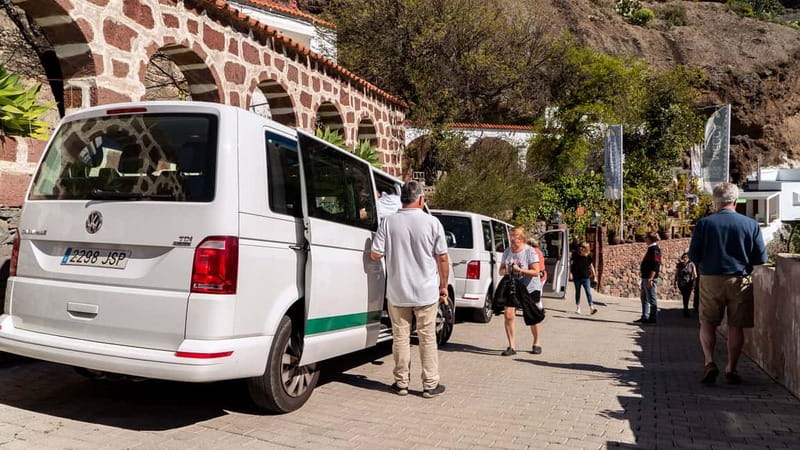
The road continues to Fataga, a small settlement in a dramatic valley. You get around 20 minutes here for photographs, a quick look around the old center, a restroom break, or a local coffee.
That limited time tells you what kind of tour this is. Fataga is a taste of village Gran Canaria, not a slow morning spent browsing every lane. I like the stop because it breaks up the drive early in the day, and the old center gives you a feel for the island’s traditional architecture.
You may wish you had longer, especially if you enjoy taking photographs or stopping for coffee. Still, the brief pause is useful because the rest of the itinerary reaches more substantial village visits later.
San Bartolomé de Tirajana and the climb inland
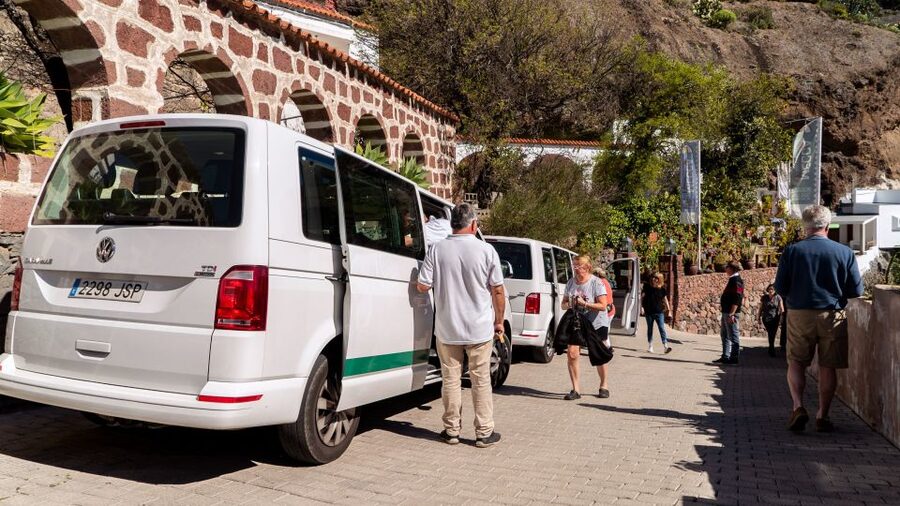
From Fataga, the route continues through San Bartolomé de Tirajana and toward Ayacata. The drive is scenic, with the road climbing through the island’s interior. This section is less about a single attraction and more about watching the terrain change outside the windows.
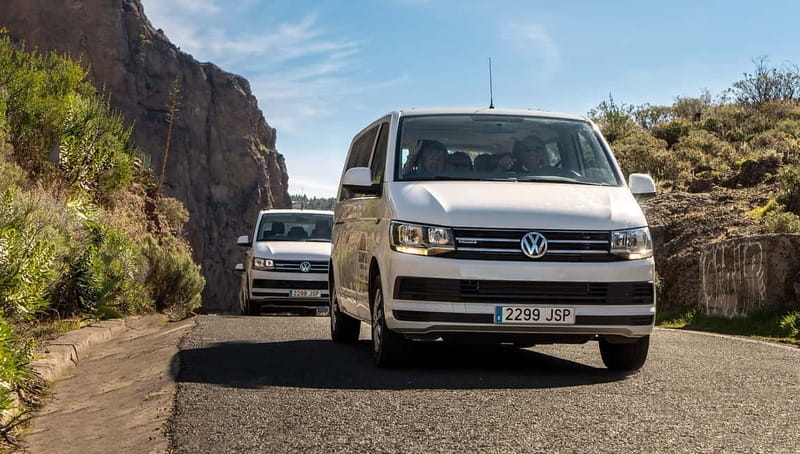
The bends are a real part of the day. Several people have specifically praised the drivers for handling the winding roads well, which matters when you are riding mountain routes for hours. If you are prone to motion sickness, sit where you can see the road ahead, bring water, and avoid a heavy breakfast.
The air-conditioned van is another practical plus. The vehicle keeps you more comfortable during warm spells, while the mountain portions can still feel cool. One useful tip is to pack a light coat, particularly for the north side.
A completely different kind of day out in Gran Canaria:
- Guided tour of the Banana World
★ 5.0 · 3,431 reviews - From Puerto Rico de Gran Canaria: Dolphin Watching Cruise
★ 4.3 · 2,520 reviews - Gran Canaria: Dolphin and Whale Watching Cruise
★ 4.3 · 1,855 reviews - Gran Canaria Guided Buggy Tour
★ 4.7 · 1,743 reviews
Tejeda combines views, village streets, and almond treats
Tejeda is one of the day’s main stops, with roughly 40 minutes for a visit, photographs, sightseeing, and a break. It is described as the antique center, and this is where the tour feels more anchored in village life rather than simply stopping at a viewpoint.
You can walk through the older part of town and visit a well-known almond bakery. Local almond products are among the small food experiences that give the trip more character. Tastings are not included, so carry some spending money if you want to try local products.
Tejeda is also a good place to appreciate the island’s high interior. The village sits in a mountainous setting, and the surrounding views are a sharp contrast to the flat resort zone in the south. Forty minutes is enough for a quick look and a snack, but not enough for an extended walk or a relaxed meal.
This is a recurring theme throughout the day. The tour helps you understand where places are and why they matter, but it does not let you settle into each one. If you want to photograph every angle of Tejeda, you would be happier returning independently.
Artenara and Gran Canaria’s cave houses
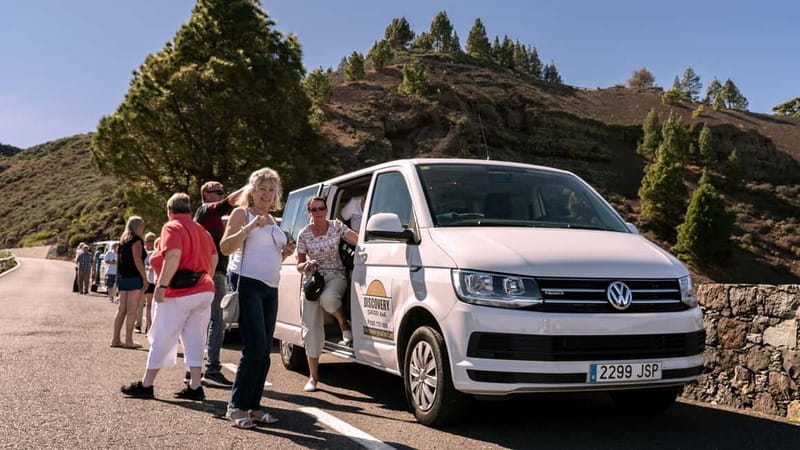
Artenara is another major stop, with about 40 minutes for a guided visit, walking, photographs, and free time. The village is especially known for its cave houses, one of Gran Canaria’s most distinctive attractions.
These homes are built into the rock rather than simply placed on top of it. The result is unlike the resort architecture farther south, and it gives you a direct look at how people adapted to the island’s rugged interior. The cave houses are not just a photo background. They help explain the practical side of life in the mountain communities.
The guided element is useful here. A guide can point out what you are seeing and add context that would be easy to miss if you only arrived for a quick photograph. Several guides have been praised for explaining the island’s geology, plants, history, and daily life in a way that is easy to follow.
Artenara is also one of the places where the tour feels most rewarding for first time visitors. You see something specific and unusual, not just a scenic overlook. Again, the stop is short, so keep your walk focused.
Monte Pavon Mirador and the optional Canarian lunch
The route then turns toward Fontanales and Monte Pavon Mirador. This stop combines scenery with the option of a Canarian lunch. You can sit down for the meal, take photographs, and look toward Las Palmas and Tenerife from the viewpoint.
Lunch is not included in the $83 price, nor are tastings or drinks. That keeps the basic fare clear, but you should budget extra if you want to eat. One useful point from the food feedback is that the meal can offer good value, with options such as tapas and tuna steak mentioned positively.
There is one limitation: the choice of where to eat may be restricted by the group schedule. If you have strict dietary needs, ask about the available lunch choices before booking rather than assuming a broad menu.
The setting makes this more than a simple fuel stop. After several hours of driving and short visits, sitting down gives you a chance to rest. The view toward Las Palmas and Tenerife also provides a different angle on the island, particularly if the air is clear.
Through Fontanales and the Laurel wood
After lunch, the route continues through the Fontanales area and along roads passing through Laurel wood. This portion adds a greener note to a day that began among the dry dunes.
You will notice how quickly Gran Canaria changes over a relatively short distance. The interior and north are shaped by altitude, cloud, and farming, while the southern coast has a warmer, drier feel. The guide’s commentary is valuable here because the scenery changes constantly and there is no single major attraction to explain what you are seeing.
This is also a section where the tour’s road-based format works well. You can watch the views without worrying about navigation. The drawback is that some of the best scenery may pass by between scheduled photo stops, so keep your camera close and do not expect to stop at every viewpoint.
Moya, the north coast, and the sound of the sea
The itinerary includes a stop or scenic passage around Moya, with time for photographs and views. Depending on the exact running order, you may spend part of this section looking at the village and part simply passing through the surrounding countryside.
The north coast brings another change. The tour follows the coast past banana plantations and stops near the rough North Sea, where waves strike the shore. This is not the gentle, resort style coast you see around the south. The water and cliffs feel more forceful, and the stop adds drama after the quieter mountain villages.
You should bring that light coat here. The north can feel cooler than Maspalomas, and wind near the sea may make the temperature drop quickly. The stop is mainly for scenery and photographs, so wear comfortable clothes and shoes rather than dressing for a beach day.
A short section through Las Palmas gives you an urban contrast before the return journey. The tour does not promise a full city visit, so think of Las Palmas as part of the drive and the wider island view, not a substitute for a dedicated city tour.
What the guide adds to the long drive
The guide can make or break a day like this. You are in a vehicle for long stretches, often on winding roads, and the commentary needs to keep the journey useful without becoming exhausting.
The strongest guide feedback centers on people such as Kevin, Fabio, Jan, Uwe, Charles, Fabrice, Ian, Louis, Jose, and Yan. Kevin is repeatedly described as funny and energetic, while Fabio is praised for explaining island history clearly and even switching between languages for different people in the vehicle. Fabrice has been praised for covering historical, geological, and botanical subjects and for adjusting the day when some sights were closed.
Guide assignments can change, so you should not book on the assumption that one particular person will lead your outing. Still, the repeated praise for humor, clear narration, multilingual ability, and driving suggests that guiding is a central strength of the experience.
The language options are English, German, Italian, Spanish, and French. The tour may include people using different languages, so commentary could take longer when the guide switches between them. That is helpful for a mixed group, but it may reduce the amount of uninterrupted explanation in any one language.
Is eight hours too long?
For an island tour covering the south, interior, north, and return route, eight hours is a fair amount of time. You see a strong range of scenery without having to organize several separate outings.
The day may feel long if you dislike vehicle tours or find mountain bends uncomfortable. The stops are generally short, and the schedule gives you snapshots rather than deep visits. On the other hand, the steady movement prevents the excursion from becoming repetitive. Every section offers a different setting: dunes, valley villages, high roads, cave houses, plantations, forest, and sea.
I would treat this as an orientation day. It helps you decide where you might want to return later, especially Tejeda, Artenara, or the north coast. It is not designed for a slow, intimate exploration of any one village.
Who will get the most from the $83 price?
I think the tour suits you best if you are staying in southern Gran Canaria and want to see the island’s interior without driving. It is also a good choice for couples, solo visitors, and families with older children who value scenery and explanation more than beach time.
The price is reasonable for an eight-hour outing with hotel pickup, drop-off, an air-conditioned vehicle, and a live guide. You still need to pay for lunch, drinks, and tastings, but the optional format lets you control some of the final cost.
You should think twice if you use a wheelchair, have significant mobility limitations, or need a great deal of personal space. The tour includes walking at village stops, getting in and out of a vehicle, and roads with many bends. Large bags are not allowed, and the excursion runs in rain or shine.
Free cancellation is available up to 24 hours before departure, and you can reserve now and pay later. Those policies are useful if your holiday plans are still shifting, but the bigger decision is whether you enjoy a full day with a fixed route.
What to bring and how to prepare
Keep your day bag small. Large bags and luggage are not allowed, so bring only what you need for the road and short village walks.
Pack:
- Comfortable clothes and walking shoes
- A light coat for the highlands and north coast
- Water and any personal essentials
- A camera or phone for viewpoints, dunes, villages, and waves
- Extra money for lunch, drinks, and local tastings
Because the weather can change between the south and the mountains, simple layers are more useful than heavy beach clothing. The tour operates rain or shine, so check the forecast but do not assume a cloudy morning means cancellation.
Should you book this rural villages tour?
Book it if you want the broadest practical introduction to Gran Canaria in one day, especially without renting a car. The combination of Tejeda, Artenara’s cave houses, Fataga, mountain viewpoints, Fontanales, banana country, and the north coast gives you a far better sense of the island than staying around the southern beaches.
Skip it if you want long, unhurried village visits or a private route built around your own interests. For most first time visitors based in the south, though, $83 is a fair price for the transport, scenery, commentary, and variety. Bring a coat, expect a few tight bends, keep your bag light, and allow the day to show you how much Gran Canaria changes from one side to the other.
FAQ
How long does the Gran Canaria rural villages tour last?
The tour lasts eight hours, including transportation, village visits, scenic drives, photo stops, and the return trip.
Where does the tour pick up passengers?
Pickup is available from many hotels and meeting points in the south of Gran Canaria, including areas around Maspalomas, Playa del Inglés, San Agustín, Meloneras, Amadores, and Mogán. The exact pickup time and location are confirmed by the supplier.
Is hotel pickup and drop-off included?
Yes. Hotel pickup and drop-off are included for the listed southern Gran Canaria locations.
Which villages does the tour visit?
The route includes Fataga, San Bartolomé de Tirajana, Tejeda, Artenara, and areas around Fontanales and Moya. It also includes scenic sections near Maspalomas, Las Palmas, and the north coast.
Is lunch included in the tour price?
No. Lunch, tastings, and drinks are not included. An optional Canarian lunch is available during the stop at Monte Pavon Mirador.
What languages are available?
The live tour guide service is available in English, German, Italian, Spanish, and French.
Is the tour suitable for people with mobility impairments?
No. The tour is not suitable for people with mobility impairments, and electric wheelchairs are not allowed.
Can I bring luggage or a large bag?
No. Luggage and large bags are not allowed. Bring only a small personal bag with essentials for the day.
What happens if it rains?
The tour operates rain or shine. Comfortable clothing and a light outer layer are sensible because conditions can differ between the south, mountains, and north coast.
Recently added around Gran Canaria
- Las Palmas: Private Old City Guided Walking Tour with Tapas★ 4.6 · 166 reviews
- 2-Hour Dolphin and Whale Watching in Gran Canaria★ 4.0 · 166 reviews
- Arucas, Teror, Viewpoint Roque Nublo – Highlights Gran Canaria★ 4.5 · 170 reviews
- Sioux City Park Entrance Ticket★ 4.5 · 171 reviews
- Firgas, Tejeda, Guayadeque – VIP Tour Gran Canaria★ 4.5 · 173 reviews
- Can-am Ryker three wheels tricycle Mountain Tour (Maspalomas)★ 5.0 · 175 reviews
- Sailing Trip and Snorkeling (max. 8 people)★ 5.0 · 181 reviews
- Guided Tour at Ron Arehucas Distillery★ 4.5 · 192 reviews
Gran Canaria Tours, compared.


Maspalomas: Guided Camel Ride in the Maspalomas Sand Dunes
Read our review →

From Puerto Rico de Gran Canaria: Dolphin Watching Cruise
Read our review →
El Salobre: Horse Riding Adventure with Transfer Options
Read our review →Browse the lists this tour appears in