
Review · TENERIFE TOURS
Costa Adeje | Cetacean sighting in Tenerife South
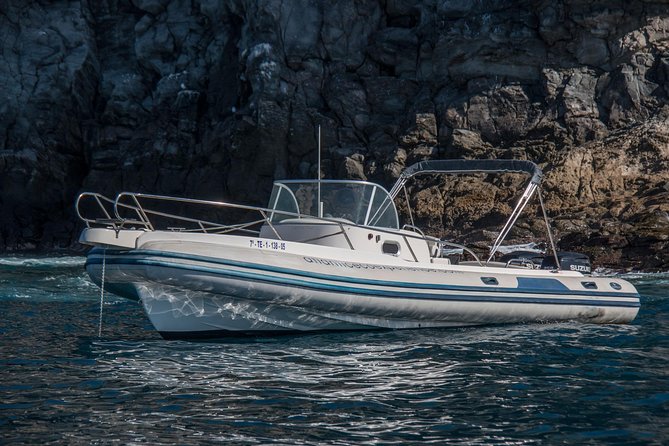
Whales can turn a holiday morning into a story. From Costa Adeje, Atlantic Eco Experience takes you along Tenerife’s south coast aboard Papacho 2, a low boat limited to 10 people. I like the small-group setting, which lets you ask real questions, and the careful wildlife policy, including switching off the engines near cetaceans.
I also like the hydrophone, which lets you hear whales communicating below the surface. Guides David, Mirna, Marina, and others are praised for making marine biology clear and lively, often using identification photographs to recognise local pilot whale families. The main consideration is the sea itself: sightings are never guaranteed, and rough water can affect comfort, especially if you suffer from motion sickness.
In This Review
- Key details before you book
- A small boat with a serious purpose
- Why Tenerife’s south coast attracts whales
- What the 2.5-hour route feels like
- Pilot whales, dolphins, turtles, and seabirds
- The people make the trip
- Is $71.35 good value?
- Comfort, sun, and motion sickness
- Who will enjoy this experience most?
- Booking, timing, and cancellation
- Should you book Atlantic Eco Experience?
- FAQ
- Where does the cetacean tour start?
- Where does the tour finish?
- How long is the experience?
- How many people can join the boat trip?
- What animals might I see?
- Is the tour available in English?
- What happens if the weather is poor?
Key details before you book
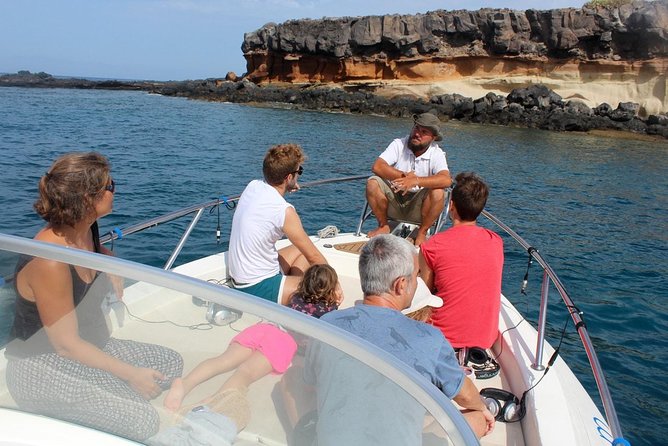
- Only 10 people maximum: You get a much quieter trip than on the large sightseeing boats operating from Puerto Colón.
- Hydrophone listening stop: The boat can pause and lower an underwater microphone so you hear whale sounds, not just see them.
- Marine biology at sea: Guides explain pilot whales, dolphins, turtles, seabirds, conservation, and animal behaviour as you watch.
- Engines are switched off near wildlife: The crew waits and lets animals choose their distance rather than chasing them.
- Two and a half hours on the water: This gives you time to search, watch, listen, and move between sightings without turning the outing into a rushed photo stop.
- Price is $71.35 per person: That is a fair price for a small, specialist trip, particularly if you value expert guiding over food, music, or a party atmosphere.
A small boat with a serious purpose
The tour begins at Av. de Colón, 4, at Puerto Colón Marina in Costa Adeje. The meeting point is easy to find, and some booking details identify the departure area as Gate 4. You return to the same place after roughly two hours and 30 minutes.
The boat is Papacho 2, with a maximum of 10 passengers. That number matters. You are not trying to peer over 50 heads or wait for a guide to reach you from the other end of a crowded deck. A group of four passengers plus two crew members has been reported, though you should expect the official maximum rather than count on a nearly private outing.
The boat sits close to the water, which gives you a direct view when a pilot whale surfaces nearby. That low position also means the sea feels more immediate. You may get excellent animal-level views, but you are more exposed to spray, sun, and movement than you would be on a large, high-sided vessel.
Your marine biologist guide gives an introduction to the animals found around Tenerife and explains why this part of the coast supports cetaceans. The tone is educational, but not stiff. David is often praised for his humour and storytelling, while Mirna and Marina are noted for their calm boat handling, photography, and care around the animals.
A few more Spain trips worth a look
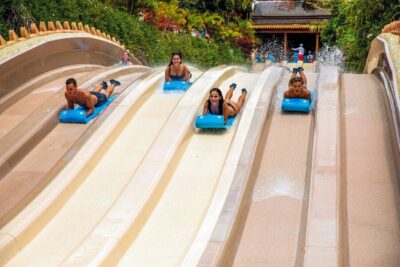
- Siam Park Entry Tickets
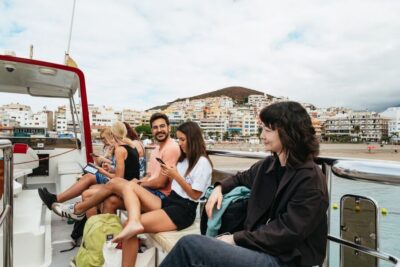
★ 4.5 · 15,710 reviews - Tenerife: Eco-Yacht Whale and Dolphin Watching and Swimming
★ 4.7 · 15,619 reviews - Los Cristianos Respectful No-Chase Whale and Dolphin Safari
★ 4.6 · 12,782 reviews
Why Tenerife’s south coast attracts whales
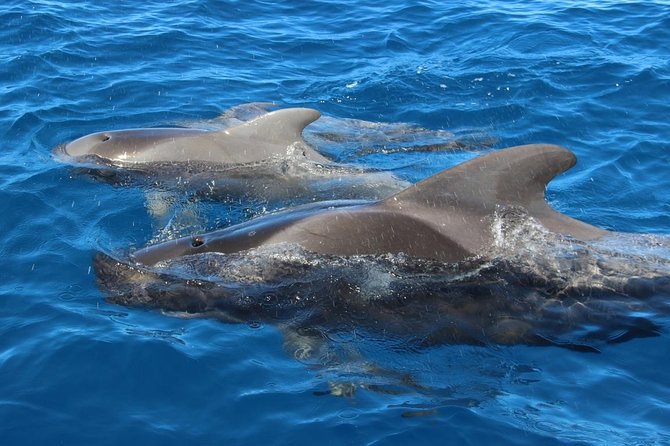
The waters off Tenerife are more than a scenic backdrop. The island rises dramatically from the ocean floor, creating deep offshore water close to land. That helps explain why short-finned pilot whales are regularly found in this area.
The guides may explain how pilot whales live in family groups and how the crew recognises some local animals from their dorsal fins. One particularly interesting detail is that these whales can travel far below the surface in search of squid. You are not simply looking at random black shapes in the water. With the right explanation, you begin to notice group structure, young animals, surfacing patterns, and the difference between a whale and a dolphin.
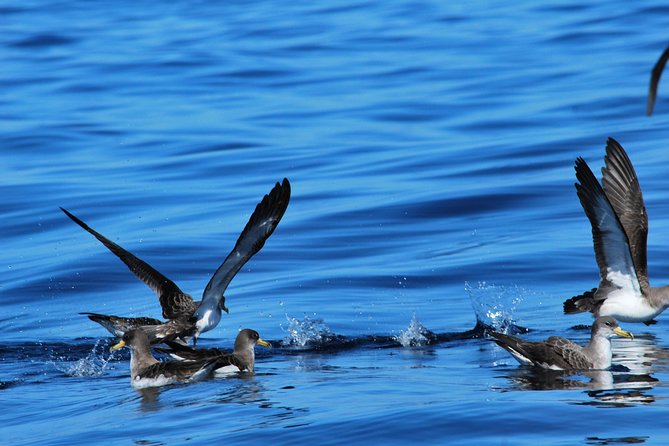
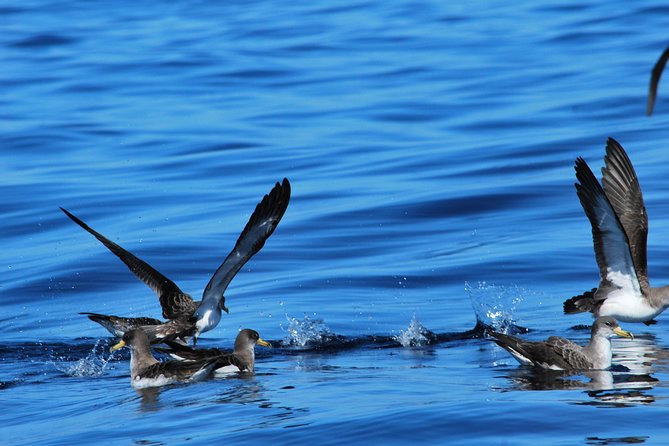
The normal focus is on pilot whales, dolphins, and porpoises, but the wider marine setting adds variety. Sightings have included loggerhead turtles, flying fish, Cory’s shearwaters, other seabirds, and different kinds of dolphins. A fin whale and orcas have also been seen on individual trips, though those are special encounters, not something you should book expecting.
That distinction is important. This is a wildlife search, not a show with trained animals appearing on schedule. Some days may bring several pods and close approaches. On another outing, you may spend more time scanning the sea and learning about the habitat.
What the 2.5-hour route feels like
After a safety welcome and short briefing, the boat leaves Puerto Colón and heads along the south coast. The exact route depends on conditions and where animals are located. There is no fixed sightseeing circuit with a guaranteed stop, since the crew needs to respond to wildlife activity.
The first part is likely to involve travel and searching. Keep your eyes moving across the water rather than staring at one point. The guide helps by pointing out signs of life and explaining what to watch for. A distant splash or a group of birds can sometimes signal activity below.
When the boat reaches cetaceans, the crew approaches with care. They do not chase animals or cut across their path simply to provide a closer photograph. Several accounts describe the boat slowing or drifting, then allowing whales to surface around it. If other boats are already crowding an area, the crew may leave rather than add pressure.
That choice can mean you miss a perfect close-up. It can also mean the encounter feels far less frantic. I would choose a respectful, quieter viewing style over a fast pursuit, especially in a place where repeated boat traffic can affect wildlife.
Near the animals, the engine is switched off. This is one of the most memorable parts of the trip. The sudden quiet changes your attention. You hear the sea, watch for a back or fin, and wait for the next breath instead of listening to an engine.
The hydrophone adds another layer. The guide lowers it into the water so you can hear sounds used by whales for communication or hunting. It is an unusually good feature because it turns the trip from a visual hunt into a lesson in how cetaceans experience their world.
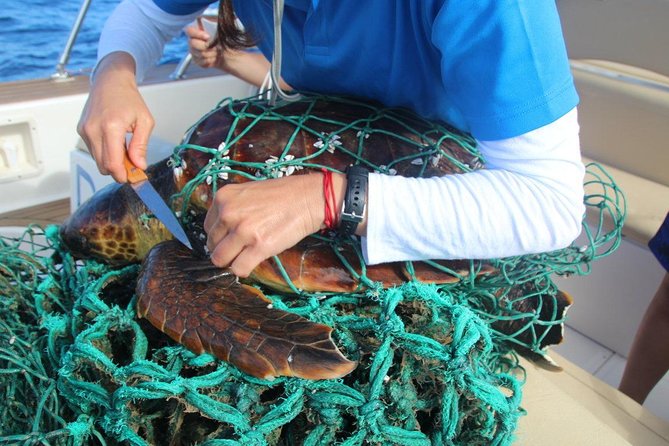
The crew may also record observations, take photographs for identification, and collect floating plastic if it is safe and practical. That gives the conservation message a hands-on quality without turning the excursion into a lecture.
Pilot whales, dolphins, turtles, and seabirds
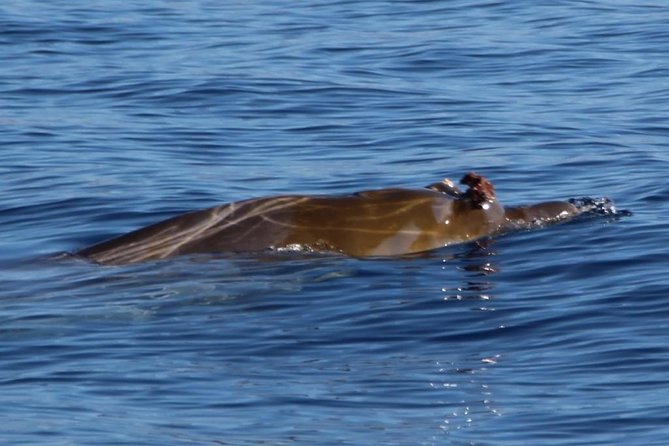
Pilot whales are the species most closely associated with this outing. You might see a family group moving together, including young animals. The crew has a photo catalogue that can help identify familiar whales by their dorsal fins, adding a local research element to the sighting.
Dolphins can be more active and quick-moving. Some trips have included striped dolphins and two types of dolphin, with animals coming close to the boat. Porpoises are also among the species you may search for, though no particular sighting can be promised.
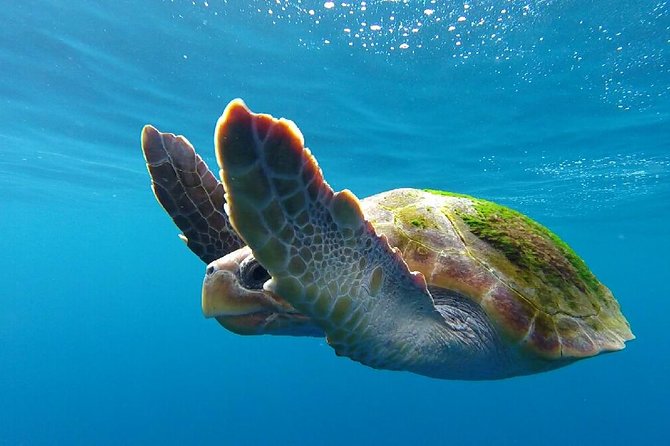
Turtles and seabirds reward people who keep watching between whale encounters. Loggerhead turtles have been seen close to the boat, and Cory’s shearwaters are among the seabirds recorded. Flying fish can appear briefly at the surface. These smaller encounters help fill the time if whales are slow to appear.
The guides explain what you are seeing rather than simply calling out names. That is where the price begins to make sense. You are paying not only for transport on the water, but for interpretation from people who study the local marine life and care about its protection.
A completely different kind of day out in Tenerife:
- Tenerife: Loro Parque Entry Ticket
★ 4.8 · 12,411 reviews - Loro Parque and Siam Park Combined Admission Tickets
★ 4.7 · 7,307 reviews - Tenerife: Kayak and Snorkel with Turtles, Wetsuits Included
★ 4.6 · 7,215 reviews - Costa Adeje: Whale & Dolphin Eco-Cruise with Snacks & Drinks
★ 4.6 · 5,096 reviews
The people make the trip
A good skipper can make a wildlife trip feel calm, and a good guide can make a short sighting meaningful. The crew receives repeated praise for both qualities.
David is described as lively, funny, and very well informed about marine biology. He uses stories, natural history, and current research to explain what is happening. One lesson compares the powerful foraging ability of short-finned pilot whales to that of a cheetah, while another explores the ancient whale ancestor Pakicetus. These details are not essential to seeing a whale, but they give the experience a sense of connection and wonder.
Mirna and Marina are praised for piloting, photography, and patient explanations. Names and roles can vary by departure, so you may not have the exact same crew. Still, the repeated pattern is clear: the team cares about making the trip useful, not merely filling two and a half hours.
Some crew members take photographs and may share them after the outing, including through WhatsApp. That has been a welcome extra for some people, but I would treat it as a courtesy rather than a guaranteed part of the package.
Is $71.35 good value?
At $71.35 per person, this is not the cheapest way to get on the water around Tenerife. A large boat may offer more room, food, drinks, or a livelier party mood for a similar price.
This tour makes better sense if your priority is wildlife and personal attention. With no more than 10 people, you can ask about behaviour, conservation, and identification without competing with a crowd. You also get a better chance of seeing the water from different sides of the boat.
The value is strongest for people who appreciate restraint. The crew does not promise a guaranteed whale encounter, and it does not treat animals as props. You pay for a careful search led by a specialist team, along with the possibility of seeing and hearing wild cetaceans in their own habitat.
A cold drink is served toward the end, and a toilet is available below deck. Do not expect a full meal, loud music, or a party cruise. This is a nature trip first.
Comfort, sun, and motion sickness
Bring strong sun protection, a hat with a chin toggle, sunglasses, and water. The boat is open and you can be in full sun for much of the outing. A hat that stays put is more useful than a loose beach hat.
Motion sickness deserves honest attention. One person became ill even after taking tablets, and another reported that the waves were large, although the boat felt sturdy. If you know you are sensitive, take your usual precautions before departure and ask a medical professional if you need advice about medication.
The low boat is excellent for viewing, but it does not remove the natural movement of the Atlantic. Sea conditions can change, and the operator may cancel if weather is poor. If that happens, you are offered another date or a full refund.
Most people can take part, and service animals are allowed. Accessibility depends on the type of reduced mobility and sea conditions, so contact Atlantic Eco Experience before booking if you need specific assistance getting aboard.
Who will enjoy this experience most?
I would recommend it to couples, families, solo visitors, and anyone who prefers a calm outing with substance. Children can enjoy it too. The crew has kept a seven-year-old engaged for the full two and a half hours, helped by the animals, stories, and changing activity around the boat.
It is especially suitable for people who care about responsible wildlife watching. The company is described as a Blue Flag Certified Whale Watching Organisation, and the operating style matches that label: engines off near cetaceans, no chasing, attention to animal space, and occasional rubbish collection.
It is less suitable if you want a guaranteed close encounter, a long lunch, or a loud social cruise. It is also not ideal for anyone who finds open-water movement difficult, unless you already know how to manage seasickness.
Booking, timing, and cancellation
The experience is offered in English and uses a mobile ticket. Confirmation is sent within 48 hours, subject to availability, and it is commonly booked around 17 days ahead. I would reserve early if your Tenerife schedule is tight, since the 10-person limit can fill faster than a large boat.
You can cancel for a full refund up to 24 hours before the start time. Changes or cancellations inside that 24-hour window are not accepted for a refund. The activity also needs suitable weather and a minimum number of participants. If the operator cancels for either reason, you are offered another date or experience, or a full refund.
The listed start and finish point is Av. de Colón, 4, Costa Adeje, Santa Cruz de Tenerife. Plan to arrive with enough time to find the marina and Gate 4 without rushing.
Should you book Atlantic Eco Experience?
Yes, if you want a small, serious whale-watching trip rather than a floating party. The strongest reasons are the 10-person limit, the marine biologist guide, the hydrophone, and the crew’s willingness to wait quietly or leave a crowded sighting area.
I would book it for the chance to see pilot whale families, dolphins, turtles, and seabirds while learning how to read the water. Just bring sun protection, prepare for waves, and accept that wild animals set the timetable. That combination of honest expectations and careful guiding makes this one of Costa Adeje’s better choices for a meaningful morning at sea.
FAQ
Where does the cetacean tour start?
It starts at Av. de Colón, 4, 38660 Costa Adeje, Santa Cruz de Tenerife, Spain. Departure information also identifies Gate 4 at Puerto Colón Marina.
Where does the tour finish?
The activity returns to the original meeting point at the end.
How long is the experience?
The tour lasts approximately two hours and 30 minutes.
How many people can join the boat trip?
The boat has a maximum of 10 travelers.
What animals might I see?
The tour searches for whales, dolphins, porpoises, sea turtles, and seabirds. Sightings can include pilot whales, loggerhead turtles, flying fish, Cory’s shearwaters, and different dolphin species.
Is the tour available in English?
Yes. The experience is offered in English.
What happens if the weather is poor?
If poor weather causes a cancellation, you are offered a different date or experience, or a full refund.
Recently added around Tenerife
- Jeep Safari to Teide and Masca★ 4.5 · 165 reviews
- Tenerife Sunset Catamaran tour with transfer – Food and Drinks included.★ 5.0 · 166 reviews
- Tour with Whale and Dolphin Watching plus food included★ 4.5 · 166 reviews
- Costa Adeje: Tuk Tuk Tour★ 4.6 · 167 reviews
- Private Surfing Lesson at Playa de las Américas★ 5.0 · 167 reviews
- Sunset and Stars at Teide National Park★ 4.5 · 168 reviews
- Tenerife Snorkeling Tour in turtle habitat★ 4.0 · 168 reviews
- Tenerife: Hard Rock Cafe Set Menu Lunch or Dinner & Drink★ 4.1 · 169 reviews
Tenerife Tours, compared.
Eco-Yacht Whale and Dolphin Watching and Swimming
Read our review →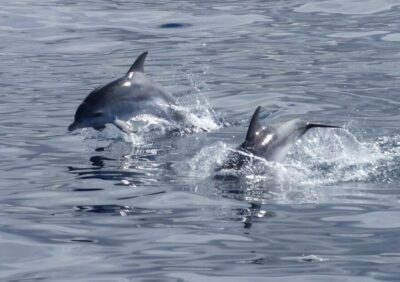
Los Cristianos Respectful No-Chase Whale and Dolphin Safari
Read our review →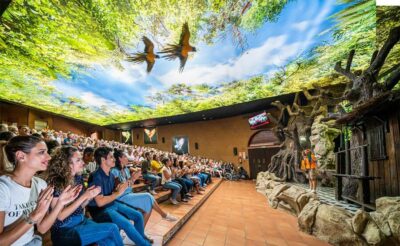
Loro Parque and Siam Park Combined Admission Tickets
Read our review →
Kayak and Snorkel with Turtles, Wetsuits Included
Read our review →
Costa Adeje: Whale & Dolphin Eco-Cruise with Snacks & Drinks
Read our review →
Mount Teide Tour with Cable Car Ticket & Transfer
Read our review →Browse the lists this tour appears in