
Review · CORDOBA TOURS
Córdoba: Guided Tour of Azahara Medina
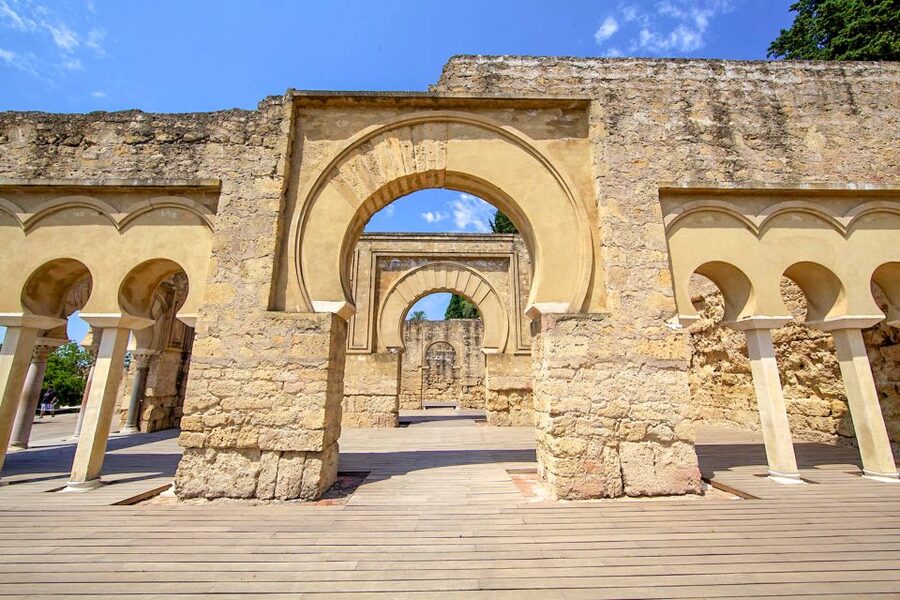
History gets physical here. Just 5 miles from Córdoba, Medina Azahara turns the story of Umayyad Spain into something you can walk through: carved stone, palace rooms, broad terraces, and unfinished archaeological work. Built by Caliph Abd al-Rahman III in the early 10th century, this palace-city served as a seat of government and a public display of power.
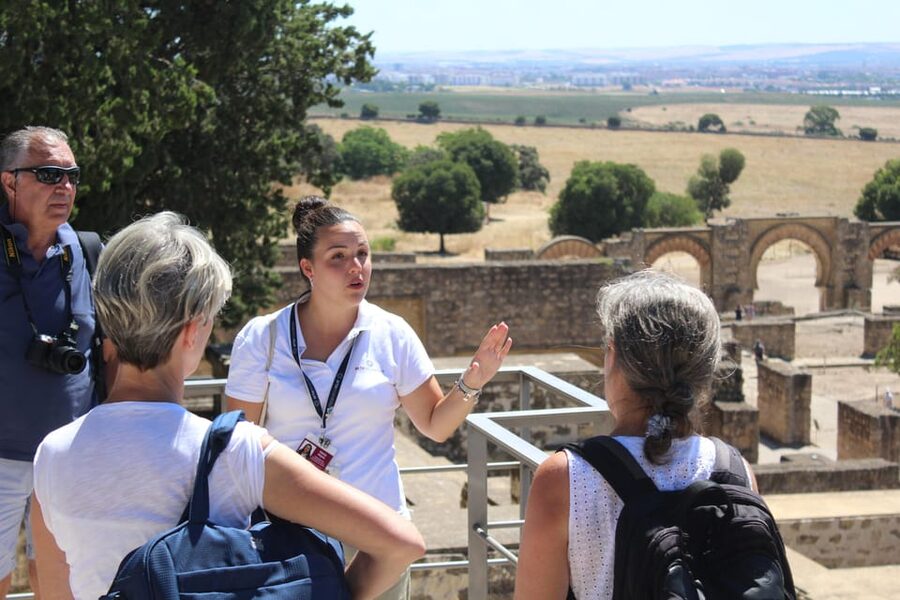
I especially like the excellent guides, who bring scattered ruins to life with stories about court life, architecture, and the people who worked and lived here. I also like the visitor center, particularly the film that reconstructs the city as it may have looked a thousand years ago. The main drawback is the heat and exposure, especially in summer, while the bus meeting point in Córdoba can take some effort to identify.
Quick verdict: At $23 per person for three hours, this is a strong-value addition to Córdoba. It is most useful with a guide, since the site is partly excavated and bare walls do not always explain themselves.
In This Review
- Key points to know before you book
- Why Medina Azahara matters to Córdoba
- The one-hour visitor center sets the scene
- Two ways to reach the palace-city
- The option with transport from Córdoba
- The option without Córdoba transport
- Following the route through the ruins
- Architecture you can understand with help
- The strongest part is the human story
- Heat, walking, and what to bring
- Is $23 good value?
- Who will enjoy this tour most?
- My practical booking advice
- Should you book the Medina Azahara tour?
- FAQ
- How far is Medina Azahara from Córdoba?
- How long does the guided tour last?
- Is transportation from Córdoba included?
- Does the tour include transport within Medina Azahara?
- Is admission to Medina Azahara included?
- What happens at the visitor center?
- What languages are available?
- What should I bring?
- Can I cancel the booking?
Key points to know before you book
- The visitor center comes first: Allow about an hour for the museum displays and virtual reconstruction film.
- You can choose your transport: One option includes round-trip travel from Córdoba, while another begins at the site.
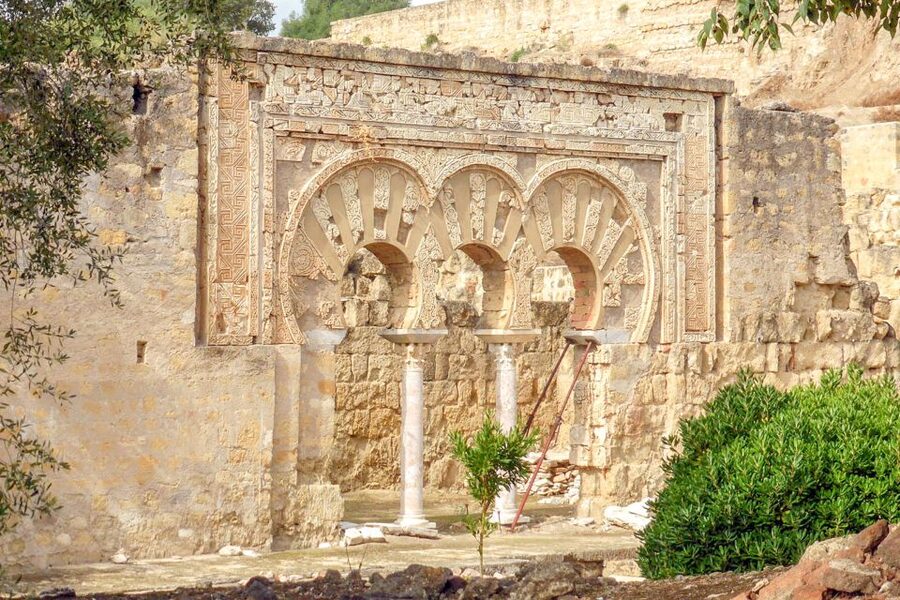
- The ruins are only partly excavated: What you see is impressive, but the city’s full size is much greater than the visible remains.
- Guide quality is the main strength: Guides such as Emilio, Almudena, Maria, Alejandro, and Pilar have been praised for clear explanations and lively storytelling.
- Summer demands preparation: Bring water, a hat, sunglasses, and comfortable clothing because much of the visit is exposed.
- The site adds essential context to Córdoba: It helps explain the political and cultural power behind the city’s famous monuments.
Why Medina Azahara matters to Córdoba
Medina Azahara is not simply an old palace outside the city. It was a planned palace-city built under Abd al-Rahman III, the Umayyad Caliph of Córdoba, in the 10th century. Its Arabic name means brilliant city, an appropriate title for a place designed to express wealth, authority, and order.
The location, about 8 kilometers from Córdoba, made it close enough for government business but separate from the older urban center. The city held official buildings and court spaces, and its construction sent a political message to allies and enemies alike.
That background matters because the site can otherwise feel like a collection of attractive ruins. Your guide connects the terraces, rooms, stonework, and formal spaces to the machinery of government. You begin to picture a working capital, not just a royal residence.
The visible site is also only part of the story. Earlier visitors have returned after many years and noticed how much more excavation has taken place, yet much remains below the ground. That gives the visit a sense of discovery, but it also means you should not expect a fully restored palace such as the Alhambra.
A few more Spain trips worth a look
- Córdoba: Skip-the-Ticket-Line Mosque-Cathedral Guided Tour
★ 4.6 · 9,634 reviews - Cordoba Mosque-Cathedral: Skip-the-Line Guided Tour
★ 4.7 · 6,610 reviews - Córdoba: Jewish Quarter, Mosque, and Alcázar Tour
★ 4.7 · 4,279 reviews
The one-hour visitor center sets the scene
The visit begins at the visitor center, either after arriving from Córdoba or as the first stop if you make your own way to Medina Azahara. Plan on roughly one hour here. It is not a throwaway introduction, and I would not rush through it.
The center presents material connected to Moorish Spain and the history of the site. The most useful feature is the film, which virtually reconstructs Medina Azahara as it may have appeared in the 10th century. This visual explanation gives you a much clearer sense of scale than the ruins alone can provide.
You can see why this matters once you reach the archaeological area. A low wall or fragment of pavement may look modest in isolation. After seeing the reconstruction, you can read it as part of a larger complex of courtyards, halls, administrative buildings, and routes through the palace-city.
The museum also helps explain the gap between what once existed and what is now visible. One visitor specifically wished for more opportunity to browse books about the people who lived there, so if you want to continue studying the site, ask about available publications or look for material at the visitor center.
Two ways to reach the palace-city
You can book the guided tour with or without the tourist bus. This choice affects both convenience and where your day begins.
The option with transport from Córdoba
The bus option includes transportation from Córdoba to Medina Azahara and back. Once at the site, the tourist bus carries you from the visitor center toward the main monuments. This is the simplest choice if you do not have a car or do not want to work out the trip independently.
Take care at the Córdoba meeting point. The departure location can vary by booking, and one useful description places it at a semicircular bus stop across from the Eurostars Hotel, behind the regular bus stops. The stop is called Parada Bus, and the sign may be small. The yellow bus with red lettering is another identifying detail.
I would arrive early enough to check the exact meeting instructions rather than relying only on a map pin. Different language groups may gather in the same area, and the guides sign people in before departure.
A completely different kind of day out in Cordoba:
- Cordoba: Equestrian Show General Entry
★ 4.5 · 2,333 reviews - Cordoba: Mosque-Cathedral E-Ticket with Audio Guide
★ 4.1 · 2,124 reviews - Cordoba Mosque & Jewish Quarter Tour with Tickets
★ 4.6 · 1,996 reviews - Cordoba: Alcazar Guided Tour and Skip-the-Line Ticket
★ 4.2 · 1,792 reviews
The option without Córdoba transport
The second choice begins at Medina Azahara. It can suit you if you already have transportation to the site or prefer to arrange that part of the day yourself. You still receive the guided visit, entrance, and the site’s transport arrangement from the visitor center to the main monuments as described for the activity.
The key advantage is flexibility. The drawback is that you must manage the journey to the archaeological area yourself, and the meeting point depends on the option you select. Check the details carefully before paying.
Following the route through the ruins
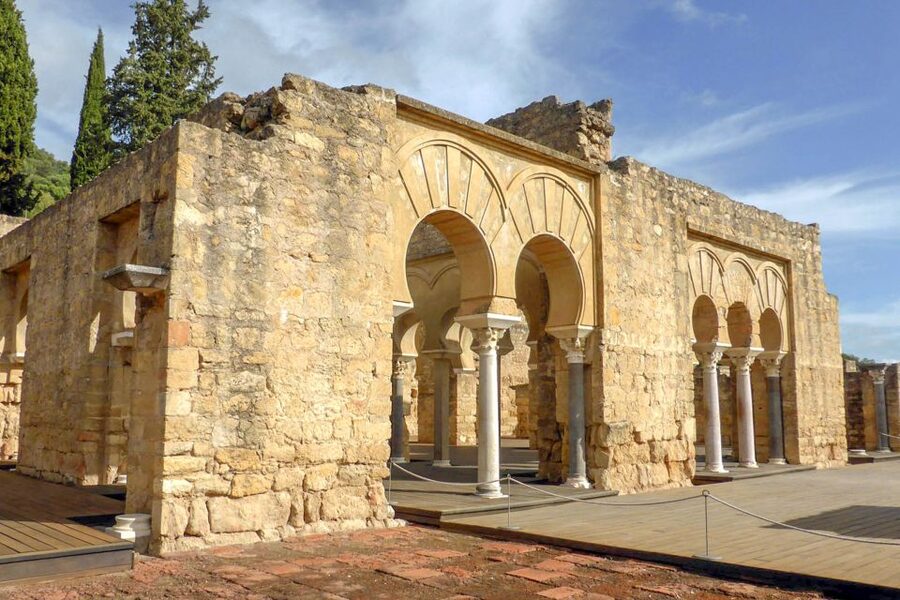
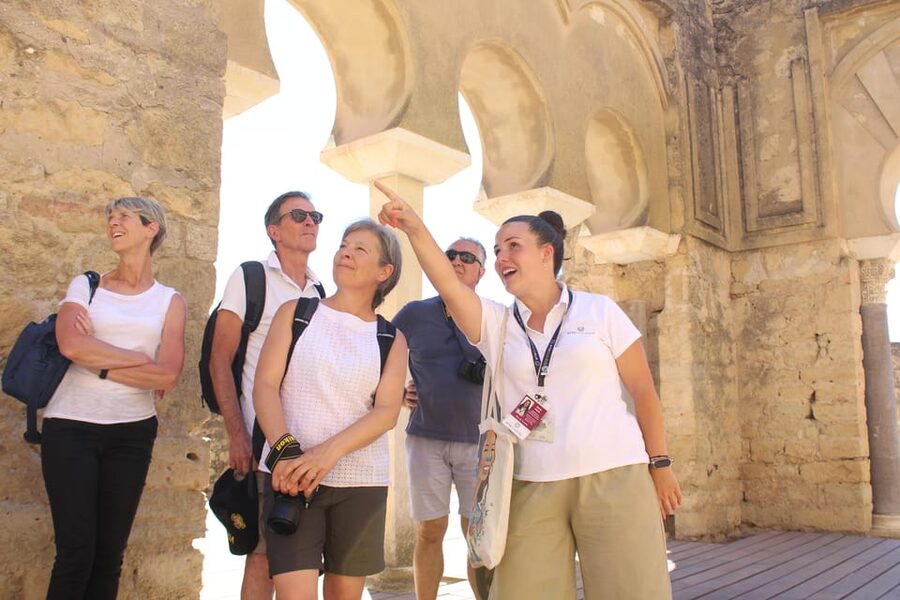
After the visitor center, the tour heads north through the main sections of Medina Azahara. The guide takes the group from one area to the next, pointing out architectural details and explaining how the city functioned.
This is where the tour earns its price. The ruins are striking, but many of the clues are subtle. A guide can explain why a space was important, how the buildings related to one another, and what daily life may have looked like in a government center of the 10th century.
The best guiding style here is part historian, part storyteller. Several guides have received praise for combining firm historical information with likely scenes from everyday life. Emilio, Almudena, Maria, Alejandro, Pilar, and others have been singled out for clear English, patience, humor, and a gift for making stones feel connected to real people.
That does not mean every detail is certain. One of the most useful qualities noted about guide Maria was her care in explaining how secure or uncertain different claims were, based on the available sources. At an archaeological site, that honesty is valuable. You get a clearer line between evidence and interpretation.
The route covers the principal historic area rather than every possible corner. The tour lasts about three hours, including the visitor center, transport arrangements, and the guided walk. Some tours in Spain run a little beyond the posted time, so avoid booking a tight appointment immediately afterward.
Architecture you can understand with help
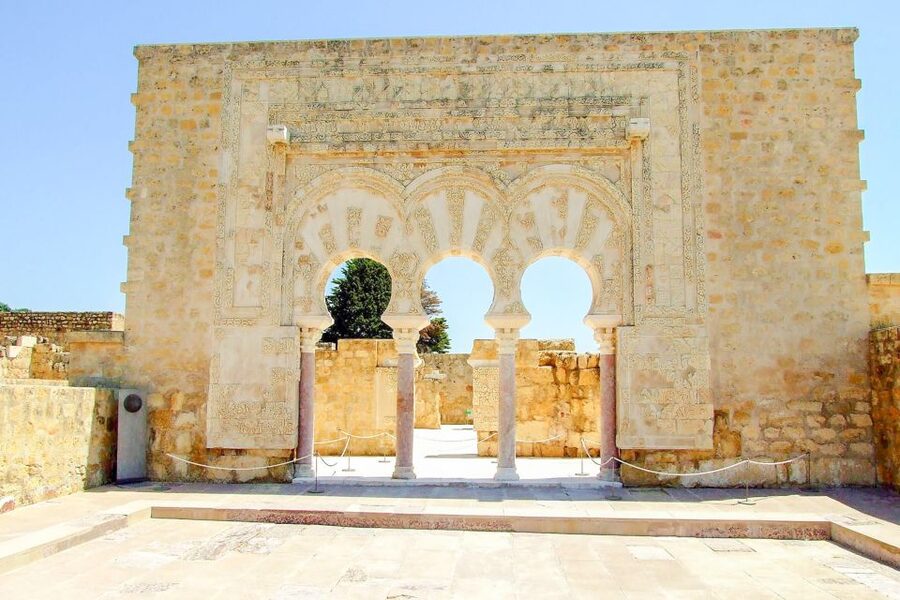
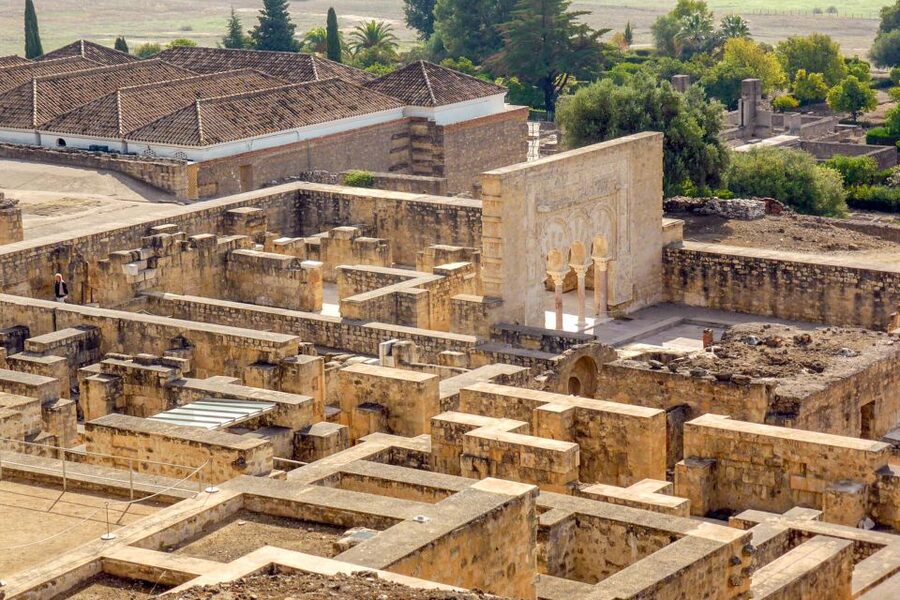
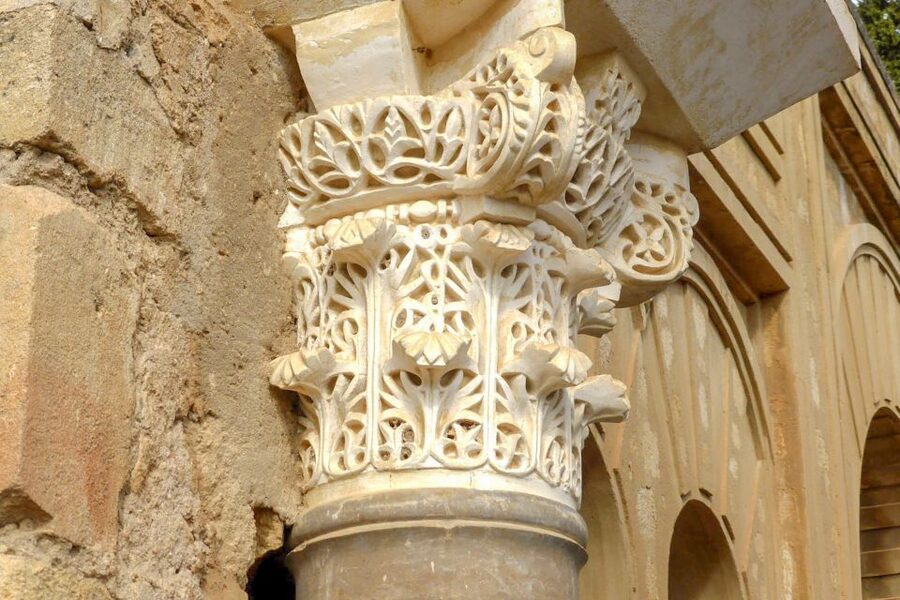
Medina Azahara was built to impress. The buildings and monuments were ornate, and their arrangement reflected the authority of the caliphate. Even in ruin, you can see the care given to proportion, decoration, and placement.
A guide helps you notice what casual sightseeing misses. Look closely at the surviving stonework, the layout of formal spaces, and the relationship between different levels of the city. The important point is not only that the buildings were beautiful, but that design helped communicate rank and power.
The visit also adds an engineering angle. Earlier guide Ana was praised for explaining both the history and the engineering of the site. That broader approach improves the experience because Medina Azahara was not merely decorative. It had to support government, court life, movement, and the needs of a large royal complex.
The archaeological work remains ongoing. You will see completed areas alongside sections that are still fragmentary. That unfinished quality may disappoint anyone hoping for a fully reconstructed palace, but it gives you a more honest connection with the work of archaeology.
The strongest part is the human story
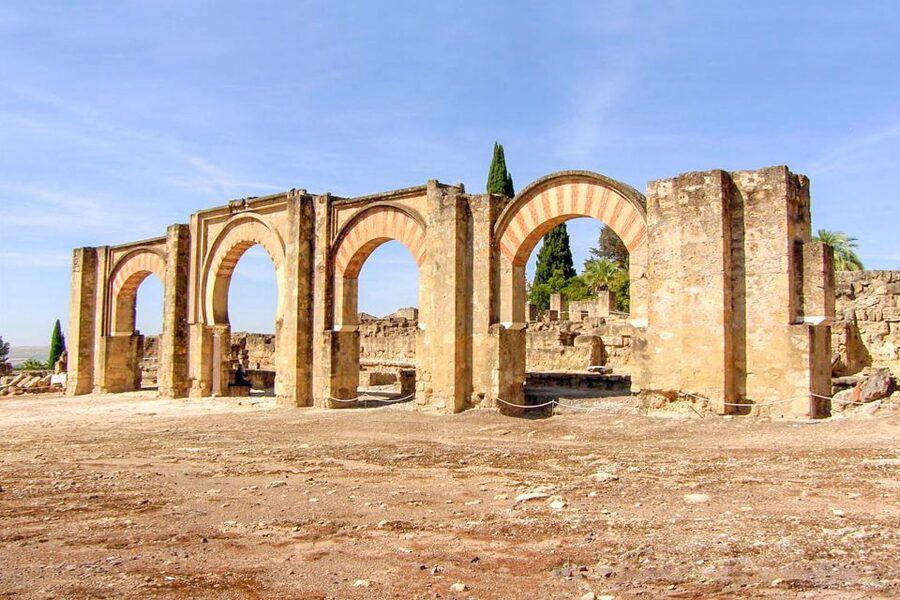
Ruins become easier to remember when you can picture the people behind them. The guides focus not only on Abd al-Rahman III and political power, but also on the everyday life of the city in the 10th century.
You might hear about how officials used the palace-city, how court spaces were arranged, and what the surviving architecture suggests about social order. The exact details depend on your guide and language group, but the stated focus is clear: the visit aims to show how the city functioned, not just when it was built.
That approach suits curious visitors who want more than a list of dates. Guides have been praised for answering questions, welcoming different points of view, and adding context from earlier centuries of Andalusian history.
The English tours appear to be especially well served by the available guides. Comments about perfect or very strong English, humor, and thoughtful answers recur across different years. Still, guide assignments change, so you should treat particular names as examples of the tour’s strengths rather than a guarantee that one person will lead your group.
Heat, walking, and what to bring
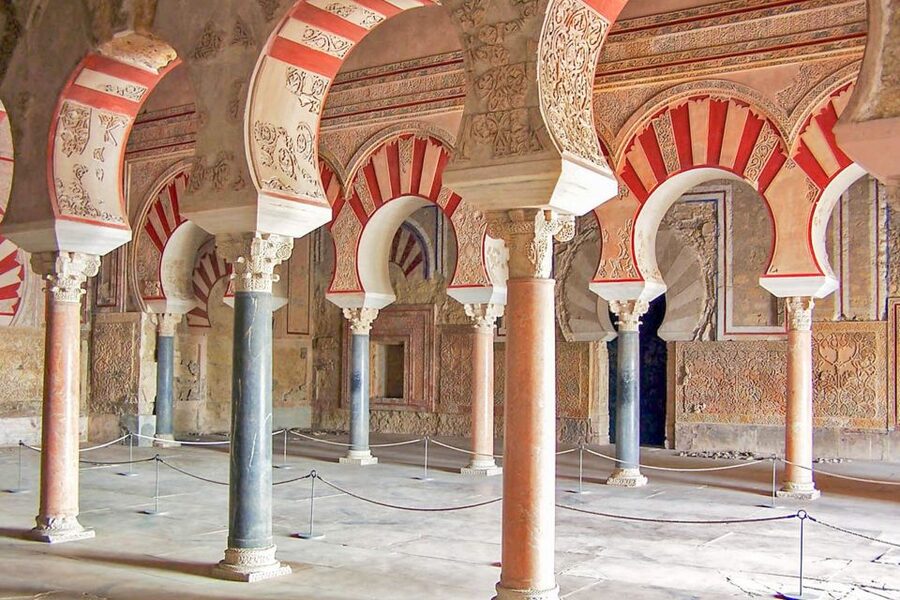
The practical challenge is the sun. Large parts of the archaeological area are open and exposed, and a summer visit can become tiring quickly. One guide, Almudena, was praised for finding shade and adjusting the pace during a very hot outing, but you should not depend on shade being available everywhere.
Bring:
- Comfortable walking shoes
- A hat
- Water or other drinks
- Comfortable clothing
- Sunglasses, especially in summer
The route is not described as difficult, but you are walking around an archaeological site rather than a polished indoor museum. Good shoes matter, and water is essential in hot weather.
Spring, autumn, and winter should be easier for a longer outdoor visit, although the activity information does not promise particular weather conditions. In July and August, consider choosing the coolest available start time and leave room in your schedule for the tour to run longer than three hours.
Is $23 good value?
At $23 per person, the tour is reasonably priced for a three-hour experience that includes entry, a guide, and, with the relevant option, transport from Córdoba and back. The value is strongest if you are staying in Córdoba without a car or if you want historical interpretation rather than a quick look at the ruins.
The visitor center alone gives the outing more substance than a simple transfer to an archaeological site. You receive a museum introduction and a reconstruction film before walking among the remains. That sequence helps you understand what you are seeing.
The price is less compelling if you prefer to explore silently and at your own pace. The guided structure takes you through the main sections one by one, so you will have less freedom than on an independent visit. You also need to select the transport option carefully, since the meeting point and included travel differ.
Free cancellation up to 24 hours before the start adds useful flexibility, and the reserve-now, pay-later option can help if your Córdoba plans are still shifting. These policies are practical, but the real reason to book is the guide. Without interpretation, the site asks you to do much more of the historical work yourself.
Who will enjoy this tour most?
I would choose this for anyone who has already seen Córdoba’s central monuments and wants to understand the political world that shaped them. It is also a good fit for visitors interested in Moorish Spain, archaeology, architecture, Islamic history, or the development of Andalusia.
Families with older children may appreciate the visual reconstruction and stories about palace life. The three-hour length is manageable, though younger children may tire in the sun and may not enjoy the historical explanations as much as adults.
This is less suitable if you want a short photo stop, a fully restored palace, or a visit with no walking. It is also not the best choice for a rushed itinerary. The visitor center deserves attention, and the guide’s explanations are central to the experience.
Language options are English and Spanish. If you need another language, this activity does not list one.
My practical booking advice
First, choose between the bus and no-bus options based on your actual plans in Córdoba. Do not assume the meeting location is the same for both.
Second, read the departure instructions closely. The Parada Bus stop can be easy to miss, particularly if you follow a general map link to the regular city bus stops. Look for the semicircular stop across from the Eurostars Hotel and confirm that you are in the right place.
Third, plan for sun and carry your own drinks. A hat and comfortable shoes will make a bigger difference than a camera upgrade.
Finally, treat the visitor center as part of the main attraction. The film supplies the missing pieces, allowing you to understand the ruins as a real palace-city rather than isolated walls.
Should you book the Medina Azahara tour?
Yes, if you want history explained clearly and you value an efficient trip from Córdoba. The $23 price is fair, the three-hour format gives you enough time for the visitor center and main ruins, and the guides have repeatedly been praised for strong English, humor, patience, and lively storytelling.
Book with realistic expectations. Medina Azahara is only partly excavated, much of the site is outdoors, and the remains are not restored to their original appearance. If those limits sound frustrating, visit Córdoba’s intact monuments instead.
If you are curious about how the caliphate worked, how royal architecture expressed authority, and how archaeology rebuilds a lost city, this is one of the most useful additions to a Córdoba itinerary.
FAQ
How far is Medina Azahara from Córdoba?
The archaeological site is about 5 miles, or 8 kilometers, from Córdoba.
How long does the guided tour last?
The activity lasts approximately three hours. Starting times depend on availability.
Is transportation from Córdoba included?
Transportation between Córdoba and Medina Azahara is included when you choose the tourist bus option. The meeting point depends on the option booked.
Does the tour include transport within Medina Azahara?
Transportation from the visitor center to the main monuments is included as part of the site arrangements described for the activity.
Is admission to Medina Azahara included?
Yes. Entrance to the site is included.
What happens at the visitor center?
You spend about one hour at the visitor center, where you can learn about Moorish history and watch a film that virtually recreates Medina Azahara in the 10th century.
What languages are available?
The live guided tour is available in English and Spanish.
What should I bring?
Bring comfortable shoes, a hat, drinks, and comfortable clothing. Water and sun protection are particularly important during hot weather.
Can I cancel the booking?
You can cancel up to 24 hours in advance for a full refund. The reserve-now, pay-later option allows you to hold a place without paying immediately.
Recently added around Cordoba
- Visit in Spanish to the Cathedral Mosque. Does not include entrance ticket★ 5.0 · 165 reviews
- Cordoba Mosque Guided Tour★ 4.5 · 170 reviews
- Córdoba: Tablao Flamenco at Doble de Cepa with Optional Meal★ 4.4 · 197 reviews
- Cordoba: Medina Azahara Museum and Archaeological Site Tour★ 4.8 · 199 reviews
- Patios of Cordoba Walking Tour★ 4.4 · 199 reviews
- Cordoba Flamenco Show at Tablao El Cardenal with a Drink★ 4.5 · 210 reviews
- City Sightseeing Cordoba Hop-On Hop-Off Bus Tour★ 4.0 · 213 reviews
- Cordoba Monuments Intensive Tour in English Tickets included★ 4.5 · 214 reviews
Cordoba Tours, compared.
Skip-the-Ticket-Line Mosque-Cathedral Guided Tour
Read our review →
Cordoba Mosque-Cathedral: Skip-the-Line Guided Tour
Read our review →
Cordoba Mosque & Jewish Quarter Tour with Tickets
Read our review →
Skip-the-Line Great Mosque-Cathedral History Tour
Read our review →Browse the lists this tour appears in