
Review · MUSEUMS
Cartagena : Roman Theatre Museum Entry Ticket
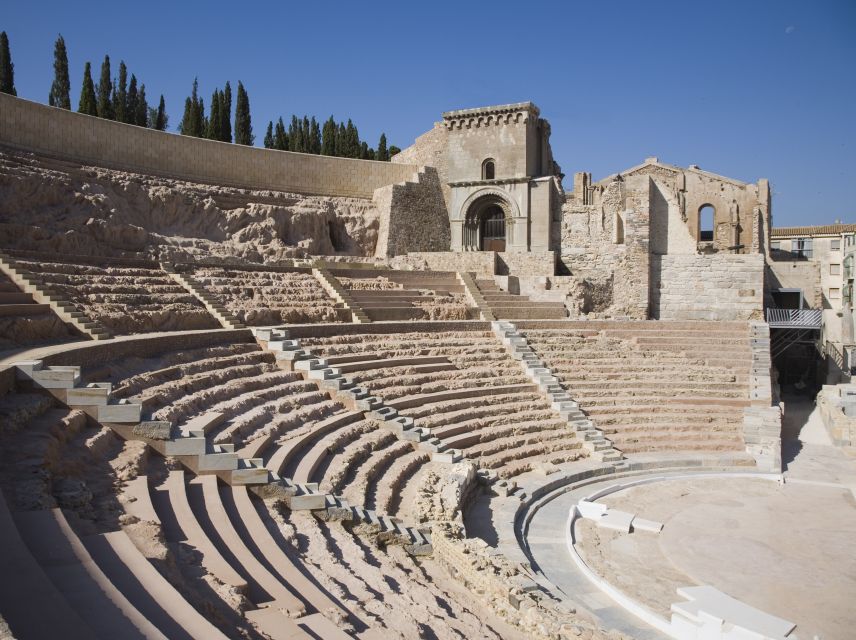
History can hide in plain sight. Cartagena’s Roman Theatre Museum takes you from archaeological displays into one of Spain’s largest ancient theaters, a surprisingly moving visit for just $8. I like the clear route from museum to ruins, and I especially like that you can explore at your own pace with an optional audio guide. The main drawback is practical: parts of the theater are reached by open steps without handrails, so some visitors may not be able to reach the lowest areas.
The museum, designed by architect Rafael Moneo, does more than display old stones. It explains how the theater was buried, forgotten, found again, and carefully presented. Buy ahead if possible, since the entrance line can be long, and make sure you use the museum entrance rather than following map directions to the exit.
In This Review
- Key points to know before you go
- From buried ruins to Cartagena’s Roman stage
- Rafael Moneo’s museum makes the entrance part of the visit
- What the 1st-century-B.C. theater tells you
- The route from museum displays to theater ruins
- What the visit feels like for families
- Steps, handrails, and wheelchair access
- Getting the entrance right in Cartagena
- How long should you allow?
- Is $8 a fair price?
- Who will enjoy this most?
- Final verdict: should you book it?
- FAQ
- Where is the Roman Theatre Museum located?
- What does the ticket include?
- How much does admission cost?
- How long is the ticket valid?
- Is an audio guide included?
- Is the Roman Theatre Museum open on Sundays?
- Is the museum wheelchair accessible?
- Are electric wheelchairs allowed?
- Can I bring food or drinks inside?
Key points to know before you go
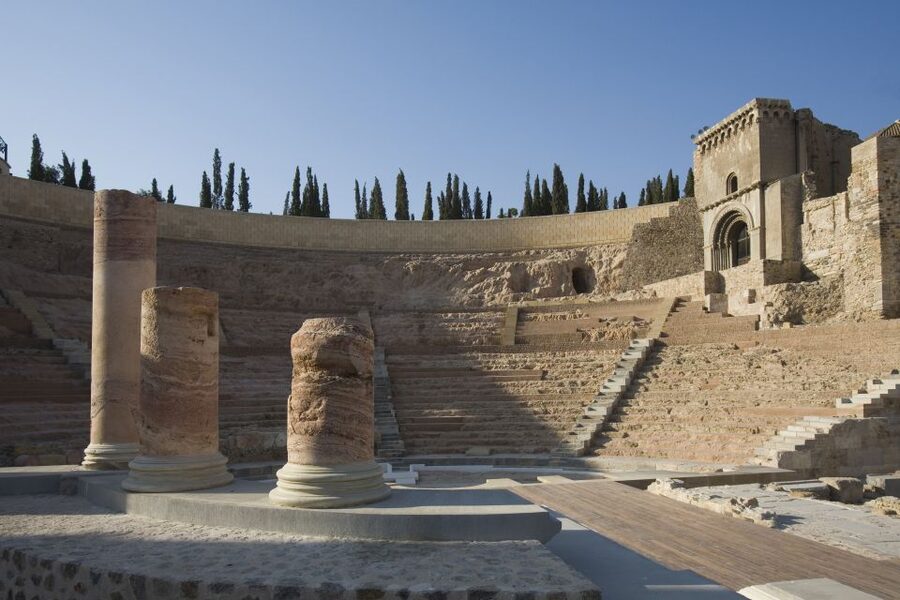
- A 7,000-seat Roman theater: This was a major public building, not a small provincial stage.
- The museum comes first: You enter through the museum, then reach the theater ruins as the final part of the route.
- Rafael Moneo’s design: The modern building frames the archaeological remains without trying to imitate Roman architecture.
- An excellent $8 value: The ticket covers both the museum and theater site for one day.
- The audio guide is worth considering: It is available in Spanish, English, French, German, and Russian.
- Plan around Sunday hours: The museum closes at 2:00 PM on Sundays.
From buried ruins to Cartagena’s Roman stage
The most interesting part of this visit is not only the theater itself. It is the story of how a huge Roman building could vanish beneath later layers of Cartagena.
The museum’s Passageway of History sets up that story. You follow the development of the site from the theater’s construction in the 1st century B.C. through the later changes that covered it. This gives the ruins a human timeline. You are not simply looking at an old wall and guessing what happened. You are shown how the site changed, disappeared from view, and eventually returned to public attention.
That context matters because the theater is woven into Cartagena’s modern streets. The discovery was surprising precisely because the remains were not sitting in an empty field. The museum helps you understand the archaeological work and the layers of history that built up above the ancient structure.
I find this approach much more satisfying than an open-air ruin with a few labels. By the time you reach the theater, you already know why the site matters and what you are looking at.
More museums:
- Madrid: Prado Museum Entry Ticket
★ 4.6 · 17,509 reviews - Barcelona: FC Barcelona Museum “Barça Immersive Tour” Ticket
★ 4.4 · 10,944 reviews - Madrid: Reina Sofía Museum Entrance Ticket
★ 4.5 · 6,889 reviews
Rafael Moneo’s museum makes the entrance part of the visit
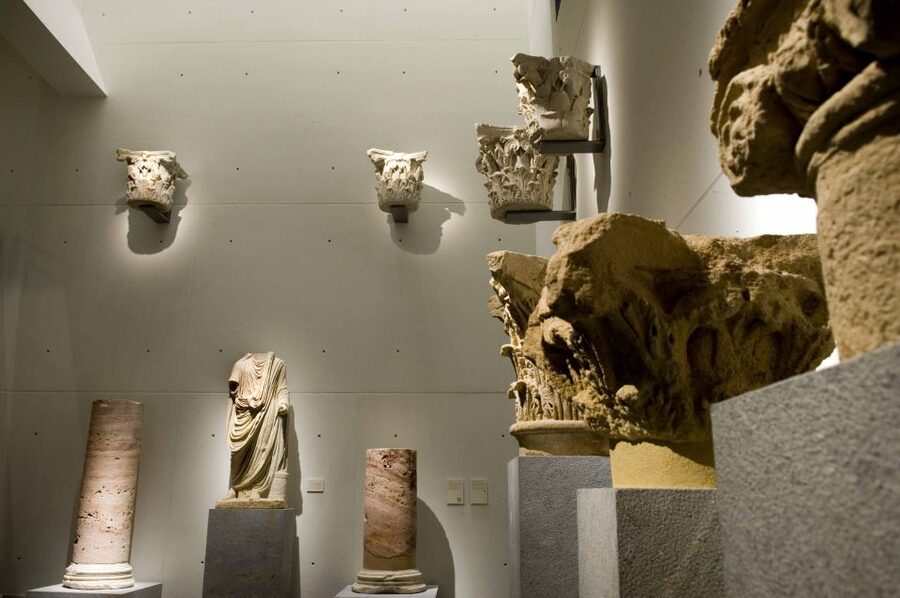
The Roman Theatre Museum was designed by Rafael Moneo, one of Spain’s best-known architects. Its role is practical, but it also gives the experience a strong sense of arrival.
Instead of walking directly into the theater, you move through the museum first. That may sound like an extra step, but it is one of the visit’s strengths. The displays gradually prepare you for the large-scale ruins outside.
The museum presents archaeological finds from the Roman period and explains the theater’s place in ancient Cartagena. You can see objects and architectural remains before reaching the main site. Several floors are accessible by lift or escalators, which makes the indoor section easier to manage for many people.
Do not rush this section. The theater is the obvious star, but the museum explains the details that make the outdoor ruins readable. It also shows how Roman entertainment was connected to politics, public life, and the way Roman power presented itself.
What the 1st-century-B.C. theater tells you
The theater could hold about 7,000 spectators. That figure changes how you see the remains. This was not a modest venue for a small local audience. It was a major civic space built for large public gatherings and performances.
The museum explains how plays were staged during Roman times and how the theater related to the political world. Roman performance was not only about amusement. Public buildings, ceremonies, and artistic displays could reinforce the authority of the people who funded them.
You will not see a complete ancient production recreated for you, but the exhibits give you enough background to imagine how the space worked. The size of the seating area, the stage zone, and the formal design all point to a building intended to impress.
The ruins also show how ancient construction affected earlier buildings. One particularly useful detail is the remains of a Roman house with mosaic tiles. The house was destroyed when the theater was built, giving you a glimpse of the city that existed before this grand public project.
That small domestic detail helps balance the scale of the theater. You see both sides of Roman Cartagena: ordinary residential life and the public architecture used to display status and power.
The route from museum displays to theater ruins
The visit is self-paced, and the route has a natural order. You begin indoors, move through the historical displays, and then arrive at the theater. That arrangement works well for families and for anyone who prefers to read and look around without keeping up with a group.
At the final section, you can walk around the remains and take in the shape of the theater. The transition from the enclosed museum to the open archaeological site is the moment when the scale becomes clearer.
The route is not a guided performance. If you choose the audio guide, you can stop when you want and replay information as needed. The guide is offered in five languages: Spanish, English, French, German, and Russian. I would add it if you want more than a quick look, especially since the history of the excavation and the political role of Roman theater are not always obvious from the stones alone.
One optional experience has also included a live guide named Bruno, who was praised for answering questions and connecting the theater with Cartagena’s wider history. Check your selected option carefully, though. The basic museum ticket and the audio guide option are not necessarily the same as a longer city tour with a personal guide.
A few more Spain trips worth a look
- Barcelona: Sagrada Familia Entry Ticket with Audio Guide
★ 4.6 · 105,312 reviews - Barcelona: Park Güell Admission Ticket
★ 4.4 · 76,534 reviews - Seville: Royal Alcázar Entry Ticket
★ 4.6 · 28,378 reviews - Seville: Cathedral and La Giralda Entry Ticket
★ 4.5 · 24,592 reviews
What the visit feels like for families
This is a good choice with children who enjoy seeing real places rather than only reading about them. The movement from museum objects to a large theater gives the visit variety, and the ancient performance setting is easy for younger visitors to picture.
A family visit can also be kept flexible. You are not tied to a fixed one-hour presentation when using the self-guided route. A 13-year-old and a 10-year-old were reported to have enjoyed the experience, which makes sense: the theater provides a clear visual focus, while the museum adds the story behind it.
There are a few cautions. Food and drinks are not allowed inside, and there is no information about a refreshment stand at the site. On a very hot day, younger children may find the exposed areas uncomfortable. Bring water for before or after the visit, and consider timing your entry to avoid the strongest heat.
Steps, handrails, and wheelchair access
The site is listed as wheelchair accessible, and the museum has lifts or escalators between floors. Still, you should not assume that every part of the ancient theater can be reached by every visitor.
The open steps leading toward the lower stage area do not all have handrails. Some visitors who are less steady on their feet have found that they could only view the theater from higher points. Wheelchairs and prams may also need to remain at the top in parts of the site.
That limitation is understandable at an archaeological monument, but it is important to know before booking. Electric wheelchairs are not allowed, and the activity information specifically lists that restriction. If full access to the lowest part of the theater is essential, contact the provider before you commit.
For many visitors, the upper viewing areas still provide an excellent sense of the site. You can see the overall shape, the seating arrangement, and the relationship between the theater and the museum. But the experience is not fully step-free from beginning to end.
Getting the entrance right in Cartagena
Finding the correct entrance can be the trickiest part of the visit. Map directions have led some people to the museum exit rather than the entrance. The key point is simple: you enter through the museum to reach the theater.
Look for the Roman Theatre Museum entrance, not just a point labeled Roman theater on a map. Follow the booking information for your particular option because the meeting point may vary.
It is wise to book before arriving. The entry price at the time described is $8 per person, and that is a strong price for access to both the museum and the archaeological site. One person specifically advised buying ahead because the ticket line can become long.
Bring the required voucher. A screenshot of a QR code is not accepted, so do not rely on a phone image alone if your booking instructions require another form of voucher.
The ticket is valid for one day, with starting times available according to the date you select. The activity also offers free cancellation up to 24 hours before the visit and a reserve-now, pay-later option, useful if your Cartagena plans may change.
How long should you allow?
The ticket itself is valid for one day, but that does not mean the visit takes a full day. The time you need depends on how closely you read the displays and whether you use the audio guide.
A quick visit can focus on the main museum route and theater views. If you want to understand the excavation, examine the Roman objects, listen to the audio commentary, and pause at the house mosaic, allow more time.
One longer experience connected with the site included more than two hours of city touring with Bruno, but that was a broader guided experience rather than a simple museum entry. For the basic ticket, plan according to your interest and schedule rather than expecting a fixed tour length.
Sunday requires special care because the museum closes at 2:00 PM. Check the available starting time before you set out, especially if you are fitting this between other Cartagena plans.
Is $8 a fair price?
Yes. At $8 per person, the ticket gives you access to a major archaeological site and a purpose-built museum that explains it. The value is strongest if you use the museum displays rather than treating the visit as a quick photo stop.
You can see parts of the theater from outside or from higher public viewpoints without entering, so the paid ticket is not the only way to glimpse the ruins. But the ticket takes you through the museum, shows the excavation story, and lets you walk around the preserved theater site.
The optional audio guide can make the small extra cost worthwhile, particularly if you are not already familiar with Roman theater design or Cartagena’s ancient past. It adds explanation while letting you move at your own pace.
The main value limitation is access. If steps prevent you from reaching the lower areas, you may not experience every part of the site. Even so, the museum and upper viewing areas still provide a substantial visit for the price.
Who will enjoy this most?
I would recommend the Roman Theatre Museum to first-time visitors who want a compact cultural stop in Cartagena. It works especially well if you like archaeology, Roman history, architecture, or places where the modern city has grown over ancient remains.
Families should find the clear museum-to-theater route manageable, though heat and steps deserve attention. The self-paced format also suits people who dislike hurried group tours.
The optional audio guide is a good fit if you want detail without hiring a personal guide. If you prefer conversation and questions, look at any guided option separately. Bruno’s city tour, where available, has been praised for its friendly explanations and broad coverage of Cartagena’s different eras.
I would be more cautious if you have serious mobility concerns, use an electric wheelchair, or need handrails on open steps. You can still enjoy the museum and upper views, but the lower theater area may not be practical.
Final verdict: should you book it?
Yes, if you want a well-priced, well-explained ancient site in Cartagena. The theater’s 7,000-seat scale is impressive, but the museum is what makes the visit meaningful. It explains the burial, rediscovery, Roman performances, political purpose, and earlier house beneath the theater.
Book ahead to avoid the ticket line, find the museum entrance rather than the exit, and add the audio guide if you want fuller explanations. Avoid Sunday afternoon, carry the required voucher rather than only a QR screenshot, and check the access details if steps are a concern.
For $8, this is one of Cartagena’s strongest short cultural visits. It is not a complete city tour, and it does not offer refreshments inside, but it gives you a clear, memorable look at Roman Spain without taking over your whole day.
FAQ
Where is the Roman Theatre Museum located?
It is in Cartagena, in Spain’s Region of Murcia.
What does the ticket include?
The ticket includes entrance to the Roman Theatre Museum and the Roman Theatre archaeological site.
How much does admission cost?
The listed price is $8 per person.
How long is the ticket valid?
The ticket is valid for one day.
Is an audio guide included?
An audio guide is available if you select that option when booking. Languages include Spanish, English, French, German, and Russian.
Is the Roman Theatre Museum open on Sundays?
Yes, but the museum closes at 2:00 PM on Sundays.
Is the museum wheelchair accessible?
The activity is listed as wheelchair accessible, and the museum has lifts or escalators. Some theater steps lack handrails, and parts of the lower site may not be accessible to every visitor.
Are electric wheelchairs allowed?
No. Electric wheelchairs are specifically listed among the items not allowed.
Can I bring food or drinks inside?
No. Food and drinks are not allowed at the site. Pets are also not allowed, except for assistance dogs.
Recently added around Spain
- Half-Day Luxury Catamaran Sailing Cruise in Granada★ 5.0 · 165 reviews
- Jeep Safari to Teide and Masca★ 4.5 · 165 reviews
- Madrid: Thyssen Museum Guided Tour with Skip-the-Line Entry★ 4.5 · 165 reviews
- Visit in Spanish to the Cathedral Mosque. Does not include entrance ticket★ 5.0 · 165 reviews
- Canyoning in Andalucia: Rio Verde Canyon★ 5.0 · 165 reviews
- Guided Tour to Caminito del Rey from Malaga★ 4.5 · 165 reviews
- VIP Private Segway Tour of Palma★ 5.0 · 165 reviews
- Las Palmas: Private Old City Guided Walking Tour with Tapas★ 4.6 · 166 reviews
Museums, compared.

FC Barcelona Museum “Barça Immersive Tour” Ticket
Read our review →

Park Güell and Gaudí House Museum Entry Ticket
Read our review →
Puro Flamenco Show with Optional Museum Ticket
Read our review →

Girona & Dali Museum Small Group Tour with Pick-up from Barcelona
Read our review →
Oceanogràfic, Hemisfèric & Science Museum Combo
Read our review →Browse the lists this tour appears in