
Review · WORKSHOPS
Bean to Bar Chocolate Workshop in Barcelona
Chocolate gets better when you know its journey. At Kina Chocolates, you do more than taste finished sweets: you roast, peel, grind, and work with real cacao beans. I like the workshop’s hands-on format and its clear look at cacao farming, ancient chocolate traditions, and modern bean-to-bar production. I also like that you leave with a chocolate bar you made yourself.
The main consideration is that this is partly a class and tasting, not two hours of making chocolate entirely on your own. Some steps are guided closely, and one participant found that Barcelona’s heat softened a finished bar on the way home. Bring an appetite, mention allergies before starting, and be ready to learn as much as you taste.
In This Review
- Key points at a glance
- Starting at Kina Chocolates in Barcelona
- From cacao pod to the first beans
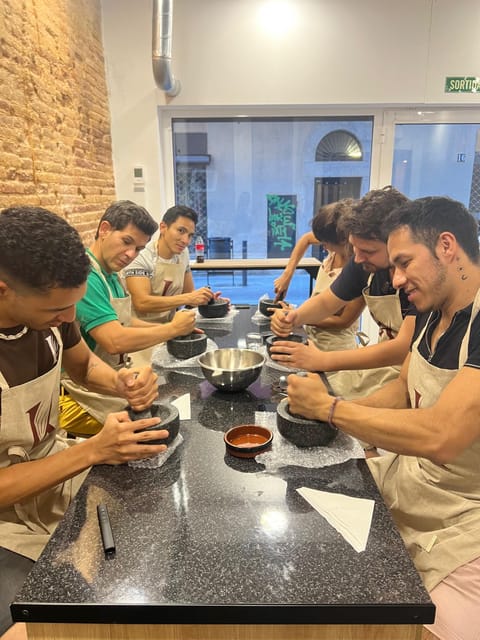
- Roasting, peeling, and grinding cacao yourself
- Tasting cocoa in several forms
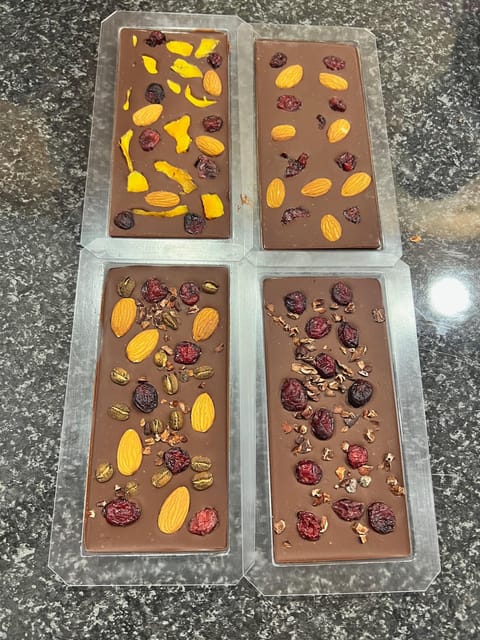
- Making your own Barcelona chocolate bar
- What makes the small group valuable
- Price, timing, and practical value
- Who should book this chocolate workshop?
- Is the Bean to Bar Workshop worth booking?
- FAQ
- Where does the Bean to Bar Chocolate Workshop take place?
- How long does the workshop last?
- How much does the workshop cost?
- What languages are available?
- How many people are in each group?
- Do I make chocolate during the workshop?
- What is included with the booking?
- Is the activity suitable for teenagers?
- Can allergies or intolerances be accommodated?
Key points at a glance
- Real cacao bean work: Roast, peel, grind, and turn cacao into your own cocoa paste.
- A small class: The group is limited to eight people, allowing room for questions and hands-on work.
- More than a tasting: Sample chocolate from different growing regions and prepare cocoa-based drinks.
- A useful chocolate lesson: Learn about cultivation, fermentation, processing, history, and fair treatment for cacao farmers.
- A take-home result: Make one personal chocolate bar and receive a certificate plus a workshop summary.
- Good for families: Adults and teenagers can take part, with several families praising it for children around 10 and older.
Starting at Kina Chocolates in Barcelona
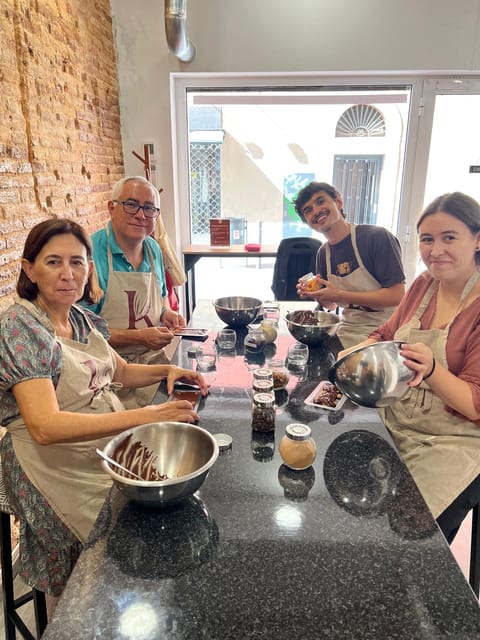
The meeting point is Local Kina Chocolates, an artisan chocolate shop in Barcelona. The setting matters. This is not a large cooking school with a line of identical stations. It is a small shop where chocolate is made and sold, so the workshop connects directly with the products and methods being discussed.
The class lasts two hours and is offered in Spanish or English. With no more than eight participants, the format feels suited to questions and conversation rather than a lecture delivered from across a room. The instructors named in the feedback include Renée, Franklin, Oscar, and Oskar. The repeated praise is not simply for the chocolate itself, but for the instructors’ warmth, humor, and ability to explain technical ideas in an easy way.
That personal style is important here. Cacao processing can sound dry if you only hear a list of steps. It becomes much clearer when you can handle the beans, smell them, taste their different forms, and see how a raw ingredient changes.
Kina Chocolates provides the materials, utensils, apron, and hat. You do not need to bring specialist equipment. The experience is wheelchair accessible, and the workshop is designed for adults and teenagers. Children are not specifically listed as the target age group, but family groups have found it suitable for children around 10 and older.
More Bar Tours in Barcelona
- Barcelona: Unique Sunset Sailing Tour with Tapas & Open Bar
★ 4.7 · 959 reviews - Barcelona Sailing: Light Snacks & Open Bar with Private Option
★ 5.0 · 874 reviews - Barcelona Sensational Sunset Tour with Open Bar and Snacks
★ 5.0 · 681 reviews
From cacao pod to the first beans
The workshop begins with the source: the cacao pod and the work required in the growing regions. You get to observe a cacao pod and learn what happens in the fields before chocolate reaches a shop counter.
This opening gives the class its purpose. Many people know chocolate as a finished bar, but not as a crop that must be grown, harvested, fermented, dried, transported, roasted, and processed. The workshop connects those stages and also discusses the communities that produce cacao.
I value this part because it shifts the focus from chocolate as a sugary snack to chocolate as an agricultural product. You learn why origin matters, how beans from different climates can taste different, and why the bean-to-bar movement pays closer attention to traceability and farmer treatment.
The class also covers cacao’s ancient uses and the long history of chocolate. You may prepare cocoa drinks based on older traditions as you learn how chocolate has been consumed in different periods. This makes the workshop feel like a short cultural lesson, not just a confectionery activity.
The subject is handled in a friendly way. Oscar is repeatedly described as passionate about chocolate and eager to answer questions, while Renée is praised for being clear, warm, and engaging. That enthusiasm helps keep the early explanation from becoming too much information at once.
Roasting, peeling, and grinding cacao yourself
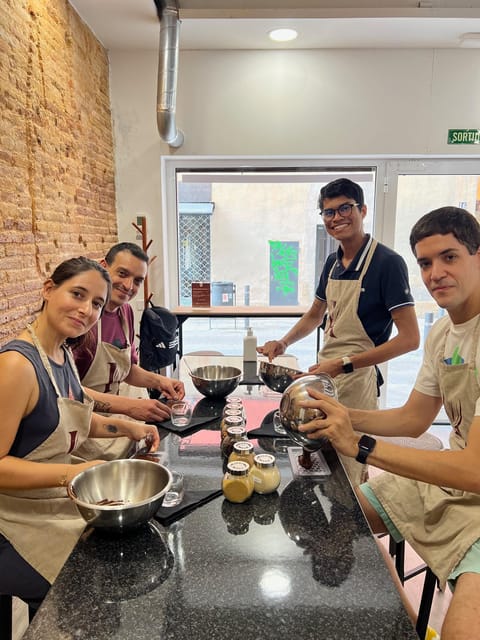
The most memorable section is the practical work with the beans. You roast the cacao, peel away the shells, grind the nibs, and make your own cocoa paste.
These steps are simple to describe but surprisingly useful to perform. Roasting changes the aroma and flavor. Peeling reveals the nibs inside the shell. Grinding shows how a dry, firm ingredient slowly becomes a smoother paste as its natural fats are released.
You are not simply watching a professional make chocolate behind a counter. Your hands take part in the process. That makes the lesson easier to remember, especially for teenagers and anyone who learns best by doing.
You also get to taste several forms of cacao along the way. The workshop can include cocoa nibs, chocolate from beans grown in different climates, and other cocoa byproducts. One session included three chocolate samples from different regions, which helped show how place affects flavor.
This is where the class can change your idea of chocolate. Fine cacao does not need to be buried under a heavy dose of sugar or flavorings. The focus is on the character of the bean and the work needed to bring it out.
One useful point to understand is that the workshop is not a free-form chocolate laboratory. You will make chocolate with guidance, but much of the class is devoted to learning, tasting, and taking part in selected production steps. If you want an advanced pastry course with extensive recipe development, this is not that. If you want to understand the basic route from bean to bar and get your hands dirty, it fits well.
Tasting cocoa in several forms
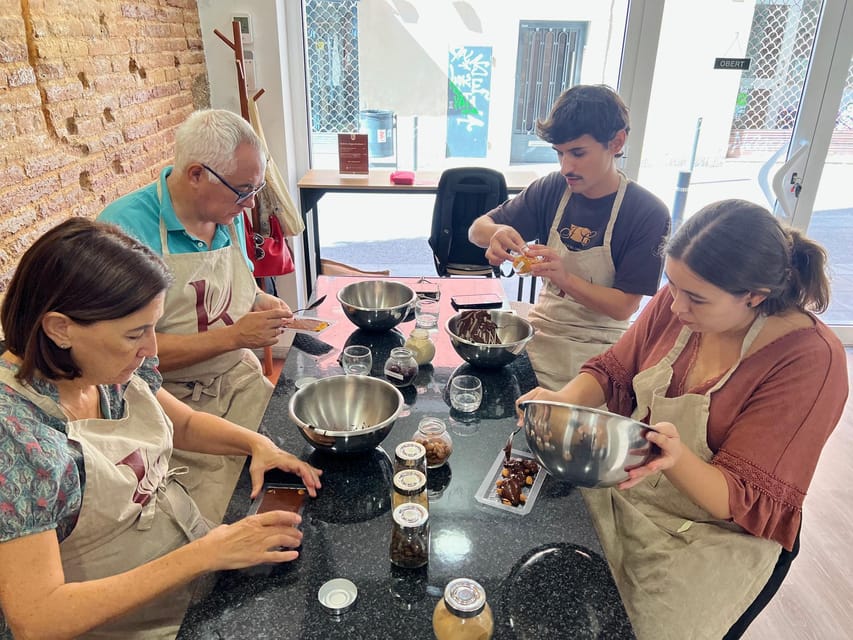
The tasting section gives the workshop variety. Along with chocolate samples, you prepare different cocoa-based drinks and taste ingredients at stages that most people rarely encounter at home.
Cocoa nibs can taste quite different from a sweet bar. Cocoa shells can be used for tea, and some participants later bought shell tea or caramel-coated cacao beans from the shop. These products help you notice how much of the cacao bean can be used.
The class also encourages you to identify flavors and compare beans from different origins. You do not need a trained palate. The point is to slow down and pay attention to aroma, bitterness, texture, and sweetness.
I like this approach because it turns tasting into a practical skill. You begin to understand why two bars with the same cocoa percentage can taste very different. Origin, roasting, processing, and added ingredients all play a part.
There is also a useful balance between explanation and sampling. The tasting is not an afterthought at the end. It appears throughout the workshop, so you can connect each flavor with a stage of production.
People with a strong sweet tooth will be happy, but the class is not limited to sugary treats. You should expect bitterness, earthy notes, and unfamiliar textures from some of the cacao products. That is part of the point.
More bar and brewery tours:
- Barcelona: El Born and Gothic Quarter Wine & Tapas Bar Tour
★ 4.8 · 674 reviews - Barcelona Sunset Cruise with Light Snacks and Open Bar
★ 5.0 · 476 reviews - Barcelona Bar Crawl
★ 5.0 · 466 reviews - Barcelona Private Sailing with Open Bar & Snacks (max 9)
★ 5.0 · 440 reviews
Making your own Barcelona chocolate bar
Near the end, you make a chocolate bar to take home. This is the most obvious souvenir, but it also gives the earlier lessons a clear finish.
You have already handled the raw beans and made cocoa paste. Now you get to see how those ingredients become a bar. The personal result will not replace the polished chocolate sold at Kina Chocolates, but it has something the shop products cannot offer: you made it during your own class.
The finished bar is one reason the experience works well for couples, families, and teenagers. It gives everyone a small project and a physical reminder of the visit. The workshop also provides a personalized certificate and a written summary of what you learned, which is handy if you want to remember the process after your holiday.
Take care with the bar in warm weather. One participant reported that the Barcelona heat softened it before it reached home. That is not a flaw in the class, but it is a practical warning. Keep your chocolate protected from heat after the workshop, especially if you plan to walk around the city before returning to your accommodation.
The bar also gives you a reason to visit the shop again. Kina Chocolates sells finished bars and cocoa products, and some people chose to buy additional chocolate, cacao beans, shell tea, or caramel cacao beans after the class. The instructors do not appear to turn the workshop into a sales pitch. The focus remains on the process, though you will have a chance to browse the shop afterward.
What makes the small group valuable
The maximum group size is eight. That is a strong number for this kind of activity.
A small group means you are more likely to see the demonstrations clearly and get a turn with the ingredients. It also makes it easier to ask about farming, flavor, processing, or the history of chocolate without interrupting a large presentation.
The size suits families especially well. Parents have found that teenagers who normally dislike organized activities stayed interested because the class mixes explanation with physical work and tasting. The two-hour length helps too. It is long enough to cover the subject, but short enough to fit into a busy Barcelona day.
The experience can also work for a couple looking for something indoors and different. It is a good rainy-day option, and the certificate and personal bar make it more memorable than a routine shop visit.
The tradeoff is that a small shop may feel close and active rather than spacious. If you prefer a quiet tasting with little participation, the apron, hat, roasting, grinding, and shared instruction may feel more involved than expected.
Price, timing, and practical value
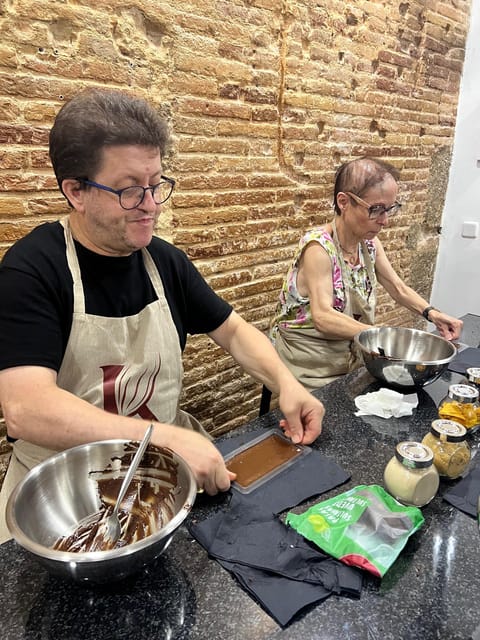
At $47 per person for two hours, this is not the cheapest chocolate tasting in Barcelona. It is also more than a simple shop visit. The price includes the instruction, ingredients, equipment, apron, hat, tastings, cocoa drinks, your chocolate bar, a certificate, and a written workshop summary.
I consider that fair value if you want an activity rather than just a snack. You are paying for access to a working chocolate setting, a small class, and a guided lesson that covers both the product and the people behind it.
The value is strongest for anyone who would otherwise book a separate food tour, museum visit, or indoor activity. You receive a souvenir, but the real benefit is the understanding of how cacao changes from bean to paste to bar.
The two-hour schedule is also easy to place between other Barcelona plans. Check the available starting times when booking because the exact session time varies. The workshop is offered in English and Spanish, though some content may be shown in its original language.
You can reserve now and pay later, which helps if your schedule is still changing. Free cancellation is available up to 24 hours before the activity for a full refund. Tell Kina Chocolates about allergies or intolerances in advance so the workshop can be adapted where possible.
Who should book this chocolate workshop?
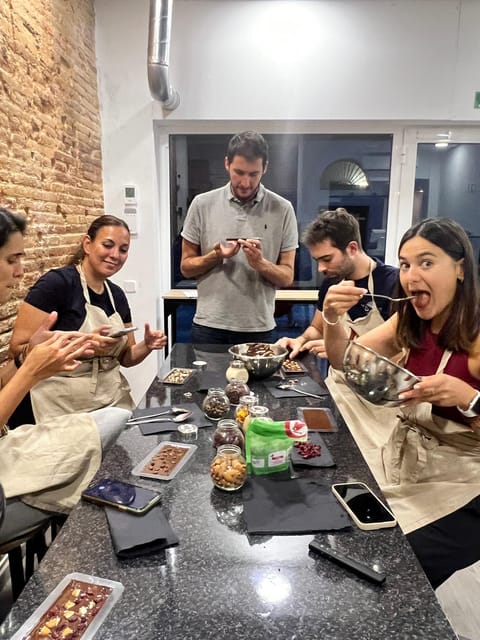
I would choose this for:
- Adults who want more than a standard chocolate tasting.
- Families with teenagers or children around 10 and older.
- Couples looking for a hands-on Barcelona activity.
- Anyone curious about cacao farming, fair treatment, and traceability.
- People who enjoy comparing flavors from different regions.
- Visitors needing a two-hour indoor activity.
It is less suited to anyone expecting to make a large supply of chocolate from start to finish. The workshop is guided and educational, with plenty of tasting and discussion. You will participate, but you are not running an independent chocolate factory.
It may also be less comfortable for people who dislike strong cocoa flavors or hands-on food preparation. Raw cacao, nibs, shells, and cocoa paste do not all taste like a sweet milk chocolate bar. Go in ready for contrast.
Is the Bean to Bar Workshop worth booking?
Yes, especially if you want a Barcelona activity that teaches you something and gives you a souvenir without taking half a day. The strongest parts are the real cacao work, the small group, and the instructors’ clear passion for the subject.
I would book it for a family with older children, a chocolate-loving couple, or anyone interested in ethical food production. I would skip it only if you want a quick tasting with no classwork, or an advanced course where you control every recipe.
For $47, Kina Chocolates offers a good mix of flavor, craft, culture, and practical work. You leave with a better sense of what chocolate is, where it begins, and why a well-made bar deserves more attention than a quick bite between sightseeing stops.
FAQ
Where does the Bean to Bar Chocolate Workshop take place?
The workshop takes place at Local Kina Chocolates in Barcelona, Catalonia, Spain.
How long does the workshop last?
The experience lasts two hours.
How much does the workshop cost?
The listed price is $47 per person.
What languages are available?
The workshop is offered in Spanish and English. Some content may be shown in its original language.
How many people are in each group?
The group is limited to eight participants.
Do I make chocolate during the workshop?
Yes. You roast, peel, and grind cacao beans, make cocoa paste, and prepare your own chocolate bar to take home.
What is included with the booking?
Materials and utensils, an apron, a hat, a personalized completion certificate, and a written workshop summary are included.
Is the activity suitable for teenagers?
Yes. The workshop is designed for adults and teenagers, and family groups have found it suitable for children around 10 and older.
Can allergies or intolerances be accommodated?
You should tell Kina Chocolates about any allergies or intolerances in advance so the workshop can be adapted.
More Workshops
- Barcelona Paella Cooking Class with Market Visit, Tapas & Sangria
★ 5.0 · 2,531 reviews - Barcelona: Cocktail Master Class by Mixologist with Tapas
★ 4.7 · 959 reviews - Barcelona: Paella Cooking Class with Market Visit and More
★ 4.9 · 711 reviews - Paella Cooking Class with Professional Chef: Four Course Dinner
★ 5.0 · 561 reviews
More Dessert Tours
- Barcelona: Nougat and Chocolate Museum Tour with Tasting
★ 4.5 · 232 reviews
Recently added around Barcelona
- Intro Segway Tour Barcelona 1h★ 4.9 · 166 reviews
- Barcelona: Bike or eBike Tour, Top Sights & Local Insights★ 4.9 · 166 reviews
- Instagram Photoshoot Tour in Barcelona★ 5.0 · 167 reviews
- Artisan Ceramic Making Experience★ 5.0 · 168 reviews
- Barcelona: Big Fun Museum Ticket★ 4.2 · 169 reviews
- Sagrada Familia Evening Private Tour with Expert Guide★ 4.5 · 170 reviews
- Gaudi’s Crypt in Colonia Güell with Audioguide★ 4.4 · 170 reviews
- Las Golondrinas Barcelona 60-min Boat Tour★ 4.0 · 170 reviews
Workshops, compared.
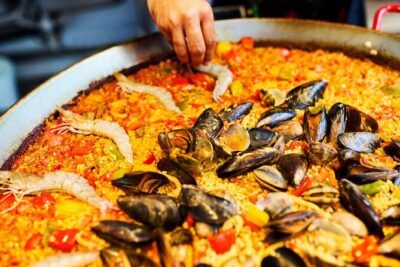
Barcelona Paella Cooking Class with Market Visit, Tapas & Sangria
Read our review →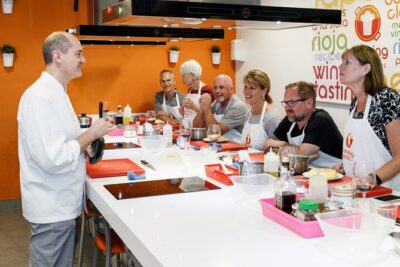
Spanish Cooking Class Paella Tapas and Sangria in Madrid
Read our review →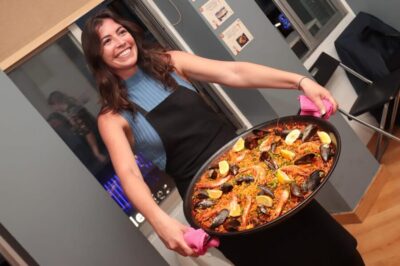
Paella and Sangria Workshop in the City Center
Read our review →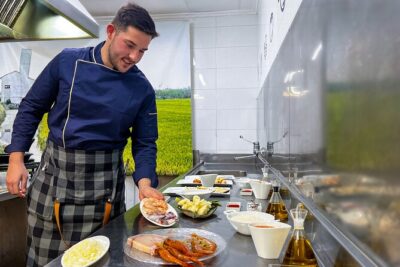
Paella Cooking Class, Wine Tasting & Central Market in Valencia
Read our review →
Group Surfing Lesson at Playa de las Américas, Tenerife
Read our review →
Paella Cooking Class in Madrid with Bottomless Wine Pairing
Read our review →
Playa de las Américas: Private or Small-Group Surf Lesson
Read our review →Browse the lists this tour appears in